www.how2flyfpv.com // COMMERCIAL LANE // CREWS & CONSULTING★ ENTERPRISE
We build FPV teams.
In five days, your crew sets up, configures, maintains, repairs, and flies its own FPV fleet — and keeps it. Hands-on FPV cohort training and consulting for agencies and companies, led by a Part 107 flight-test operator with 2,000+ FPV hours and 200+ drones built from scratch. Fully trained in Doodle Labs configuration and completely knowledgeable in Silvus Technologies configuration. Most schools make you choose: learn to fly, or get certificated. Here you get both — capability and the certificate.
Part 107Included
Part 107, handled: included in every All-Inclusive cohort — or take the 5-Day Sprint on its own for $595. Part 107 is the FAA Remote Pilot certificate you must hold to fly drones for work. Study is built into the week, your crew sits the FAA exam together at week’s end, and your operators leave certificated — legal to fly for your agency or company from day one.
www.how2flyfpv.com THE EXPERIENCE ✦ FLY IT — FIX IT — MAINTAIN IT ✦ www.how2flyfpv.com THE EXPERIENCE ✦ FLY IT — FIX IT — MAINTAIN IT ✦ www.how2flyfpv.com THE EXPERIENCE ✦ FLY IT — FIX IT — MAINTAIN IT ✦ www.how2flyfpv.com THE EXPERIENCE ✦ FLY IT — FIX IT — MAINTAIN IT ✦
◈ CHASE LEDEATTE — FOUNDER & LEAD INSTRUCTORTRAINING NATIONWIDE — BY ARRANGEMENT
Direct Transmission — From Your Instructor
Hear it from Chase himself.
“You wanna fly for the Armyor make an impact in this sector?Go to www.how2flyfpv.com & sign up now!”
● CHASE LEDEATTEFOUNDER & LEAD INSTRUCTORFAA PART 107RUNTIME 0:10
Chase LeDeatte — Part 107 flight-test operator, 2,000+ hours, 200+ builds. Fully trained in Doodle Labs configuration and completely knowledgeable in Silvus Technologies configuration. He holds the certificate himself, and he built it into every program here: crews test together and leave certificated, and individual students train on a Part 107 pathway from Day 1. Press play, hear the standard, then pick your track.
You don’t just learn to fly. You leave legal to fly for work.
FAA Part 107 is the Remote Pilot certificate. In the United States, if you fly a drone for work — for an agency, a company, a client, or pay of any kind — the FAA requires it. No certificate, no commercial flying. That is why it is built into every program on this site, stated up front, in the price — not buried in fine print and not sold back to you later as an upsell.
01 · What it is
The FAA licence to work
A 60-question FAA exam, passed at 70% or better, with TSA vetting — for operators 16 and older. It covers airspace, weather, regulations, and safe commercial operation, and it stays current with recurrent training every 24 months.
02 · What’s included here
Two ways in — Sprint or included
The 5-Day Part 107 Sprint — $595: five days of study, exam scheduling handled with you, and the whole class tests together through PSI at week’s end — pass and you leave with your temporary certificate. Or it’s included inside every All-Inclusive cohort, built into the training week. The PSI exam fee ($175) is itemised separately from the course price — the student’s at test time, unless the buyer elects at signing to absorb it.
03 · Why it sells the program
Skill + certificate = employable
Anyone can watch videos and pass a test. Anyone can learn to fly in a field. Almost nobody leaves with both — hands that can set up, repair, and fly FPV, and the FAA certificate that lets an employer, agency, or client actually put those hands to work. That combination is the product.
Sprint $595 · Included in every All-Inclusive cohort · Whole class tests through PSI · Leave with temporary certificates
PSI® is a registered trademark of PSI Services LLC. PSI administers FAA knowledge examinations under contract with the Federal Aviation Administration. How2FlyFPV students register and test through PSI's public testing channel, as any applicant does. How2FlyFPV is not a PSI testing center and is not affiliated with, sponsored by, or endorsed by PSI.
Commercial Lane — Field Operations
The work your crew trains for.
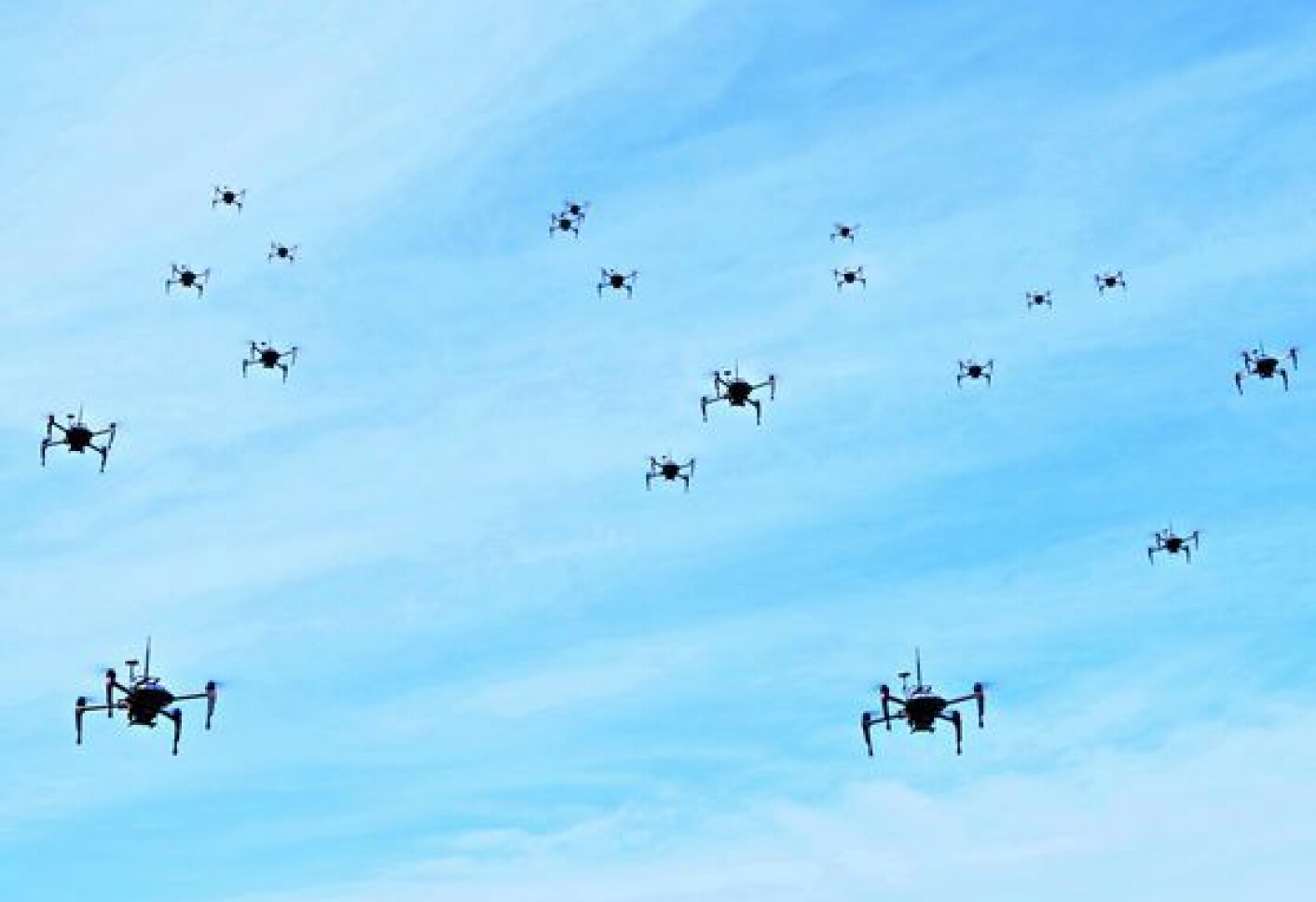
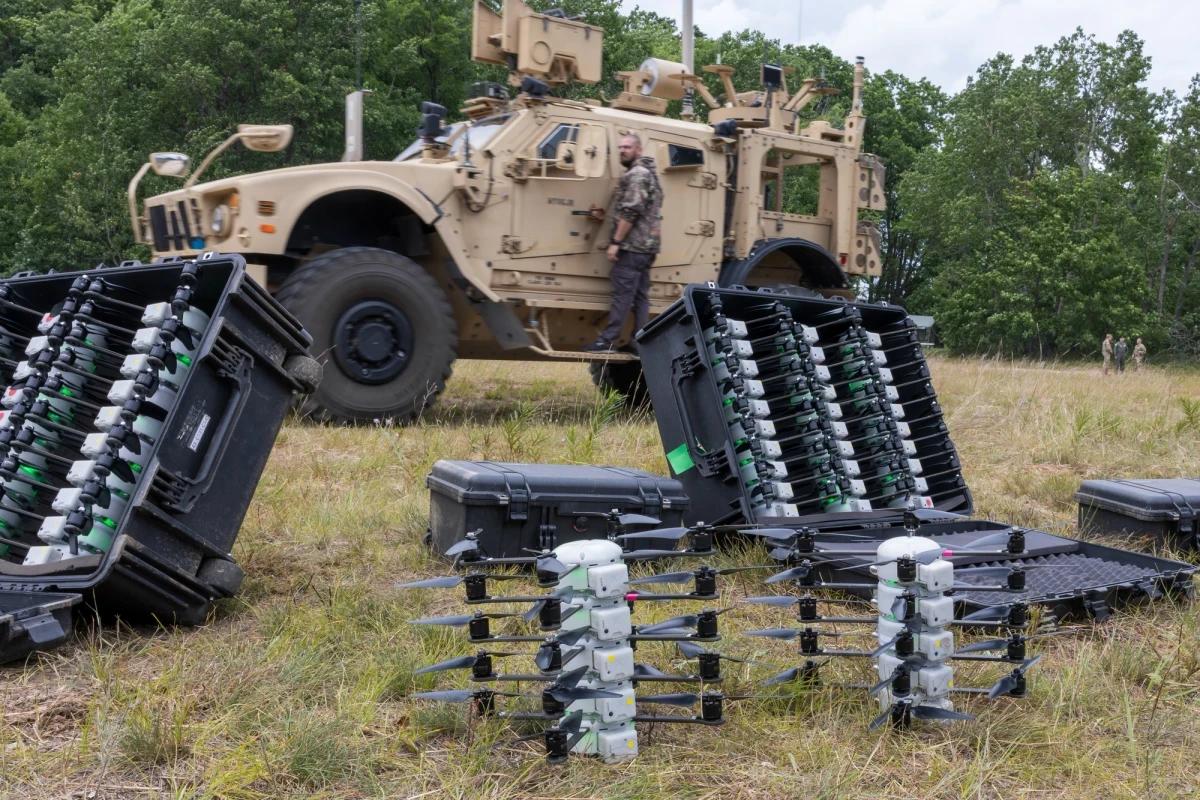
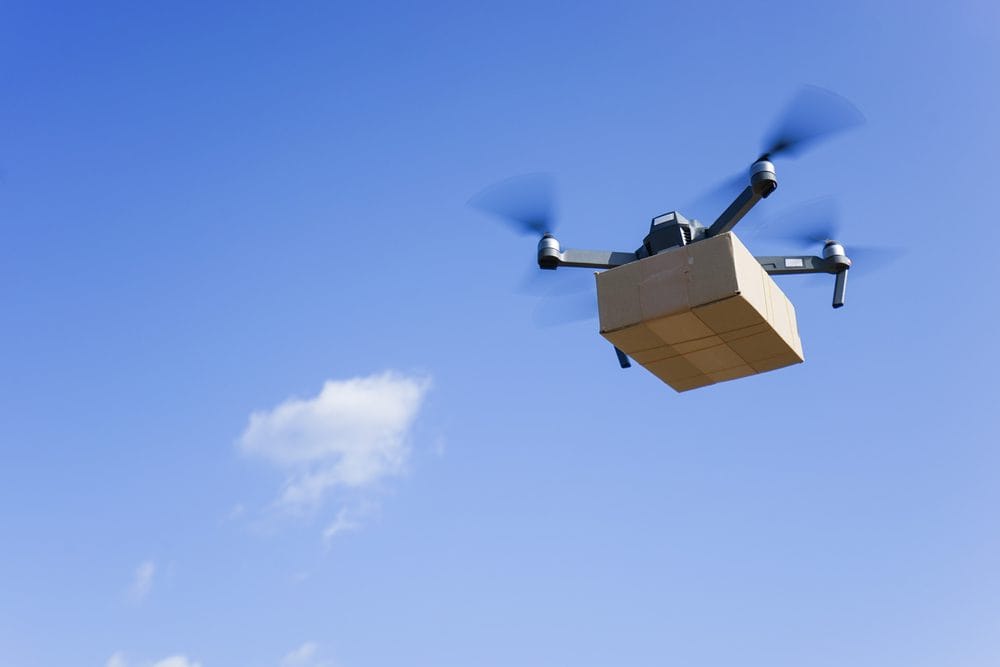
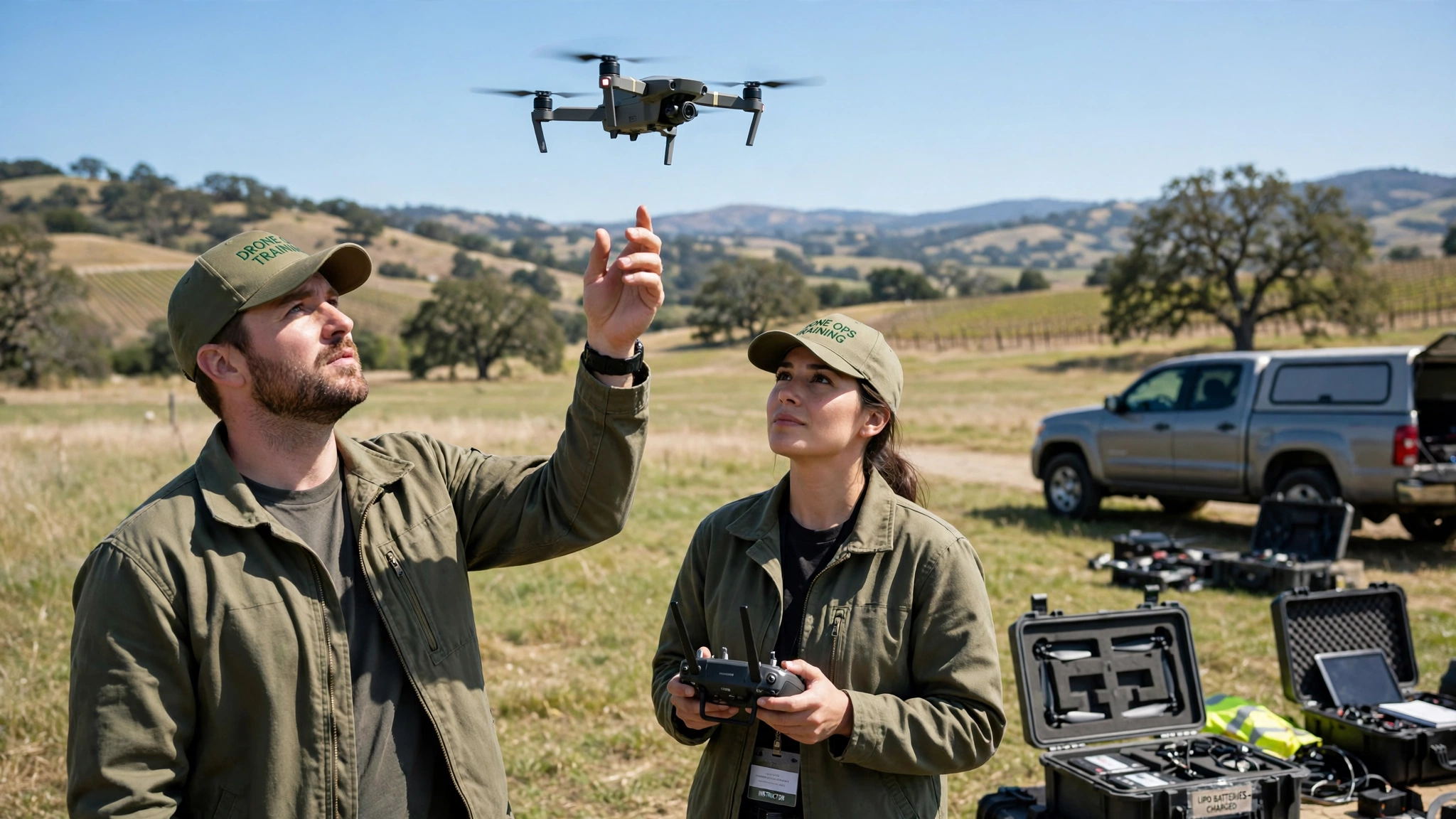
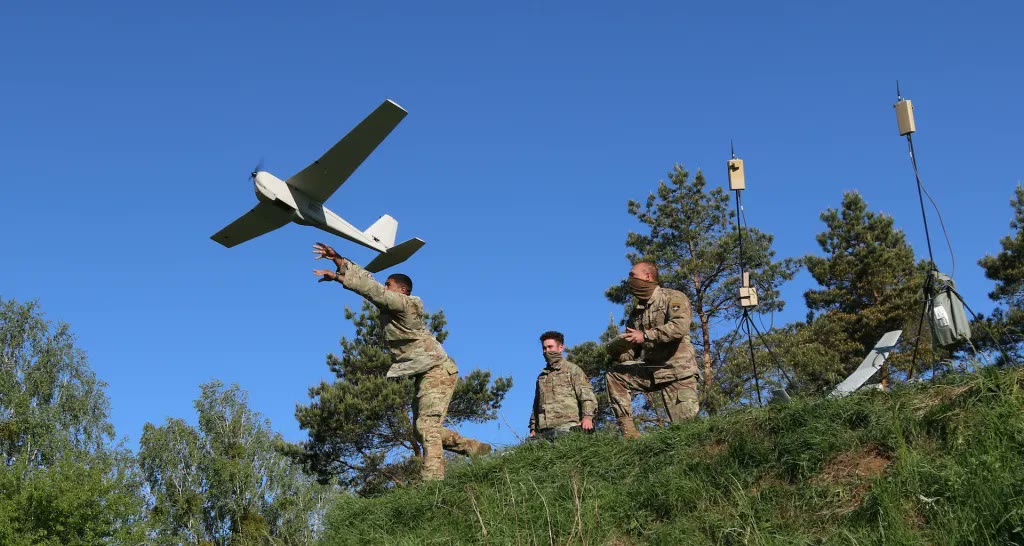
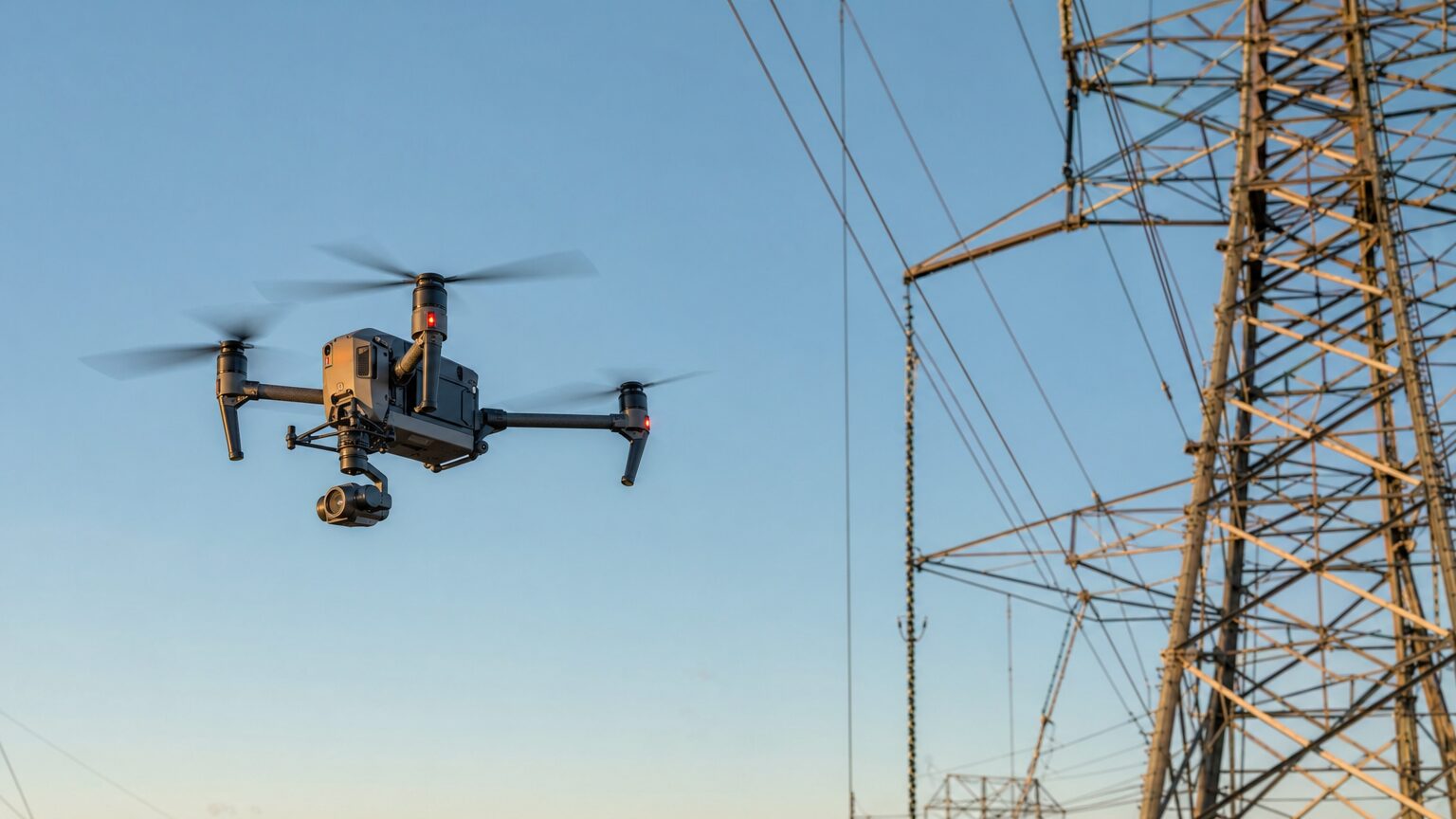
Swarm systems. Delivery drones. Tactical UAS, inspection, public-safety overwatch, live ground control. FPV skill is the tool — these missions are the job, and this is where trained crews are needed.
Swarm Ops — In The AirFormation flight · Mass UASSwarm Systems — StagedMass launch · Aircraft by the caseDelivery — LogisticsPackage ops · Crews in demandField Ops — Small UASHand launch · RecoveryDefense — Tactical UASField launch · Ground controlUtilities — InspectionTransmission · Infrastructure
Programs — The Hub
Four ways in. Pick your door.
Every program we run lives here: FPV for individual operators, Commercial crew training, the Part 107 Sprint, and the 10-Day application-operations course. Training is delivered where your crew works — we come to you.
Claude AI Basic Training IncludedBasic Claude membership included with every tier.
PSI® is a registered trademark of PSI Services LLC. PSI administers FAA knowledge examinations under contract with the Federal Aviation Administration. How2FlyFPV students register and test through PSI's public testing channel, as any applicant does. How2FlyFPV is not a PSI testing center and is not affiliated with, sponsored by, or endorsed by PSI.
Part 107 — The Selling Point Of Every Program Here
Crews leave certified.
Not “trained and good luck on the exam.” Every All-Inclusive cohort includes FAA Part 107 — study built into the week, the whole crew tests together through PSI at week’s end, and your operators leave with temporary certificates: certificated, legal to fly for work, deployable. Need only the certificate? The 5-Day Part 107 Sprint is $595 — same test day, same standard, no flight course required first.
Sprint $595 · Included in All-Inclusive cohorts · test day through PSI · Temporary certificates in hand
COMMERCIAL · www.how2flyfpv.com · CREWS & CONSULTING · FAA PART 107 INCLUDED
This is what www.how2flyfpv.com is for: commercial FPV consulting and large crew dealings. Bring one expert in by the day, or put your whole crew through the 5-day program. Every crew program includes FAA Part 107 — study built into the week, the crew tests together at week’s end — certification is the week’s goal, and certificated operators are legal to fly for work. Individuals: the FPV course — the Five-Day FPV Core Week — lives on the FPV page under Programs, with its own Part 107 pathway.
CONSULTING // $5,000 PER DAY
FPV Consulting & Instructor Days
Chase on-site with your team: stand up a new FPV program, bring a new fleet operational, or fix a program that is stuck. Priced by the day — no hourly meter.
$5,000/day + travel & per diem
Program Stand-Up Day — a new FPV program, stood up right
Platform Onboarding — new fleet, crew operational
Train-the-Trainer Day — your lead qualified to teach
Part 107 guidance — get your team’s certification plan, study standard, and recurrent-training calendar set up right
Your crew. Your site or ours. 5-day fly-and-keep FPV cohorts for 10, 15 or 20 operators — every operator flies an aircraft, maintains it, and keeps it. Modeled on OEM instructor deployments for professional flight-test teams.
Squad — 10 crew · $33,500 · 5 days
Company — 15 crew · $52,000 · 5 days
Battalion — 20 crew · $67,000 · 5 days
Fly-and-keep: every operator flies, maintains, and keeps their aircraft
Claude AI basic training included — basic Claude membership per person, with a basic introduction and training (Tips and Tricks).
Part 107 included on every tier — study built into the week; the crew tests together at week’s end, on the path to certification
50% deposit at signing — that deposit funds the cohort’s equipment purchases
PSI® is a registered trademark of PSI Services LLC. PSI administers FAA knowledge examinations under contract with the Federal Aviation Administration. How2FlyFPV students register and test through PSI's public testing channel, as any applicant does. How2FlyFPV is not a PSI testing center and is not affiliated with, sponsored by, or endorsed by PSI.
Commercial Lane — Sectors We Serve
Built for your sector. Priced in the open.
Every segment stands on its own inside Commercial — pick yours and open its briefing. Public safety leads — it is the least-served skill in the field. Then build your cohort below.
Segment 01
Public Safety
Interior and confined-space FPV capability for police, fire, EMS and rescue crews — fly manual, maintain, and repair where camera drones stop.
Segment 02 · New
Search & Rescue — Fire & Rescue
A segment of its own for SAR and fire/rescue teams inside the Commercial lane.
Segment 03
Utilities & Inspection
Confined and industrial interior inspection flying, standardized across the whole crew — one standard, every operator, documented check-offs.
Segment 04
Construction
Crew standardization and repair self-sufficiency for construction teams — field fixes that return aircraft to service instead of ending the day.
Segment 05
Agriculture
Scouting support and facility, greenhouse and confined-space inspection for ag operations — stated plainly, no spraying.
Segment 06 · DJI Platforms
DJI Inspection
Inspection training on the camera and enterprise DJI aircraft you can actually buy in the US — thermal imaging, LiDAR, and close inspection work, Part 107 included.
Cohort hosting and instructor-for-hire for colleges, CTE and STEM-grant UAS programs — students leave certificated, not just trained.
“The call comes at dusk — and your team has a camera drone, but no search pattern, no thermal discipline, and no way to hand a ground team a coordinate.”
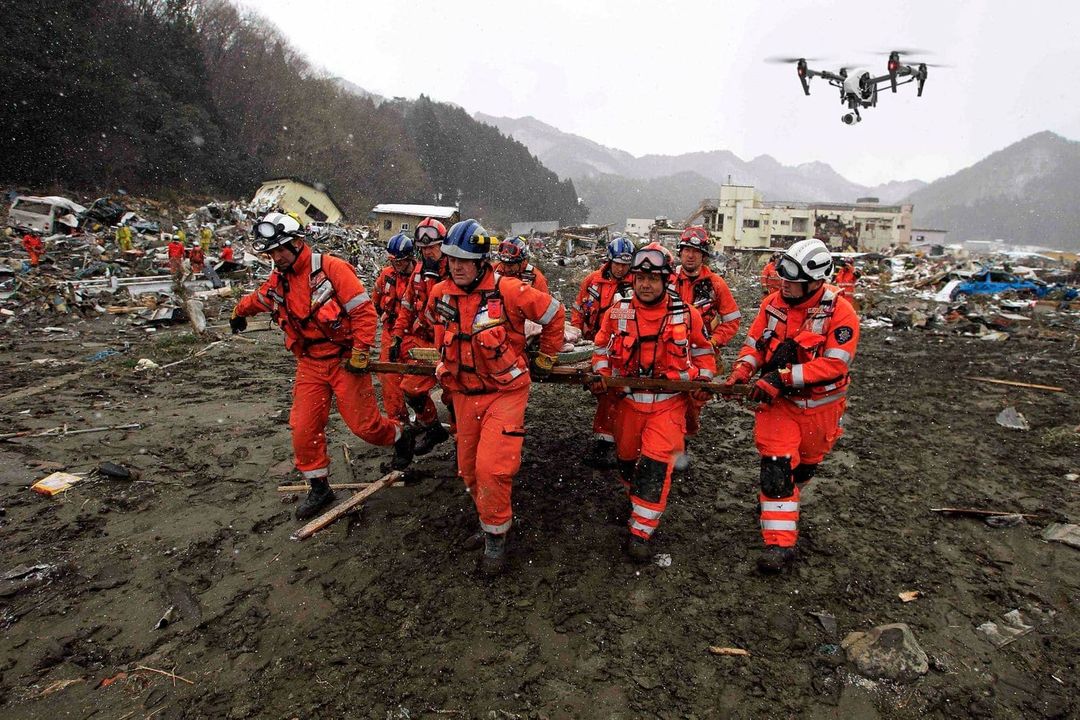
Fire departments, county SAR coordinators and technical-rescue teams: the drone team is a resource inside the incident — reporting to the IC, flying a planned search, and handing off a product a ground team can act on, not just a live feed.
Search planning from a last known point — grid, expanding-square and contour patterns, altitude and sensor trade-offs
Thermal detection and cueing — palettes, time-of-day limits, thermal crossover, and the false positives (rocks, livestock, water) that waste ground-team hours
Incident Command integration — plain-language comms, sortie logging, coordinate handoff in the formats mutual-aid partners use
Lawful night search — current FAA recurrent training plus anti-collision lighting visible for 3 statute miles
Proficiency documented to the shared standard — NFPA 2400 and NIST sUAS test methods, the common language mutual aid trusts
Exit skills: plan a search and defend the pattern, detect and geolocate a subject, hand coordinates to ground teams inside an ICS structure, fly a lawful night search, and document the sortie to mutual-aid standard. Plain boundary: drone training never qualifies anyone for water, rope or USAR rescue work itself — those stay agency credentials.
Skill stack, stated straight. Legally required: Part 107 or public-aircraft COA operation — one framework per flight. Expected for deployment on managed incidents: ICS-100 / ICS-200 / IS-700 (agency-set; there is no single national SAR drone licence, and no standalone California SAR UAS credential exists — mutual-aid readiness is documented agency proficiency under NFPA 2400 and the NIST test methods, plus the requesting agency's acceptance). Thermal interpretation for search is an employer-recognised skill — detection and cueing, not temperature measurement for a report.
Parrot ANAFI USA — lighter 320-sensor thermal: adequate for cueing, weaker for wide-area search than a 640 sensor · $7,000 list
Loudspeaker / spotlight payloads and spare-battery sets — budgeted explicitly, per platform
FPV whoop trainer kits — collapsed-structure and interior-void familiarisation, flown inside the 5-day cohort
Gear prices are current US dealer list. Imported aircraft and thermal payloads are widely listed pre-tariff — landed cost is confirmed in writing at purchase.
“Your ducted cinewhoop sits in a case because nobody can repair it or fly it manual.”
Police, fire, EMS and search & rescue fly camera drones well — and have almost no one who can build, repair, and fly FPV in confined, GPS-denied spaces. That gap is the job.
Interior clearing support — structured, safety-led FPV fundamentals indoors
Confined-space and disaster / interior search support
Indoor / Tactical FPV Module — the cohort focus for public-safety teams
Repair-and-maintenance self-sufficiency, so one crash never ends the capability
Exit skills: configure, maintain, and fly manual FPV indoors and out, repair common crash damage, run a preflight/failsafe check, work as pilot, observer or team lead in a scenario — and keep the records an auditor, an insurer or a city council can read. Stated plainly: no national “tactical drone certificate” exists. What your operators leave with is a documented sign-off against a published standard — NIST sUAS test methods / APSA BPERP-style lanes, inside an NFPA 2400-shaped program — plus the policy, logs and currency files that make the capability defensible.
Skill stack, stated straight. Legally required: FAA Part 107 for civil operations, or flight as public aircraft under the agency's own COA — one framework per flight, and the crew must know which before takeoff; in California, AB 481 governing-body approval covers law-enforcement acquisition and use. Employer-recognised, not licences: NIST sUAS Standard Test Methods and APSA BPERP proficiency lanes, NFPA 2400 program structure, AUVSI Trusted Operator levels. Required in any defensible program: SOPs, flight and maintenance logs, recurrent proficiency checks.
Platforms & gear (current US list):
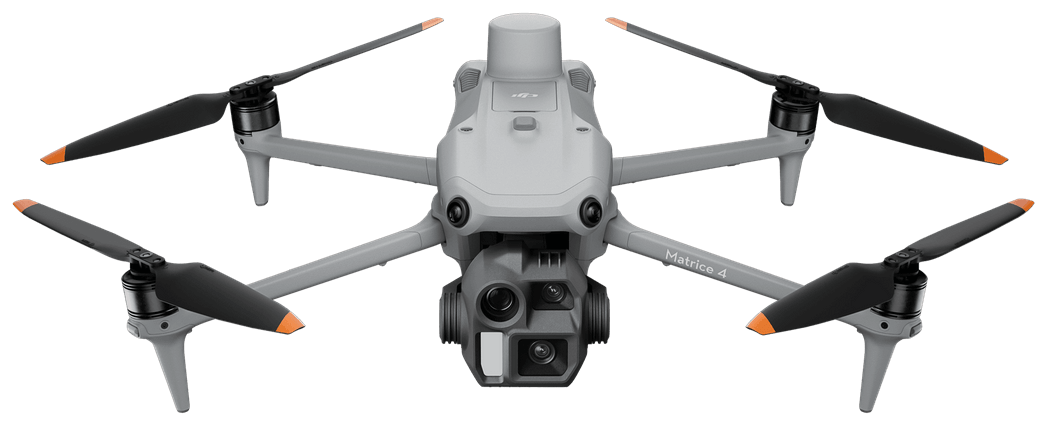
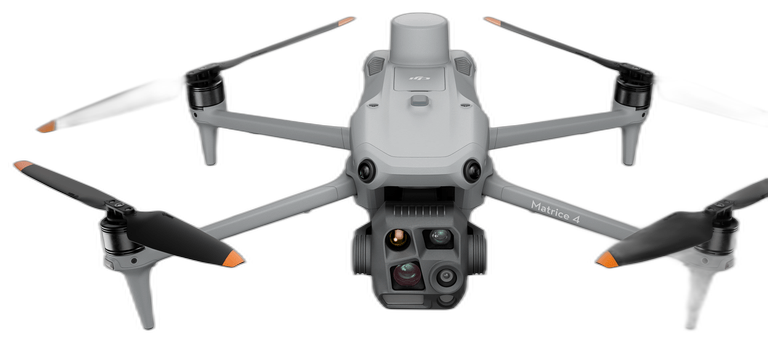
DJI Matrice 4T — thermal overwatch and perimeter · $7,199–$7,849
Parrot ANAFI USA — portable thermal / zoom · $7,000 list
Ready to fly FPV trainer kits — the aircraft your operators learn on and keep, all in one, everything you need · $1,826–$2,758 per operator
Gear prices are current US dealer list. Imported aircraft and thermal payloads are widely listed pre-tariff — landed cost is confirmed in writing at purchase. Budget truth: a two-aircraft starter capability is a five-figure decision before software, spares and insurance; a DFR dock program is a six-figure multi-year subscription. Training is the small line item.
COHORTS — SQUAD 10 · $33,500 · COMPANY 15 · $52,000 · BATTALION 20 · $67,000 · PROGRAM STAND-UP CONSULTING $5,000 / DAY
SQUAD — 10 OPERATORS · $33,500 · 5 DAYS
“Your crew flies the same structure five different ways — and one crash ends the inspection day.”
Utilities, energy, inspection firms and construction crews hold the largest whole-team training budgets — and crew sizes of 10–20 match the cohort tiers exactly. Two trades, one standard:
Utilities & Inspection. The deliverable is the product: a defect list tied to asset IDs and GPS, radiometric thermal images that can be re-measured in software, and a report an engineer can act on.
Confined / industrial interior inspection flying
Standoff discipline and zoom technique — pole-top, insulator, crossarm and substation rounds from repeatable viewpoints, never contacting energised plant
Thermal fundamentals done right — emissivity, reflected temperature, palettes, and knowing when a reading is not trustworthy
Solar thermal scanning and defect recognition; crew standardization — one standard, every operator, documented check-offs
Repair self-sufficiency: field fixes that return aircraft to service
Construction. The same truth every week: the same orthomosaic, photos and video from the same viewpoints, so percent-complete stops being an argument.
Photogrammetry capture — overlap, GSD, ground control and checkpoints, RTK workflow
Processing to orthomosaic, surface models and stockpile / cut-fill volumes, with the accuracy achieved — and its limits — stated on the deliverable
The repeatable weekly progress flight a superintendent can rely on
Stated plainly: we train inspection flying and thermography preparation. ITC thermography certification is issued through ITC's own course and exam — we prepare your operators for it; we do not issue it. And drone capture never replaces a licensed surveyor: survey deliverables stay licensed work, tied to ground control. Drone training also never authorises anyone to enter or touch electrical plant.
Skill stack, stated straight. Legally required: Part 107, LAANC authorisation where corridors cross controlled airspace, and the asset owner's own access and minimum-approach rules. The recognised thermography credential in this segment is ITC Level I sUAS Thermography (4-day course + exam; the employer certifies under its own written practice) — Infraspection's Level I is the recognised alternative. For construction deliverables: ground control, RTK, GSD and accuracy reporting are the core skill no FAA credential covers; Pix4D / DroneDeploy certificates are vendor-recognised workflow proof, not surveying competence; OSHA cards are site-required and separate.
Platforms & gear (current US list):
DJI Matrice 4T — thermal + zoom in one compact aircraft · $7,199–$7,849
DJI Matrice 4E — mechanical-shutter mapping · $5,099–$5,189
Inspired Flight IF800 Tomcat (US-made, Blue UAS) · from $23,000 · Freefly Astro Max · $22,995 (NDAA/Blue $28,995)
Software: DroneDeploy Individual $4,188 / yr · PIX4Dmatic $2,290–$4,990 / yr · PIX4Dcloud from $1,290 / yr — never bundled into a seat price, stated up front
Gear prices are current US dealer list. Imported aircraft and thermal payloads are widely listed pre-tariff — landed cost is confirmed in writing at purchase.
COHORTS — SQUAD 10 · $33,500 · COMPANY 15 · $52,000 · BATTALION 20 · $67,000 · 5 DAYS ON SITE
COMPANY — 15 OPERATORS · $52,000 · 5 DAYS
“Your platform is only as good as the operators flying it — and onboarding is eating your engineers.”
Drone companies and defense-adjacent teams: Chase learned this market from the receiving end, when OEM instructors deployed to train his flight-test team. Now he delivers that standard to yours. Training only — no clearance, contract, or endorsement is implied.
Platform onboarding — your operators, or your customers' operators, on your aircraft
Operator fundamentals to a documented standard
Train-the-Trainer Day — your lead runs recurrent practice in-house
Exit skills: fly, configure, and maintain Group 1-class aircraft, fly to a checklist under supervision, diagnose and repair common faults, and keep operator and maintenance logs an employer can audit. The honest line: five days does not make a five-year test operator. It makes a junior operator/technician with documented fundamentals and a logbook — the entry point your hiring managers say is hardest to find. Where a role needs a security clearance, that is the government's call at the employer's request — training makes the skill stick; it never confers a clearance.
Skill stack, stated straight — from live employer postings. Employer-required in most operator postings: Part 107 in hand or obtainable on hire. Employer-required for senior and test roles: documented Group 1/2 operating and maintenance experience — years, not weekends — across COTS hardware, autopilots, ground stations, comms and payloads, with SOP and checklist authorship. Employer-required for technician roles: build, configure and repair competence (Betaflight / PX4 / ArduPilot / QGroundControl). Employer-recognised: ASTM F3266-aligned training, AUVSI TOP, OEM platform training. Training fleets mirror employer fleets — open-architecture builds plus one enterprise camera platform for context — and every quote carries the consumables: frames, stacks, motors, props, batteries, bench kit, inside the $1,826–$2,758 per-operator ready to fly kit.
5-DAY COHORTS — SQUAD 10 · $33,500 · COMPANY 15 · $52,000 · BATTALION 20 · $67,000 · TRAIN-THE-TRAINER & SUSTAINMENT DAYS $5,000 / DAY
BATTALION — 20 OPERATORS · $67,000 · OR $5,000/DAY PRODUCTS
“Season hits, your scouting crew isn't ready — and hiring ahead of it doesn't pencil out.”
Wine and ag operations: the honest FPV fit is scouting support and inspection — stated plainly, we do not sell spraying.
Crop and operation scouting support
Facility, greenhouse and confined-space inspection
Seasonal crew ramp-up — a trained crew before the season, not during it
Scouting training, inside the 5-day cohort: First — capture it right: multispectral bands and indices without jargon, calibration-panel and sunlight discipline, flight height and overlap for the crop in front of you, plus a thermal facility check on a pump or roof. Then — turn it into a decision: NDVI / NDRE and zone maps, a ground-truth walk, exports for the grower's system, and the one-page scout report.
Exit skills: fly a calibrated multispectral mission, produce index maps that compare week to week, ground-truth what the imagery suggests, and deliver a report a grower or agronomist can act on. The drone does not diagnose — imagery cues the scout; the agronomist confirms on the ground and makes the input call. Scouting only, always: no spraying, no application, no applicator claims.
Skill stack, stated straight. Legally required for commercial scouting: Part 107. The core skill with no FAA credential: multispectral fundamentals — bands, indices, calibration panel, sunlight sensor, radiometric consistency. Vendor-recognised: PIX4Dfields Essentials-type training. Separate professional credentials, never conferred by drone training: Certified Crop Adviser, California PCA and Qualified Applicator licences — listed only so the boundary is unmistakable.
PIX4Dfields · $1,990 / yr or $349 / mo · DroneDeploy Ag Lite · $1,908 / yr
RGB-only starter: Matrice 4E · $5,099–$5,189 — many vigour and stand jobs start RGB plus targeted multispectral, not multispectral on day one
Gear prices are current US dealer list. Imported aircraft and sensors are widely listed pre-tariff — landed cost is confirmed in writing at purchase.
SCOUTING TRAINING RUNS INSIDE THE 5-DAY COHORT — SQUAD 10 · $33,500 · COMPANY 15 · $52,000 · BATTALION 20 · $67,000 · FOLLOW-UP DAYS $5,000 / DAY
SQUAD — 10 OPERATORS · $33,500 · 5 DAYS
The full teaching of this pathway — Part 137, the §44807 exemption, and the California DPR certificates, with the filing packages assembled — lives in the 10-Day Part 107 + Part 137 course. → See the 10-Day page
AGRICULTURE — WHAT’S ISSUED
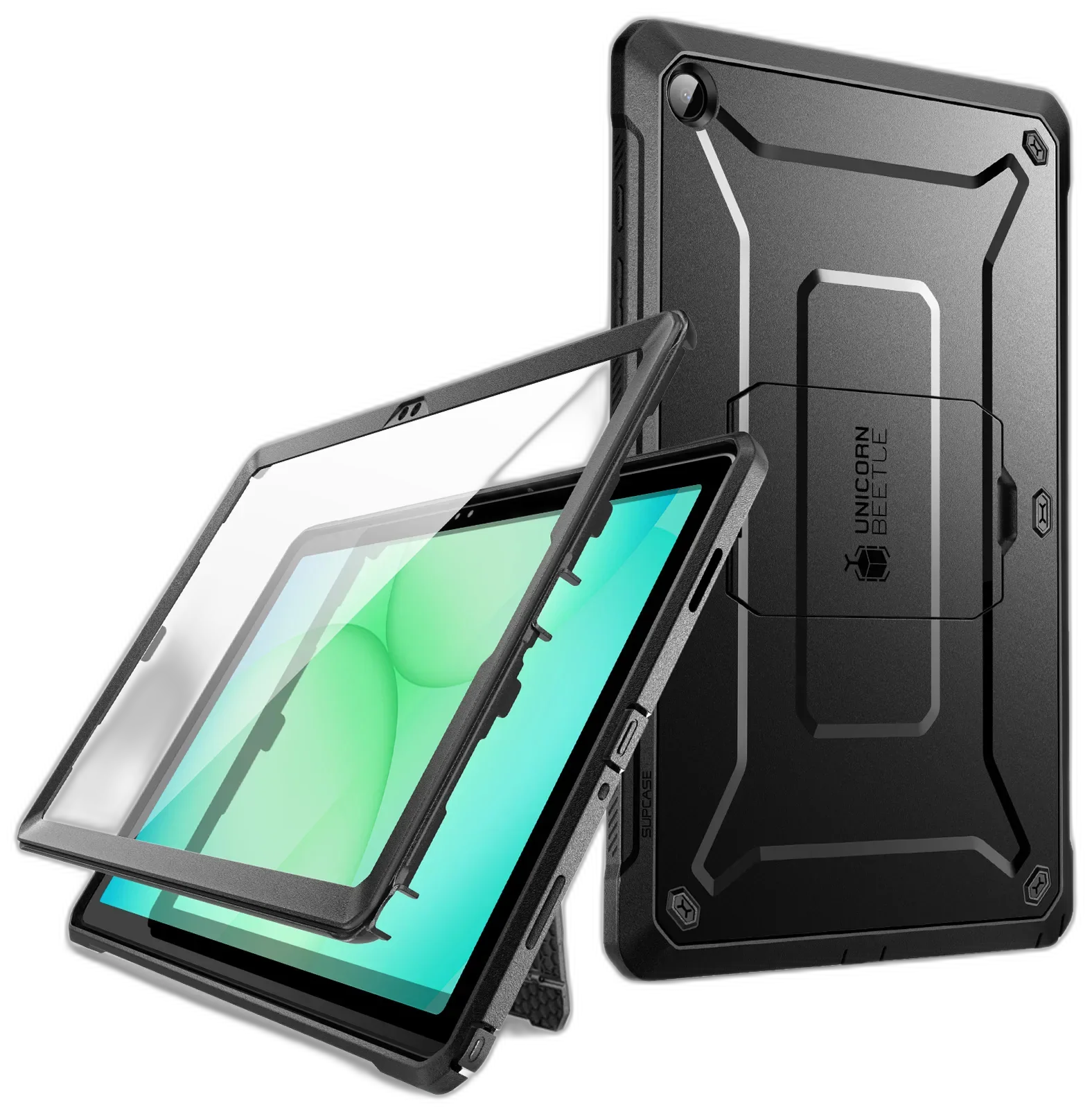
Nothing to purchase. Your bag, the full merch kit, and the tablet you train with are issued for training.
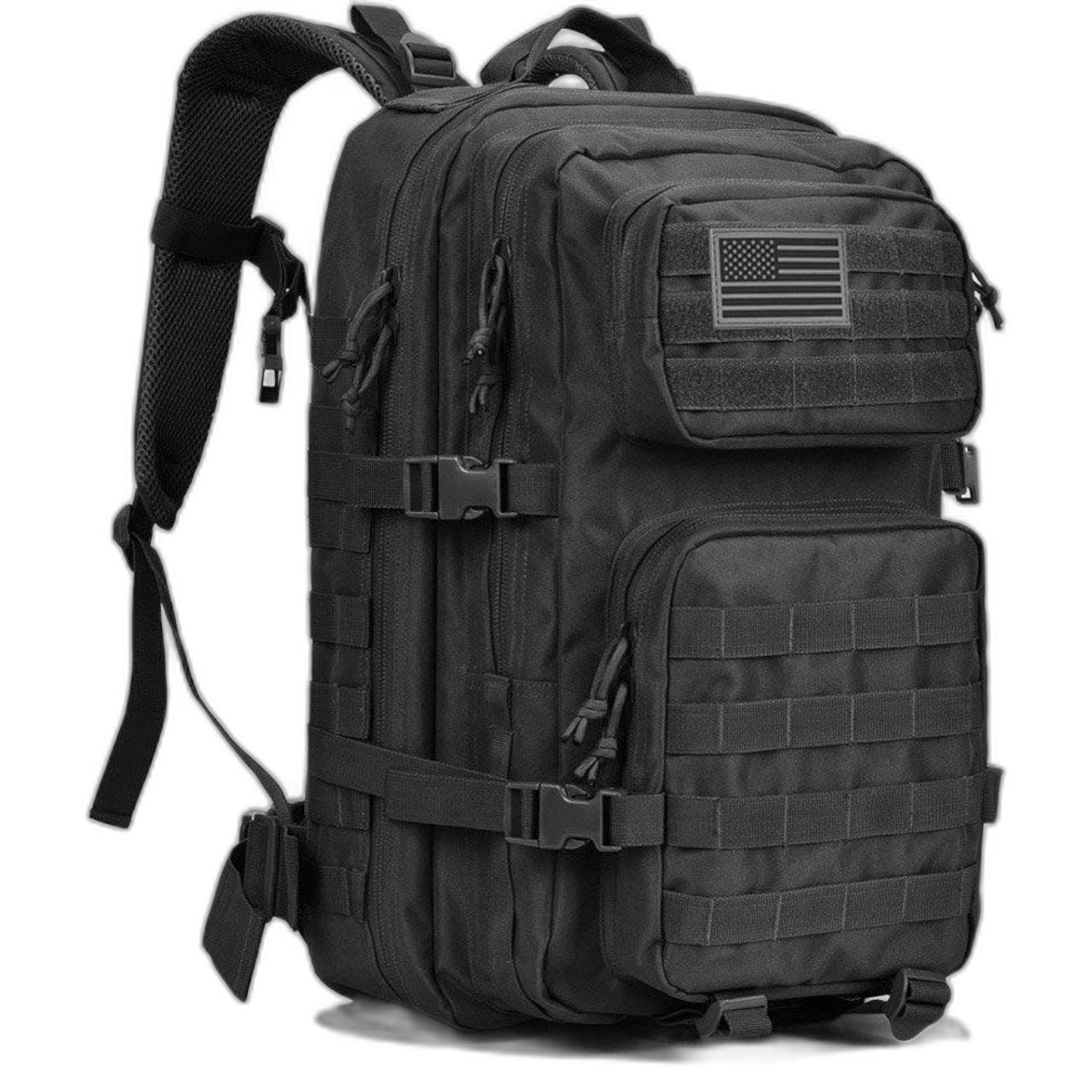
REEBOW GEAR 40L Tactical Backpack
Samsung Galaxy Tab A11+ — Course Tablet
$299.99
SUPCASE Unicorn Beetle Pro Case
$39.99
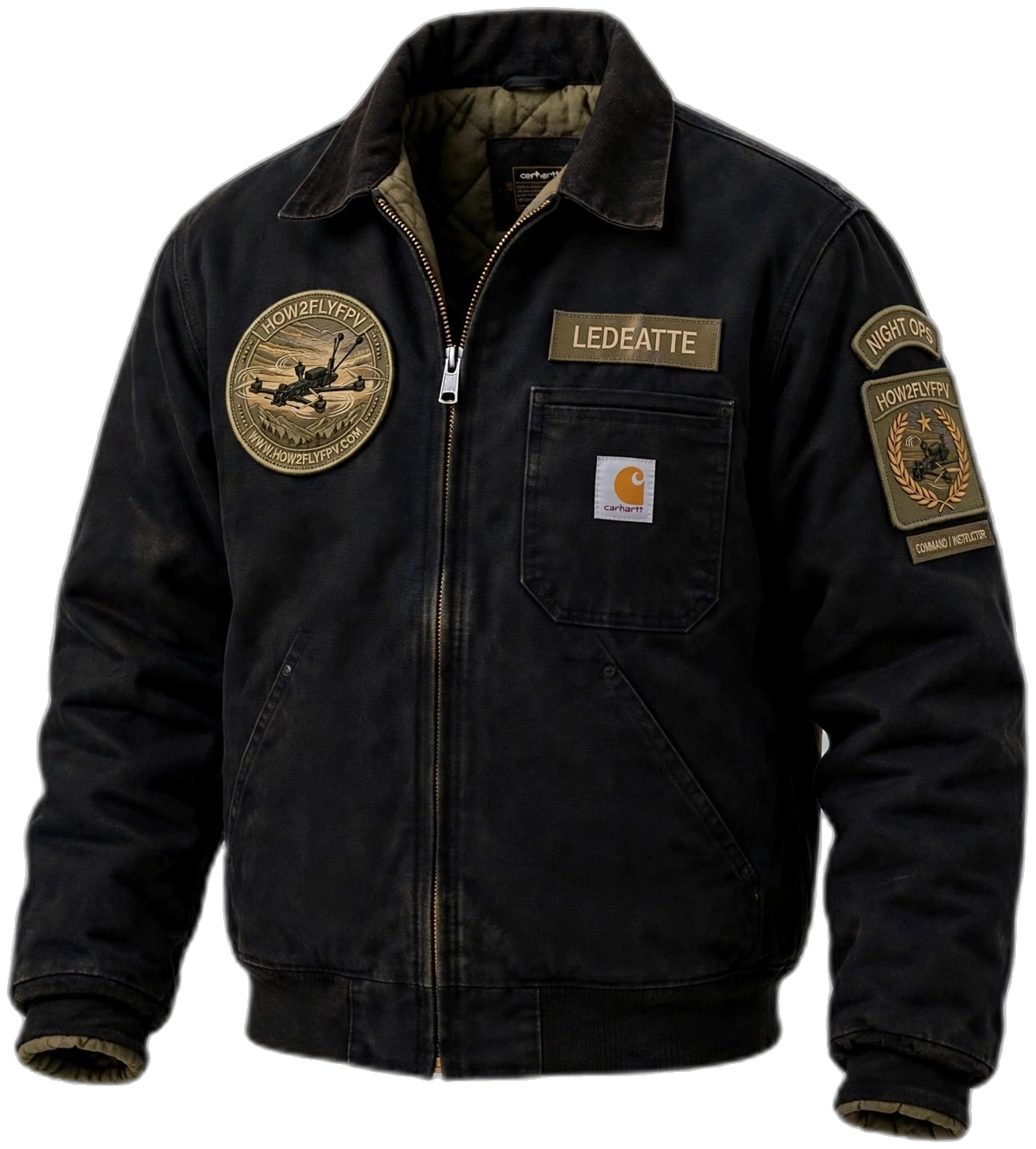
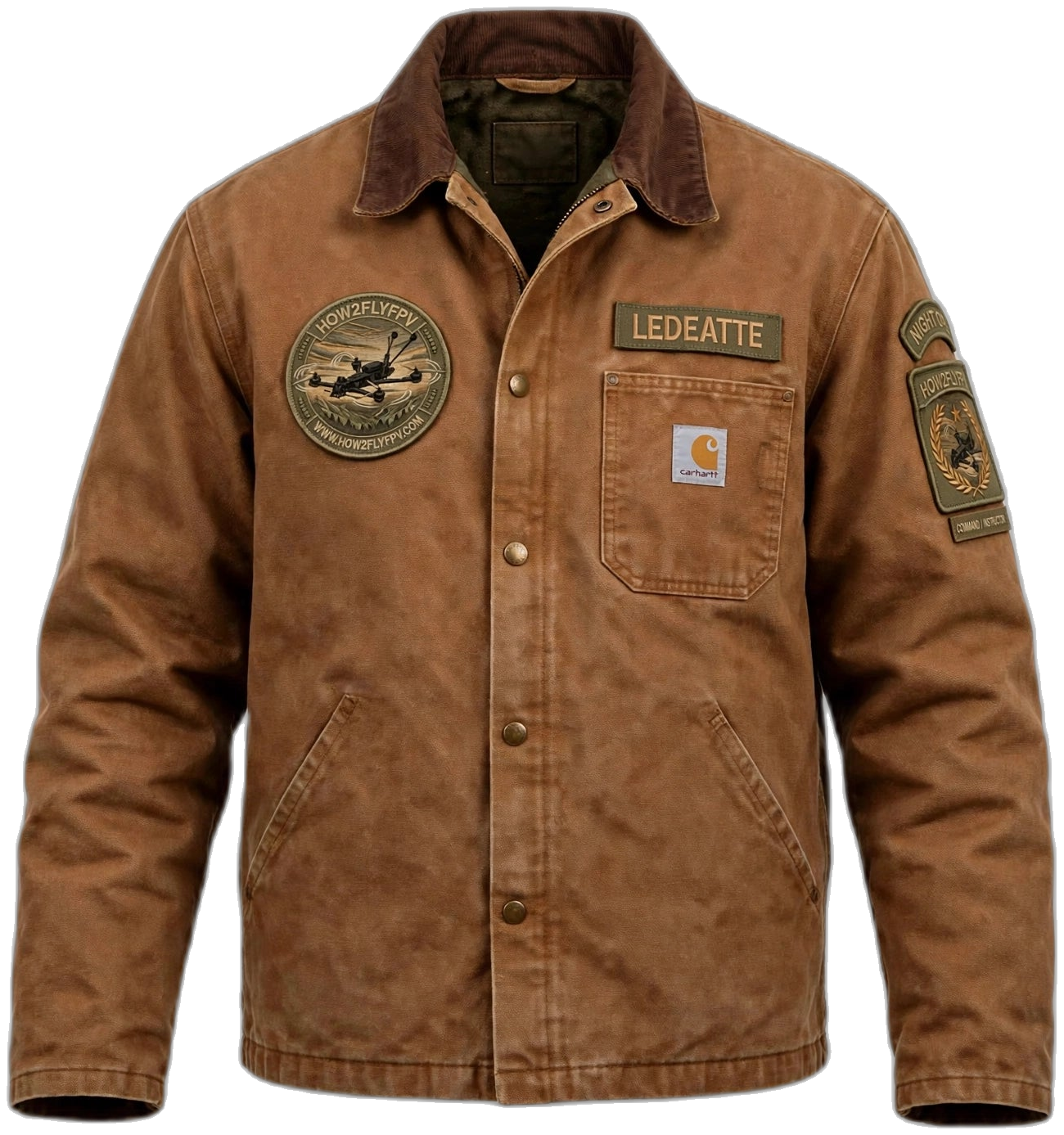
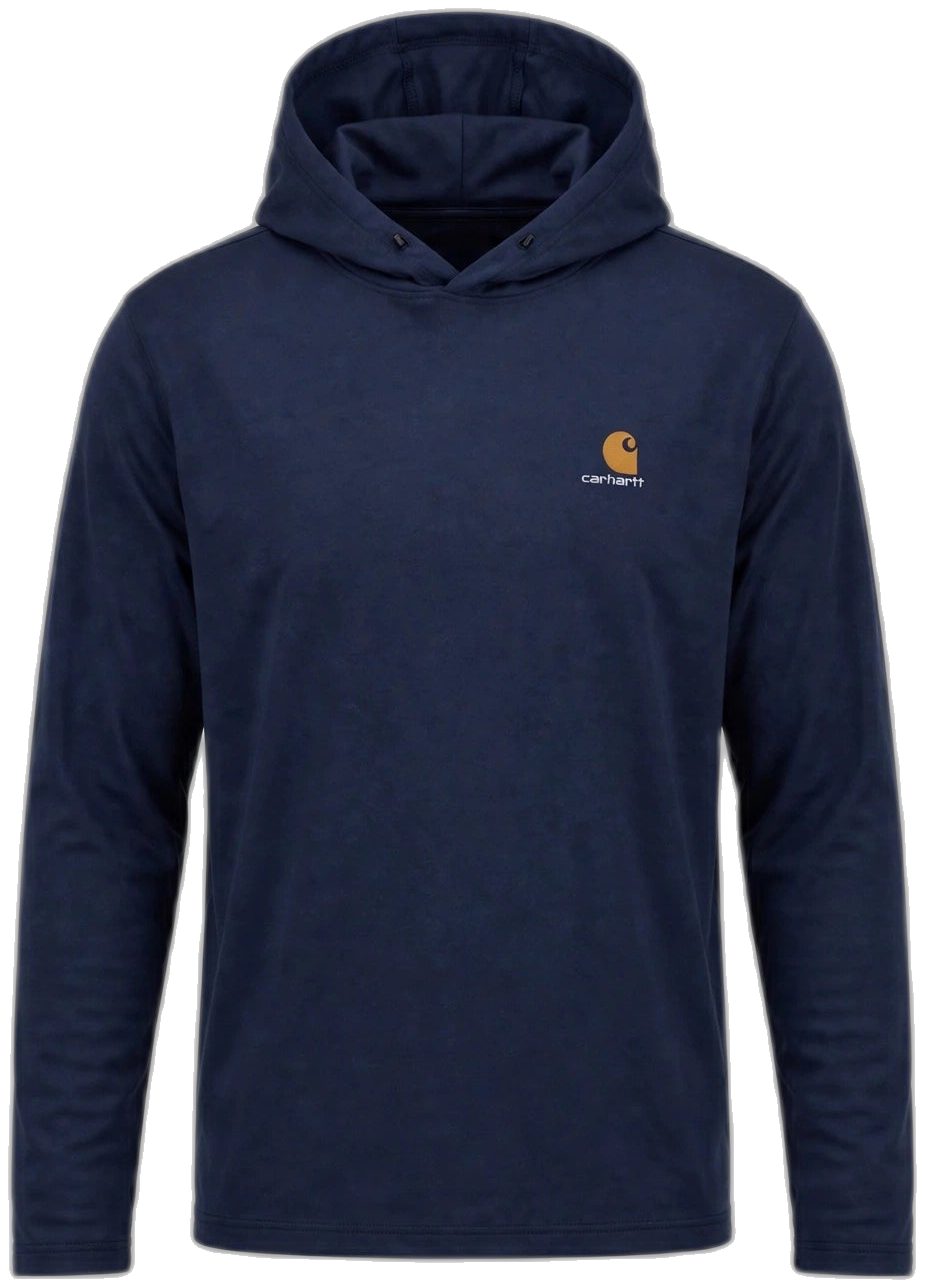
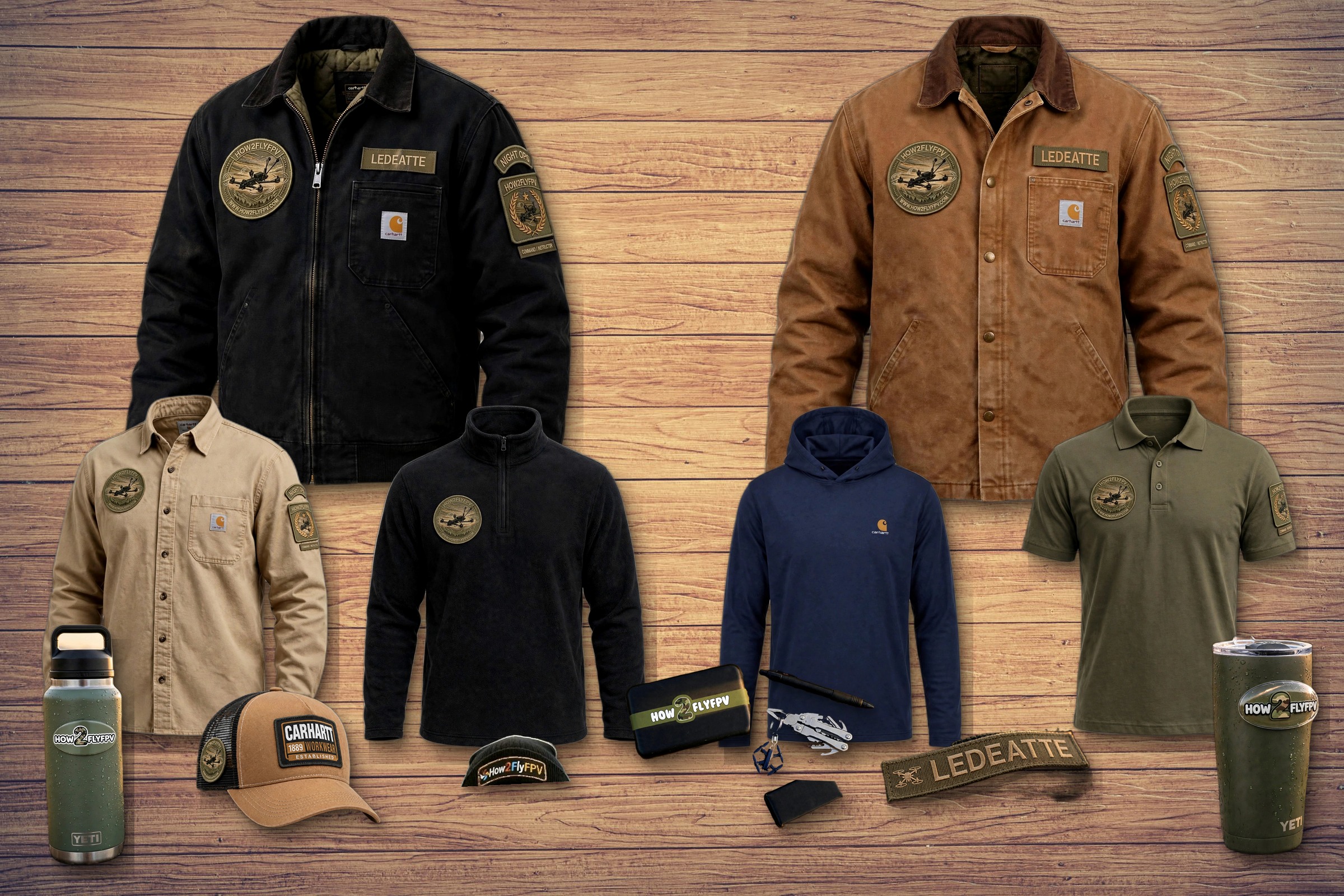
The Full Merch KitAll 13 pieces — issued for training
Detroit Jacket — Carhartt Duck Detroit
$279
Chore Coat — Carhartt Firm Duck
$249
Sun Defender Shirt — Carhartt Force
$145
Work Shirt
$135
Quarter-Zip Pullover
$129
Force Pocket Polo
$95
YETI Rambler 20 oz Tumbler
$85
YETI Rambler 26 oz Bottle
$79
Canvas Cap
$65
A18 Beanie
$49
Smalls Set
$35
Patch Set
$25
Name Tape
$12
Contents value, itemized above: $1,721.98
Materials: $2,221.98 (contents $1,721.98) · Licensing: $1,450 · Consulting: $1,000/day per person · Five-day course: $6,721.98 — materials at cost + $5,000 consulting; licensing fee and material margin dropped on the five-day course
Full price $8,671.98 (materials $2,221.98 + licensing $1,450 + five-day consulting $5,000) → Five-day deal $6,721.98SAVE $1,950.00 per student — licensing + material margin dropped, five-day course only.
Claude AI basic training included — basic Claude membership per person, with a basic introduction and training (Tips and Tricks).
“The grant is approved — but no instructor can actually run a hands-on FPV cohort.”
Community colleges, CTE and technical schools, and STEM-grant programs are standing up UAS workforce programs with real funding. This lane is instructor-for-hire and cohort hosting for workforce programs.
Grant-aligned cohort hosting at your campus or an arranged site
Instructor-for-hire days at the standard day rate
Part 107 built into the program — a cohort’s students study during the week and test at its end — your CTE / college program’s path to certificated operators, not just trained ones
The pathway your institution can publish: FAA TRUST for younger and recreational students → Part 107 at 16+ (the $175 FAA exam fee is itemised separately in every proposal, never buried) → documented fly-and-repair proficiency → the entry roles in public safety, inspection, agriculture and the drone industry. Students leave with a built and flying aircraft, logged simulator and flight proficiency, and a written next-step pathway.
What the institution receives: a cohort roster with a per-student sign-off against the documented standard, the SOP and checklist pack, a train-the-trainer day so your own instructor can run recurrent practice, and a sustainment plan — the outcomes pack your grant reporting actually needs.
How the funding actually works, stated straight. WIOA-funded seats in California run through the state ETPL: the provider registers via CalJOBS and works through the county's local ETPL coordinator, and a program is fundable only as listed — an administrative commitment that is maintained and audited, not a one-time form. Ask us for the listing status in writing for your proposal. Whether a hosted cohort needs a credentialed teacher of record is your district's HR determination — every institutional proposal asks that question in writing and records the answer. Education fleets stay cheap to crash: ready to fly whoop kits at $1,826–$2,758 per student, simulator seats at $19.99, radios from ~$60, and one shared enterprise aircraft per site for demonstration — with a substitution clause for equivalent components in every institutional quote.
HOSTED COHORT $33,500 / $52,000 / $67,000 BY CREW SIZE · INSTRUCTOR & TRAIN-THE-TRAINER DAYS $5,000 / DAY
HOSTED COHORT OR INSTRUCTOR DAYS — $5,000/DAY
Cohort Configurator — The Offer, In The Open
Build your cohort.
Pick your sector and crew size. Tier, total, and per-operator cost update instantly — no “contact us for pricing,” ever.
Your Tier
SQUAD
Total — 5-Day Fly-and-Keep Cohort
$33,500
$3,350 per operator· 10 operators · Public Safety
Part 107 included at every tier — study built into the week, crew tests together, operators leave certificated.
50% deposit required at signing — that deposit funds the equipment purchases for your cohort.
Commercial Lane — The 5 Days, Part 107 & The Fleet
See the week before you call.
The week runs on mission work — interiors, inspection lines, perimeter, overwatch — flown on the aircraft your crew flies, maintains, and keeps. Part 107 study runs through the whole week alongside the flying — it is part of the program, not homework we leave you with — and the crew sits the FAA exam together at week’s end.
Included In Every Cohort — Not An Add-On
Part 107 — the crew tests at week’s end.
Tell them plainly: if your people fly drones for work without an FAA Part 107 Remote Pilot certificate, they are flying outside the rules — and so is your organization. Every How2FlyFPV™ cohort closes that gap inside the same 5 days. No separate course to buy, no second trip, no “go study on your own and good luck.”
Daily study blocks through the week — regulations, airspace, weather, loading, and operations, taught in plain language alongside the flying
The traps covered head-on — the airspace, chart, and regulation questions that fail first-time test-takers, drilled until they’re automatic
Practice exams to a standard — nobody sits the real exam on a hope; the program standard is 85% or better, twice in a row, before test day
The crew tests together through PSI at week’s end — 60-question FAA exam, 70% to pass, TSA vetting — and leaves with temporary certificates in hand, legal to fly for work right away, plus a recurrent-training calendar (every 24 months) so they stay current
That is the selling point: one week, one price — a crew that can fly it, fix it, maintain it, and legally fly it for work.
Training aircraft — flown and kept by your crew
Three standard training platforms. Analog and ELRS throughout — aircraft your crew learns to maintain and repair on a tailgate — the tools behind the mission work above.
EMAX TINYHAWK III PLUS ANALOGREMOTE — RADIOMASTER BOXER (ELRS)
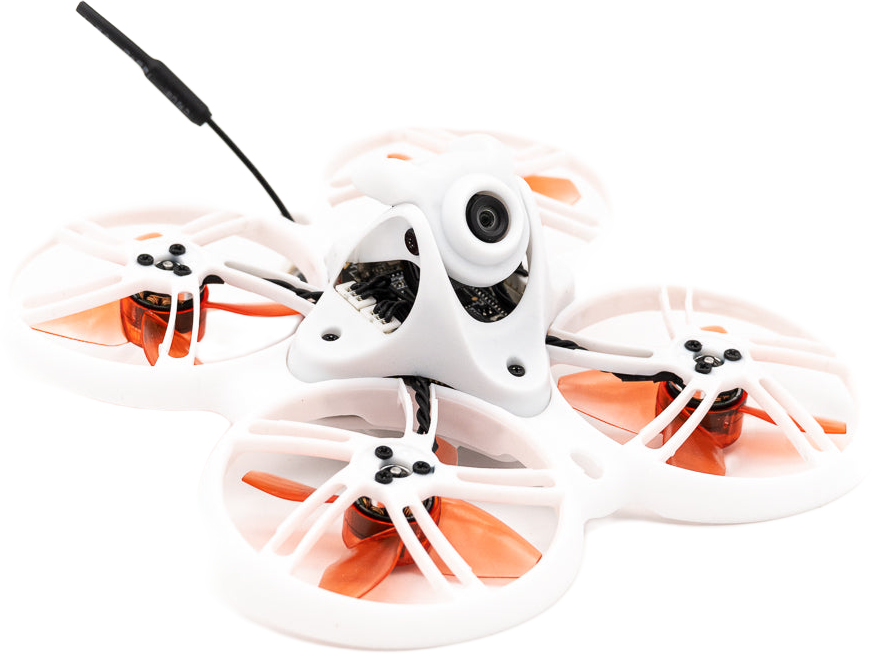
Indoor Trainer — 76mm · Ducted · 1S
EMAX Tinyhawk III Plus Analog
$170.99 / AIRCRAFT
The locked whoop: prop-guarded and forgiving — interior basics, tight-line control, and safe reps around people and property.
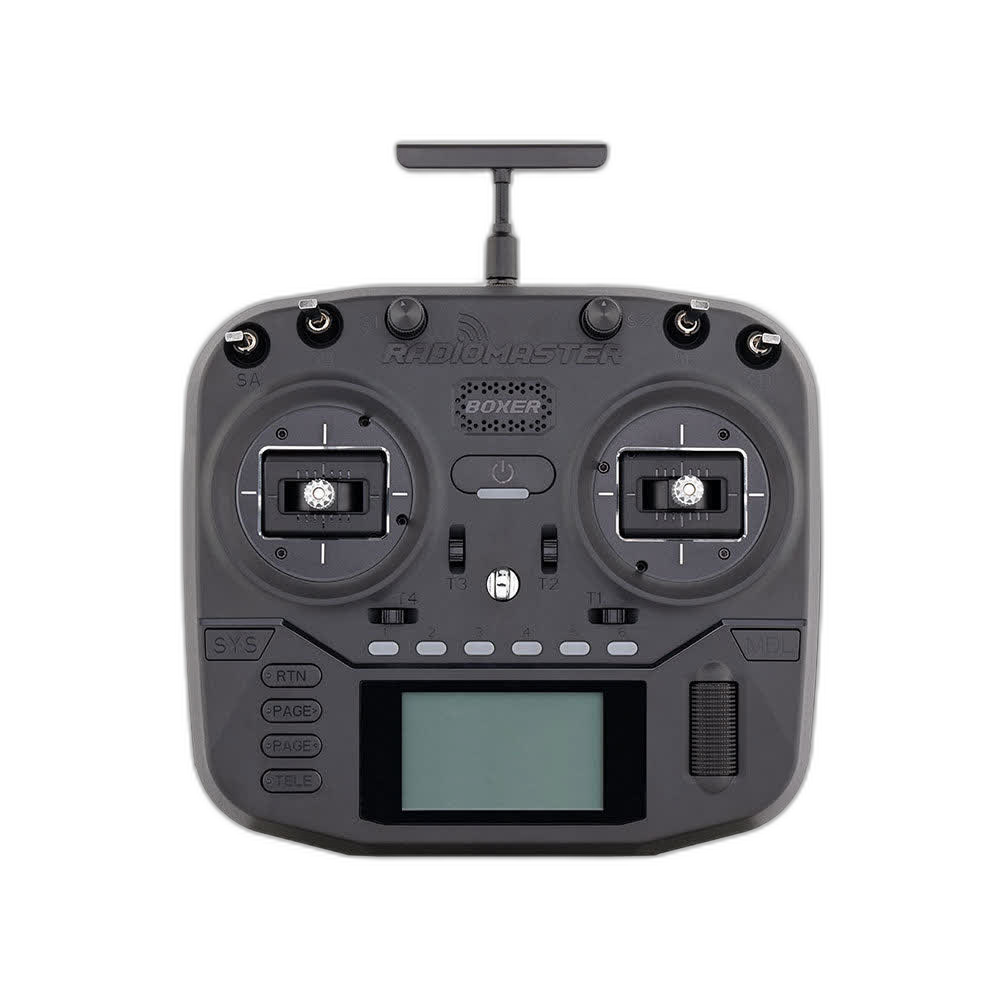
ControllerRadioMaster Boxer (ELRS)
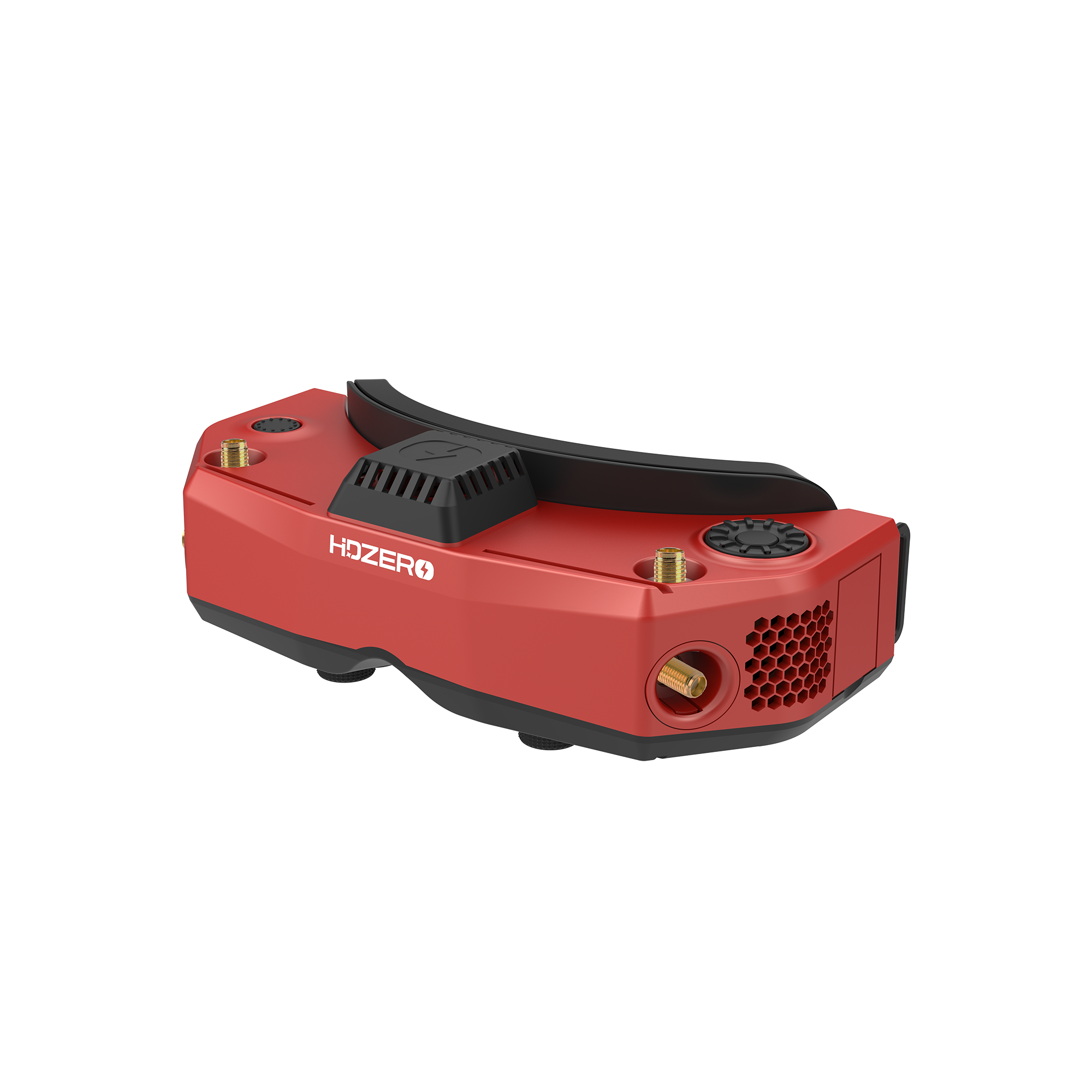
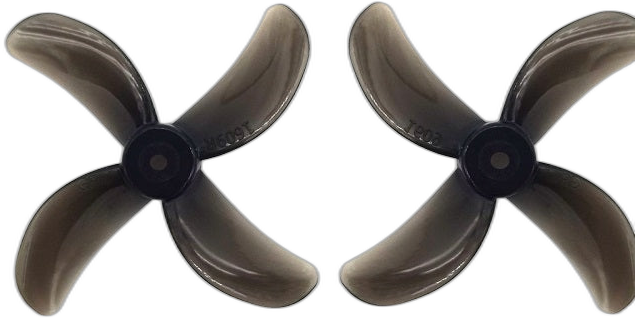
SetupAnalog video · HDZero Goggle 2 (built-in analog receiver) · Gemfan 1609-4 props in ducts
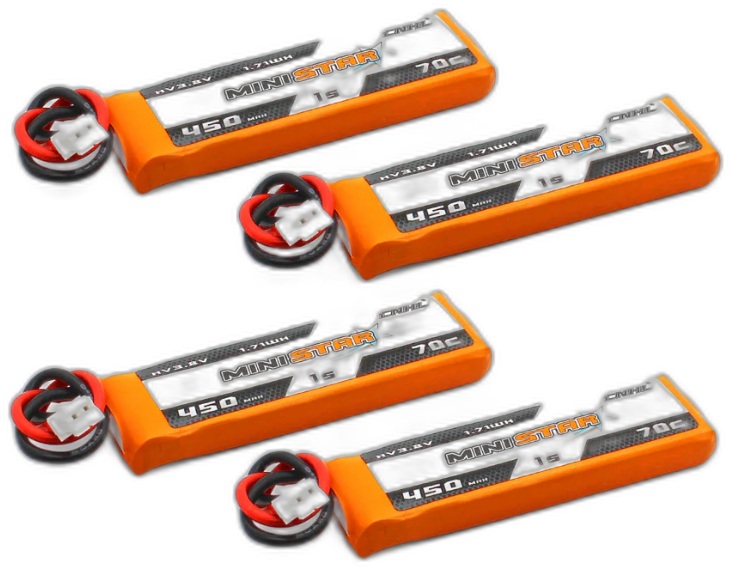
PowerCNHL MiniStar HV 450 1S
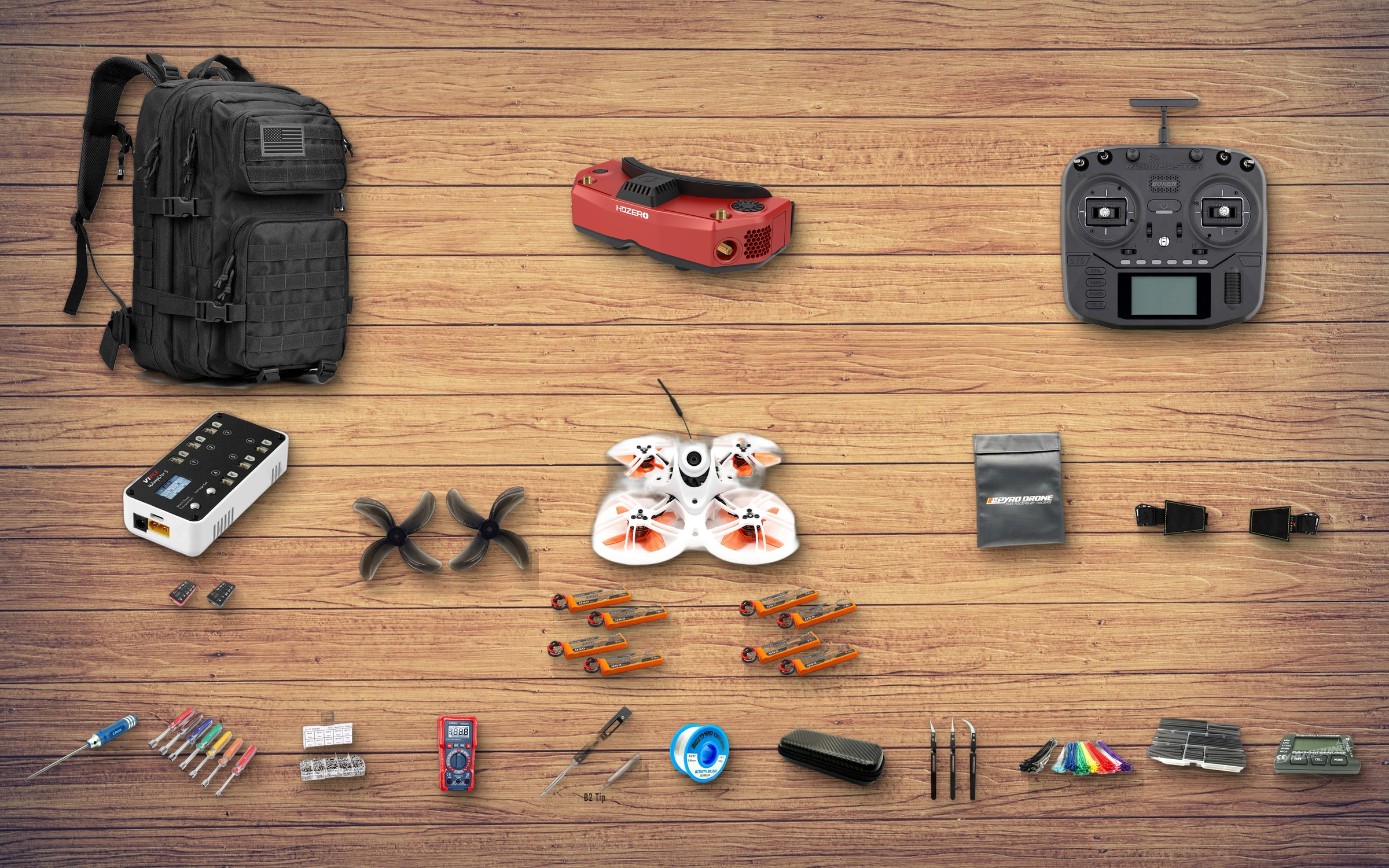
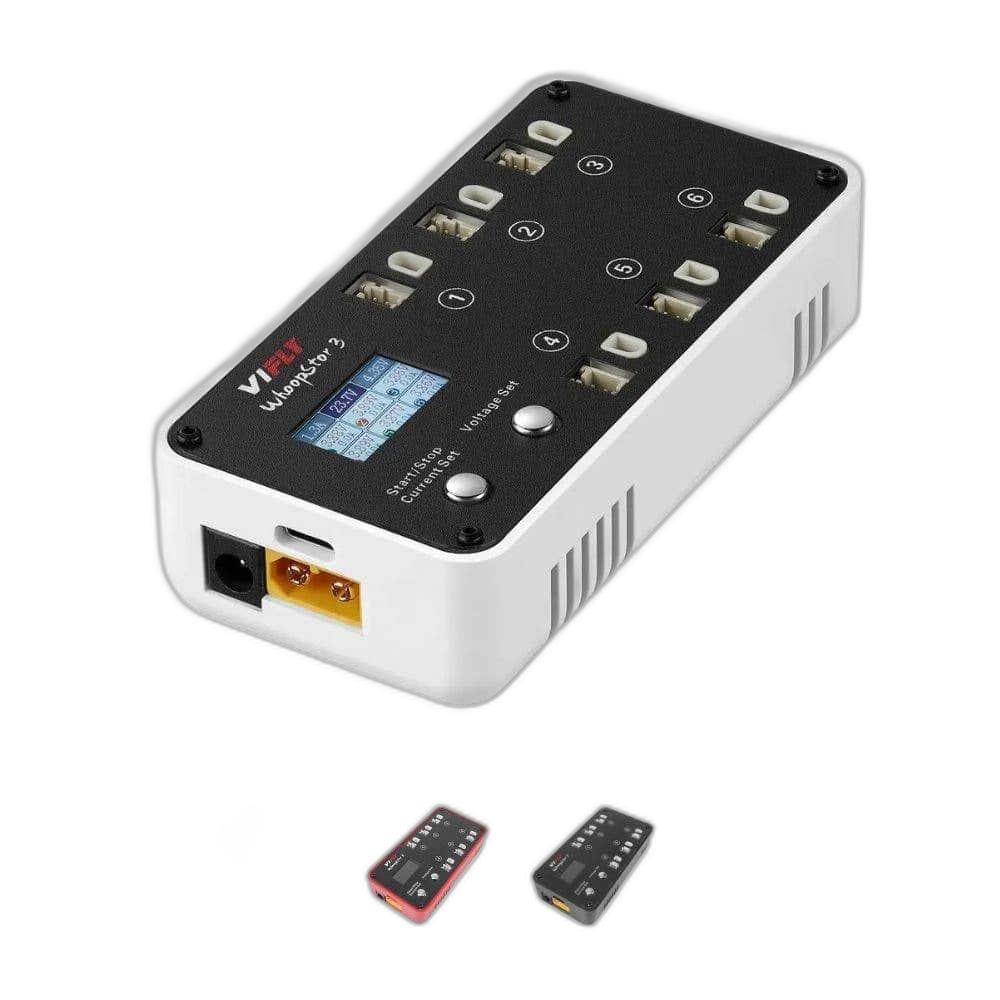
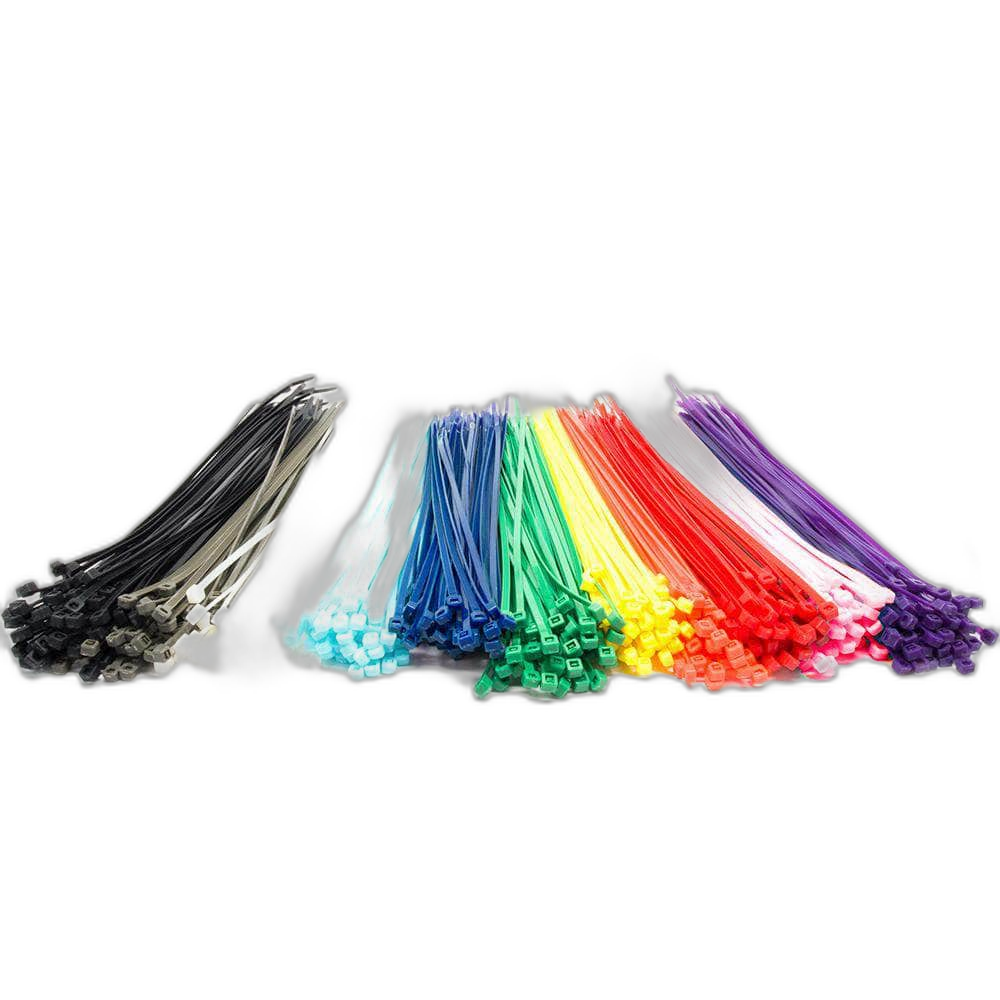
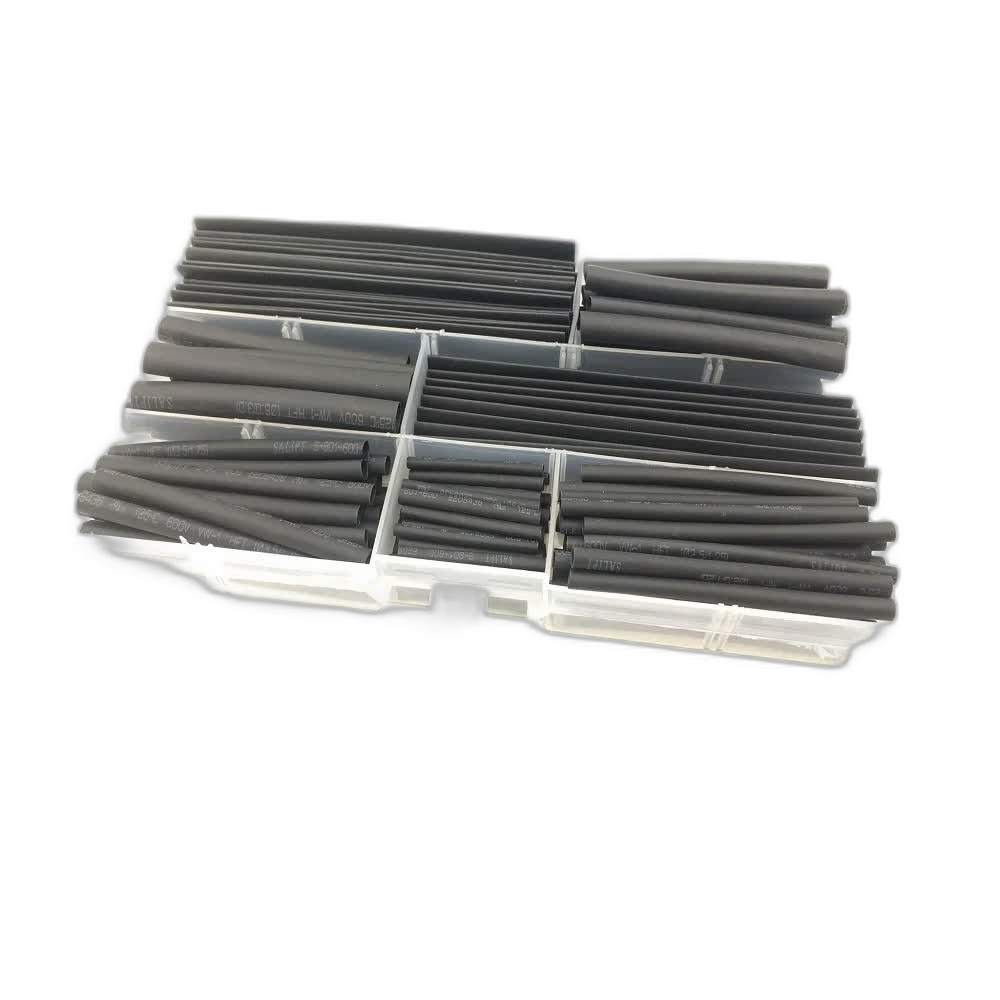
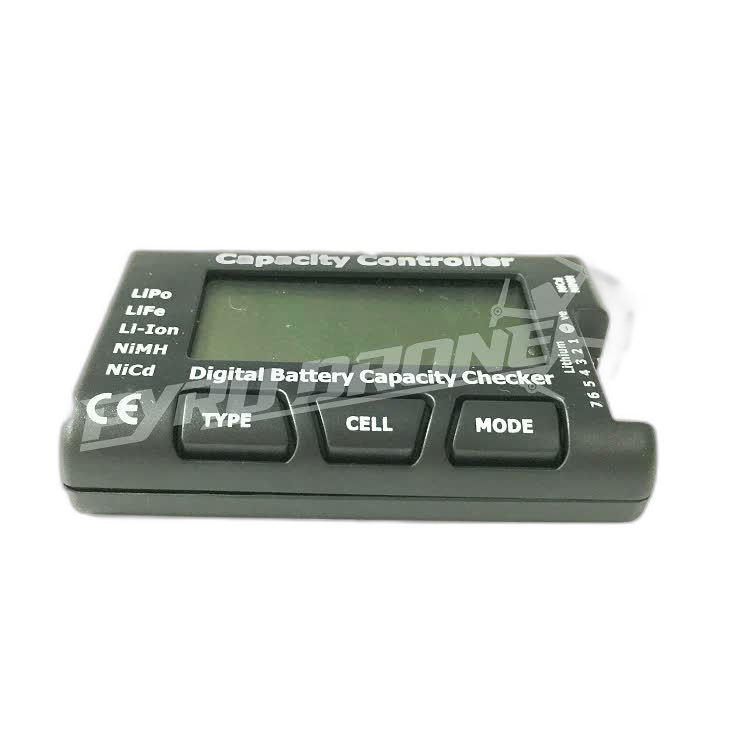
Full KitBoxer radio · HDZero Goggle 2 · MiniStar HV 450 1S packs · Gemfan 1609-4 props · WhoopStor V3 charger · REEBOW 40L backpack · LiPo safe pouch · hex drivers (M2–M5) · 8/10mm nut drivers · M3 screw kit · digital multimeter · TS101 soldering kit · tweezers · zip ties · shrink tube · LiPo battery checker
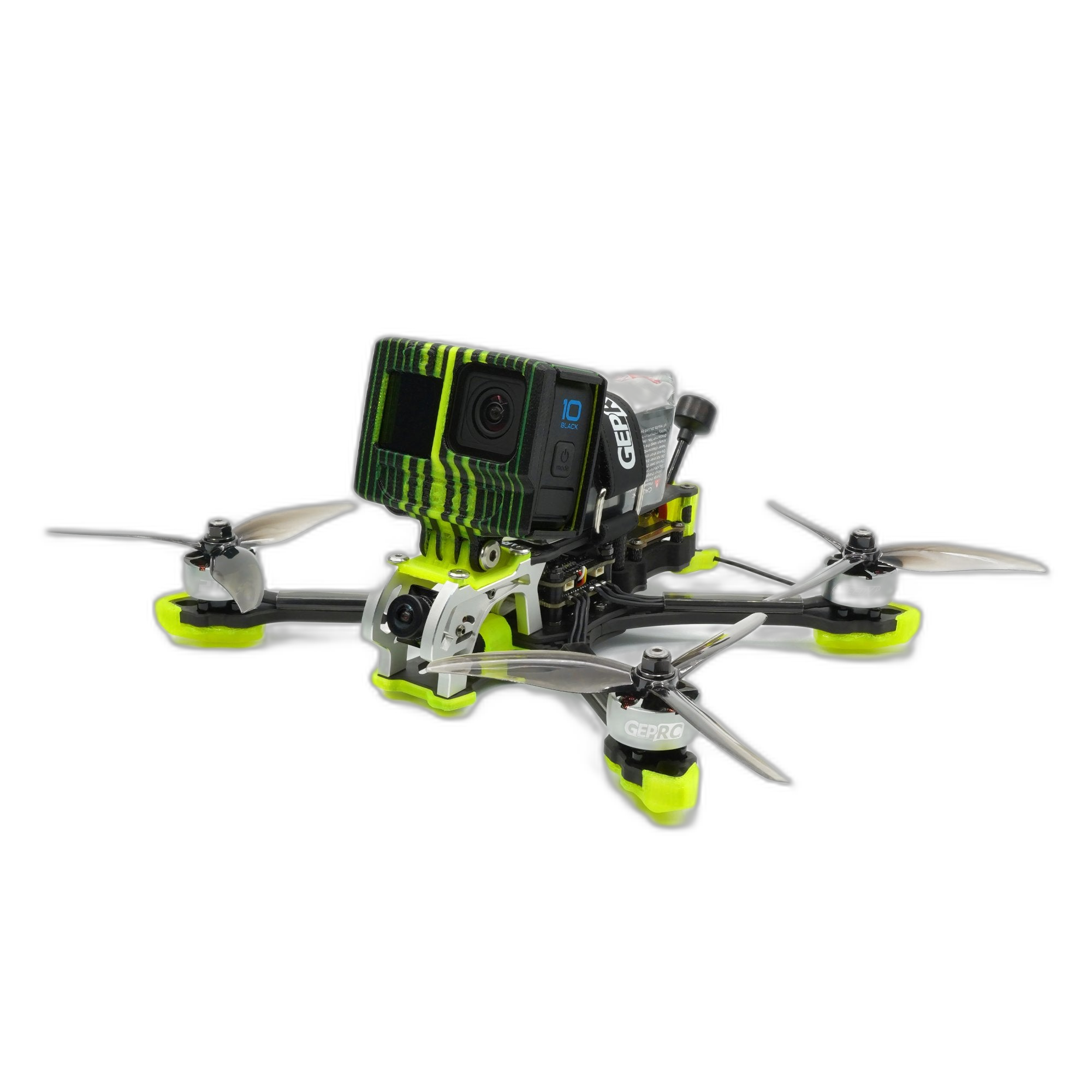
Analog bind-and-fly 5″ — a real flight-controller / ESC stack your crew tunes, maintains, and repairs — the outdoor standard.
ControllerRadioMaster Boxer (ELRS)
SetupHDZero Goggle 2 (built-in analog receiver) · Gemfan Freestyle4S props · 6S power
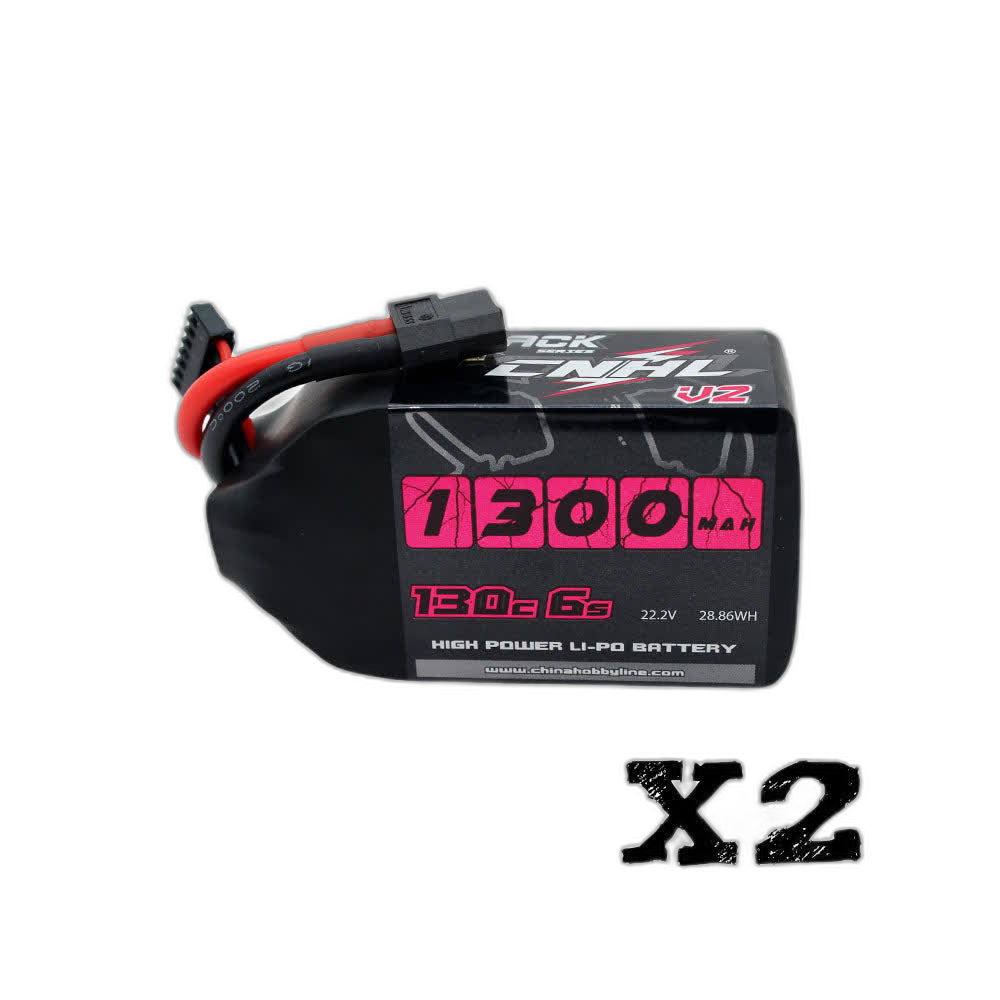
PowerCNHL Black Series V2 1300 6S
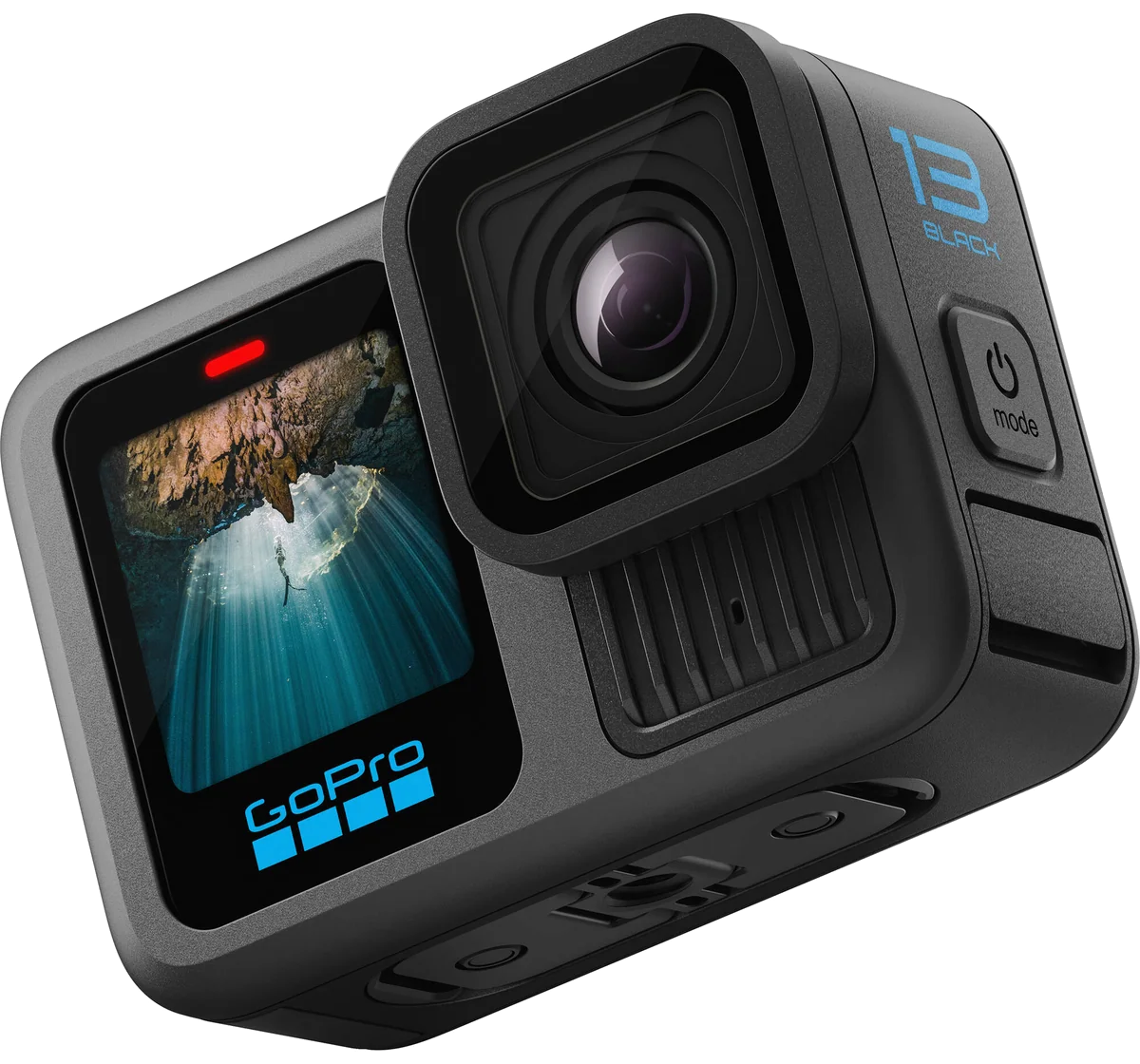
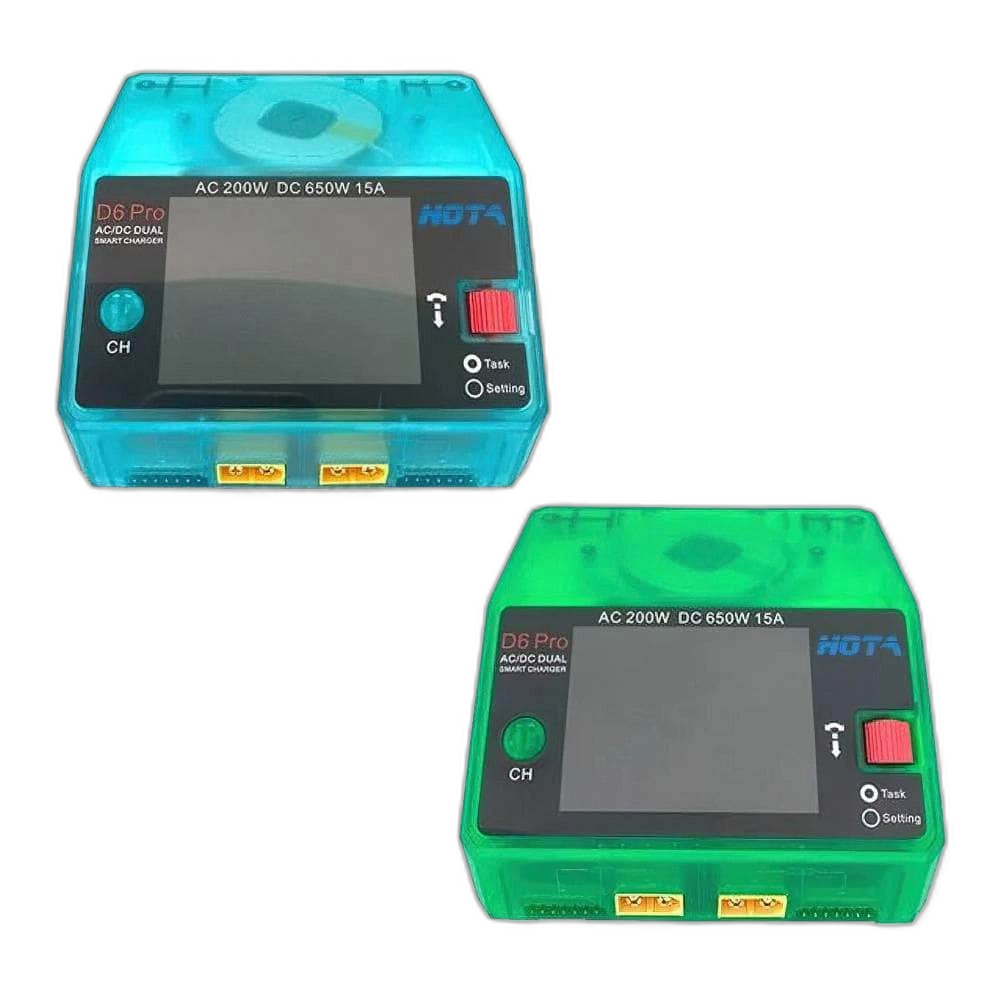
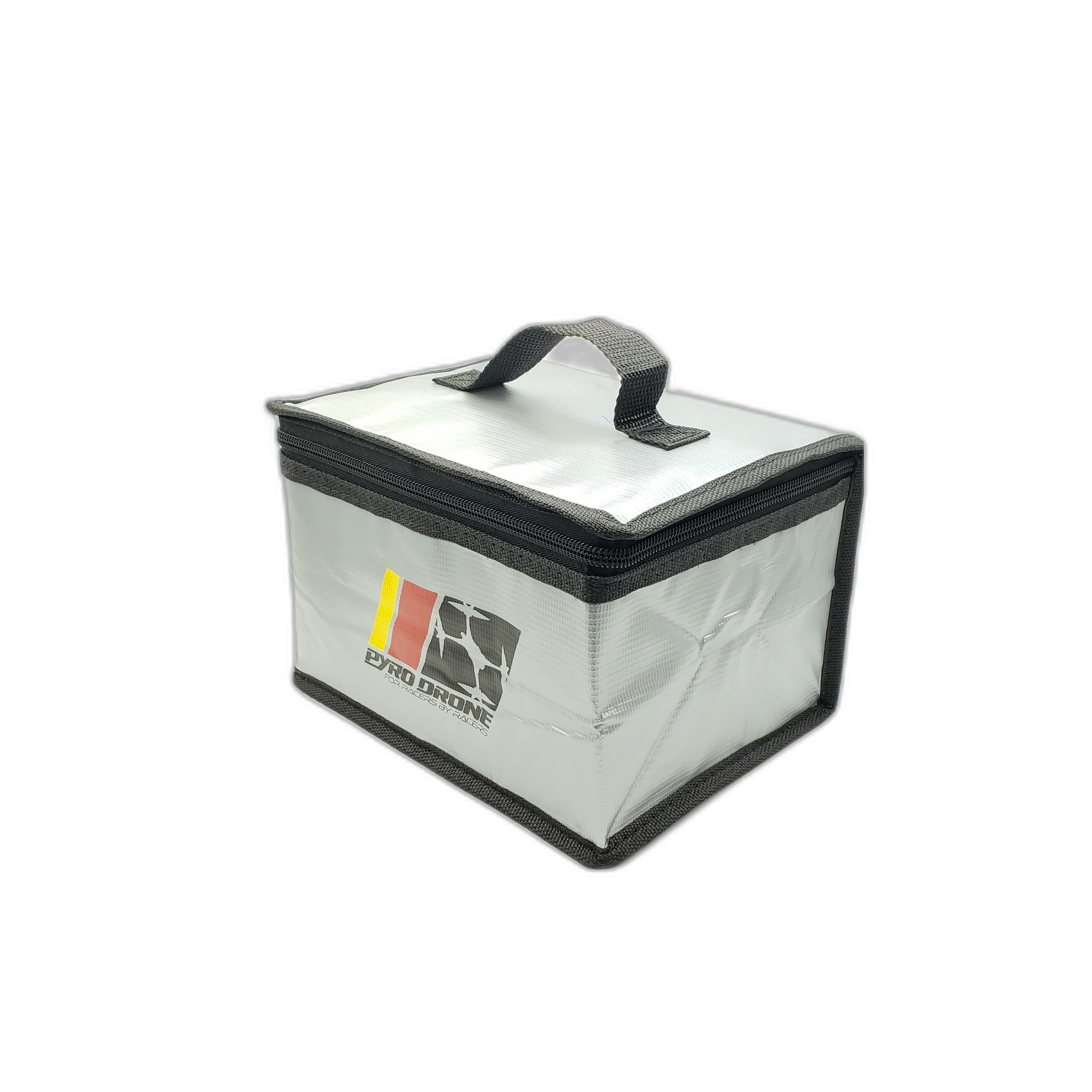
Full KitBoxer radio · HDZero Goggle 2 · GoPro Hero 13 Black · Black Series V2 1300 6S packs · Gemfan Freestyle4S props · HOTA D6 Pro charger · REEBOW 40L backpack · LiPo safe bag · hex drivers (M2–M5) · 8/10mm nut drivers · M3 screw kit · digital multimeter · TS101 soldering kit · tweezers · zip ties · shrink tube · LiPo battery checker
FLOWN + KEPT BY YOUR CREW
1 / 3
Your fleet breaks. We keep your crew current.
Sustainment / Repair Clinic Day — $5,000/day. Recurrent proficiency checks, crash-repair clinics, tuning and spares planning, on your site. Fleets don't stay qualified on their own.
Yes — that is the entire model. Fly-and-keep: every operator trains on a factory aircraft during the cohort and keeps it. Your organization owns a fleet and a crew that can repair it.
Where does it run?
Your site, anywhere by arrangement — or hosted by us. Travel and per diem are quoted in the written proposal, never buried.
Zero experience?
Designed for it. The progression is simulator-first with a verified hover standard before live flight, then acro fundamentals on the aircraft each operator built. Most crew members arrive having never touched an FPV radio.
Is Part 107 really included — on every tier?
Yes — Squad, Company, and Battalion alike. Part 107 is the FAA Remote Pilot certificate required to fly drones for work. Study is built into the 5 days, practice exams run to the program standard (85% or better, twice in a row), and the crew sits the 60-question FAA exam together at week’s end. It is in the price you see — not an add-on, not an upsell.
What do you need from us?
A scoping call and a headcount. From there: a written proposal with a flat price, then invoice or purchase order. No hourly meters, no surprise line items.
PSI® is a registered trademark of PSI Services LLC. PSI administers FAA knowledge examinations under contract with the Federal Aviation Administration. How2FlyFPV students register and test through PSI's public testing channel, as any applicant does. How2FlyFPV is not a PSI testing center and is not affiliated with, sponsored by, or endorsed by PSI.
UAS Flight Test Operator · FPV Pilot · FAA Part 107 Remote Pilot
LeDeatte does not teach from theory. He teaches from the flight line. At Scout AI he operated Group 1–2 systems in live test programs. He has also built and flown FPV platforms hands-on. 2,000+ flight hours. 200+ FPV aircraft built from scratch. Fully trained in Doodle Labs configuration and completely knowledgeable in Silvus Technologies configuration. When your aircraft behaves abnormally, he has already seen it, crashed it, and repaired it.
He has also received professional OEM instructor training — the standard manufacturers use to bring entire teams operational on new platforms — and he delivers training to that same standard: structured, safety-enforced, flight-first. No slide decks as a substitute for stick time.
2,000+Flight hours logged
200+FPV aircraft built
PART 107FAA Remote Pilot
SCOUT AI · FLIGHT TESTFlight-test experience
“Most schools teach you to fly. I qualify you to fly it, repair it, and operate it under pressure — that is the operator who holds up in the field.”— Chase LeDeatte, Founder & Lead Instructor, www.how2flyfpv.com
Memorize them. You will be held to them every day.
01
Simulator first
No aircraft outdoors until simulator hours are logged and verified. Simulator time counts as flight time here.
02
Acro from day one
Angle mode is a temporary scaffold. It is removed in week one. Your reflexes are rewired for manual flight.
03
Fly it. Fix it. Keep it.
Every operator flies and maintains the aircraft they keep. No loaners. No shortcuts. No exceptions.
04
Failsafe before flight
If failsafe does not drop the aircraft within 1 second, the aircraft does not fly. Period.
05
Crashes are curriculum
Failure is data. Every crash is debriefed, repaired, and reflown. That is where competence is built.
The FPV Pathway — The Full Picture
Simulator → whoop → 3″ cinewhoop → 5″.
The progression is the industry consensus, flown on the radio you will actually fly: simulator first, acro from the first hour; a ducted 1S tinywhoop indoors; the ducted 3″ cinewhoop for indoor and real-estate fly-throughs; and the 5″ outdoors for full acro, power management and field repair — aircraft capability and judgement training inside visual line of sight, never sold as beyond-visual-line-of-sight permission.
What the course price actually includes: the aircraft you fly and keep, radio and goggles in the itemised kit, simulator guidance, spares consumed in training, a named instructor at a maximum 6:1 ratio, proficiency gates you must pass — not attendance — and a written sign-off standard. Stated plainly: no government FPV licence exists, and anyone selling one is misdescribing the product. Recreational flying runs on FAA TRUST; the moment FPV flying is for work — paid fly-throughs included — Part 107 is the law, and this course trains that pathway the whole way.
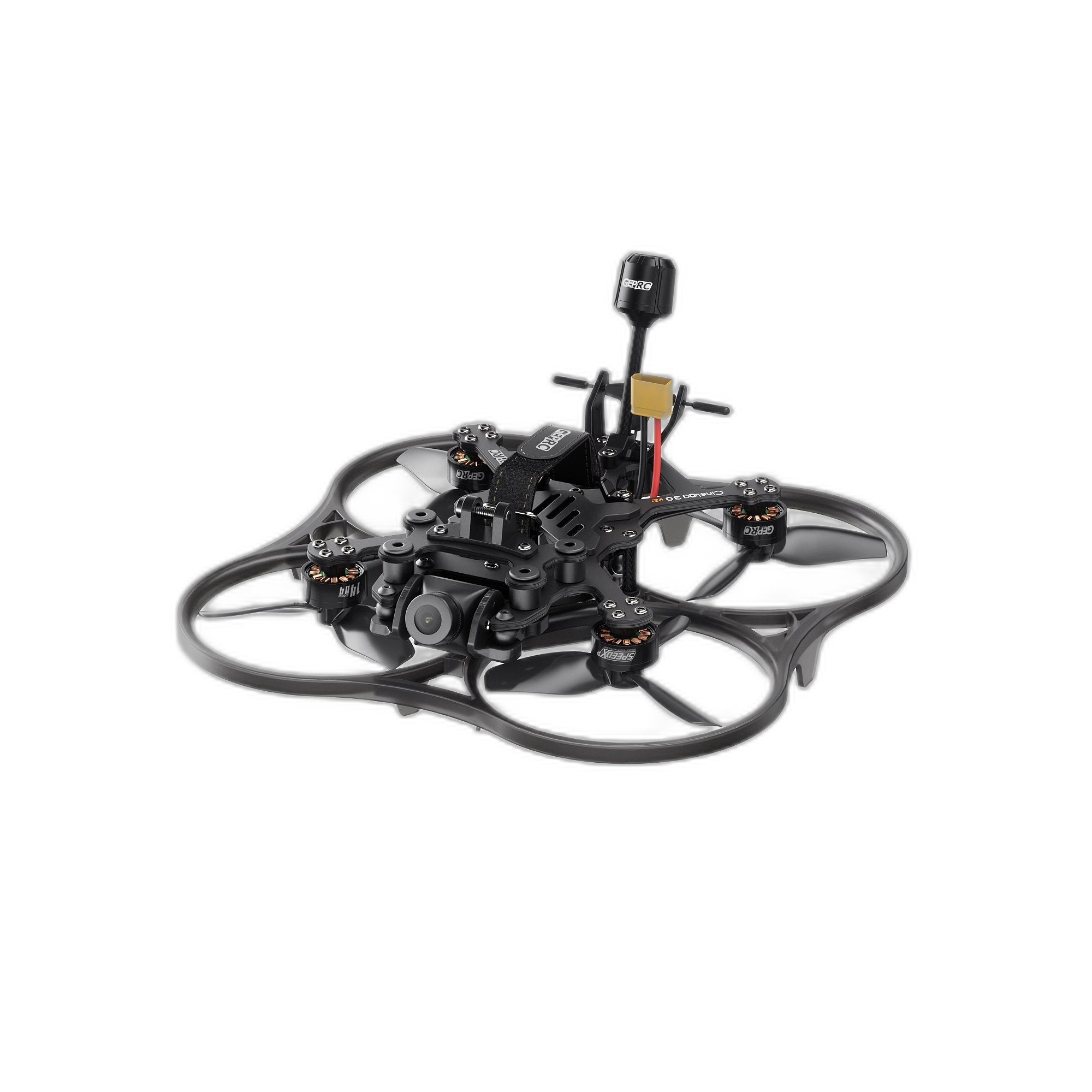
The gear, at current US prices: VelociDrone simulator · RadioMaster Boxer (ELRS) $129.99 — the one radio every seat flies · your fly-and-keep kit — the Tinyhawk III Plus Analog whoop, the GEPRC CineLog30 V2 Analog 3″ cinewhoop, and the GEPRC MARK5 Analog 5″, itemised on the platform cards above. One supply truth: FPV components are overwhelmingly foreign-produced and US retailer stock runs in and out — kits are quoted with a substitution clause for equivalent parts and a stock check at booking, never a promise of a specific frame months ahead.
The price, in context: private FPV coaching in this market runs $150/hr and taster experiences run $79–$149 — neither is training. The five-day course is priced flat — $5,000 consulting per student with materials at cost, licensing and margin dropped — with a 6:1 maximum ratio, an aircraft you keep and a documented sign-off, against the $150/hr private rate.
Select your platform on day one — tap a card for your total cost. Every kit is a ready to fly kit: all in one, everything you need. Most operators start Tinywhoop and advance to 5″.
Materials (kit): $1,826 · Licensing: $1,450 · Consulting: $1,000/day per person · Five-day course: $6,325.76 — materials at cost + $5,000 consulting; licensing fee and material margin dropped on the five-day course
Materials (kit): $2,758 · Licensing: $1,450 · Consulting: $1,000/day per person · Five-day course: $7,257.44 — materials at cost + $5,000 consulting; licensing fee and material margin dropped on the five-day course
Claude AI basic training included — basic Claude membership per person, with a basic introduction and training (Tips and Tricks).
Two tiers at the same price — Deluxe: the full kit + all merch included free · Basic: the full kit, no merch. You keep your equipment either way. Deluxe adds induction into the Deluxe alumni circle — our graduate network, where alumni connect and share job postings, links, and plugs. The certificate gets you qualified. The circle gets you connected. Deluxe induction: the alumni circle. Graduate, and the circle opens — alumni post jobs, share plugs, and open doors for each other. Your five days end; your network doesn't.
Secret Society of UAV Jobs — the Deluxe alumni circle. Private group · on Facebook.
A separate, special course — only CineWhoop students fly cinewhoops. Deluxe bundle only: one price, the full bundle included. GoPro programming, color grading, integration, and stabilized flying for real estate.
REEBOW GEAR 40L Tactical Backpack
$41.99
GEPRC CineLog30 V2 Analog
$335.00
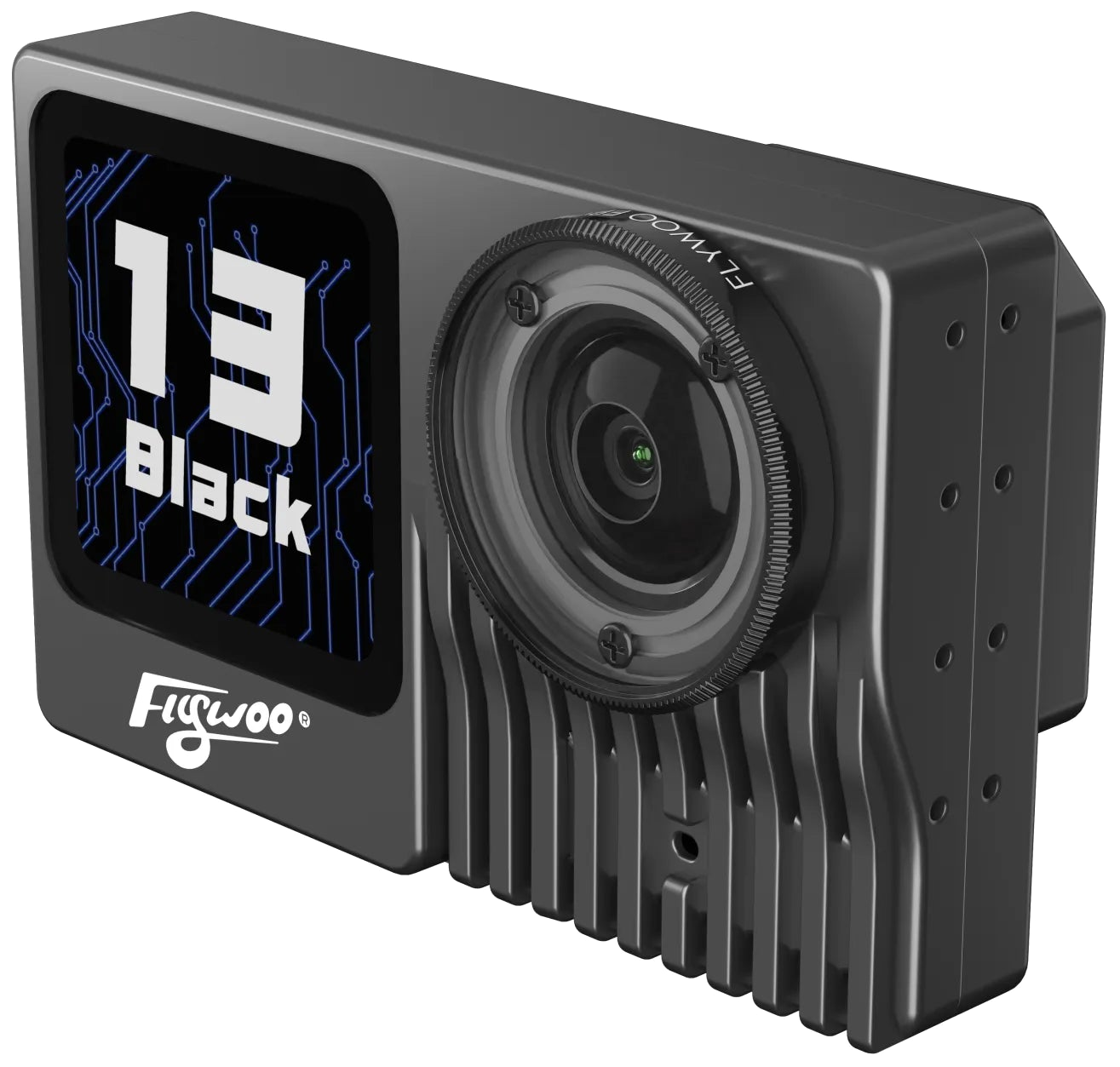
Flywoo Naked GoPro GP13 Pro V2.1
$589.99
HDZero Goggle 2
$699.99
RadioMaster Boxer
$129.99
×2
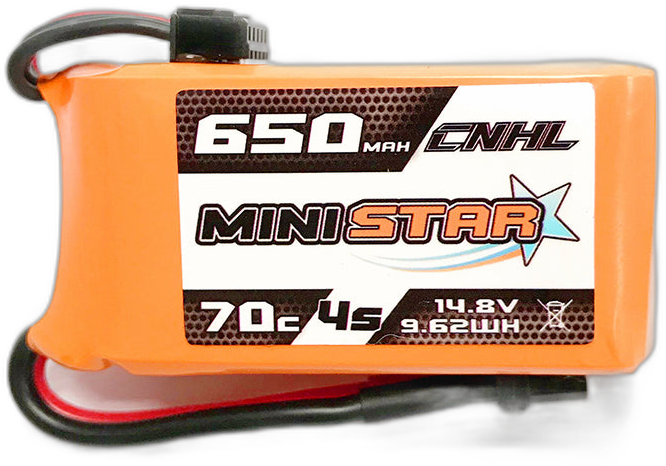
CNHL MiniStar 650 4S
$29.98 · pair
HOTA D6 Pro
$151.99
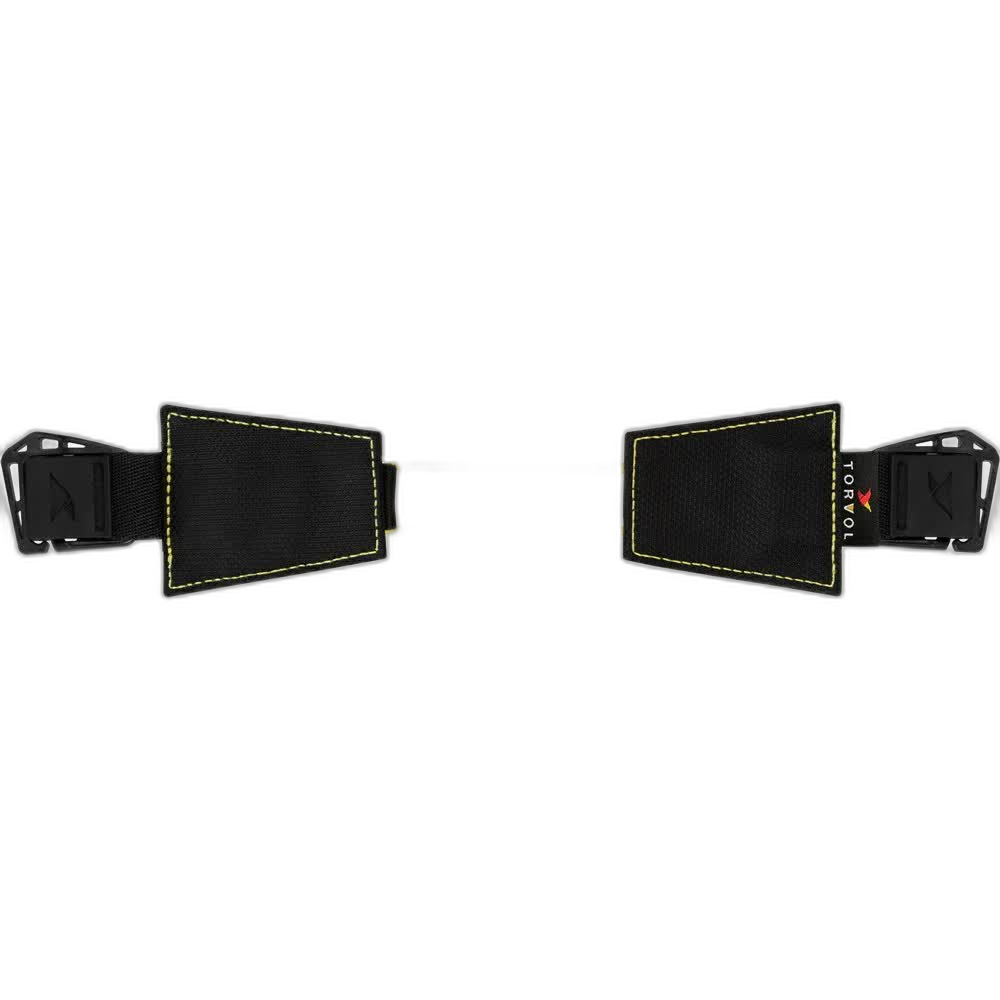
Torvol Quad Strap
$12.99
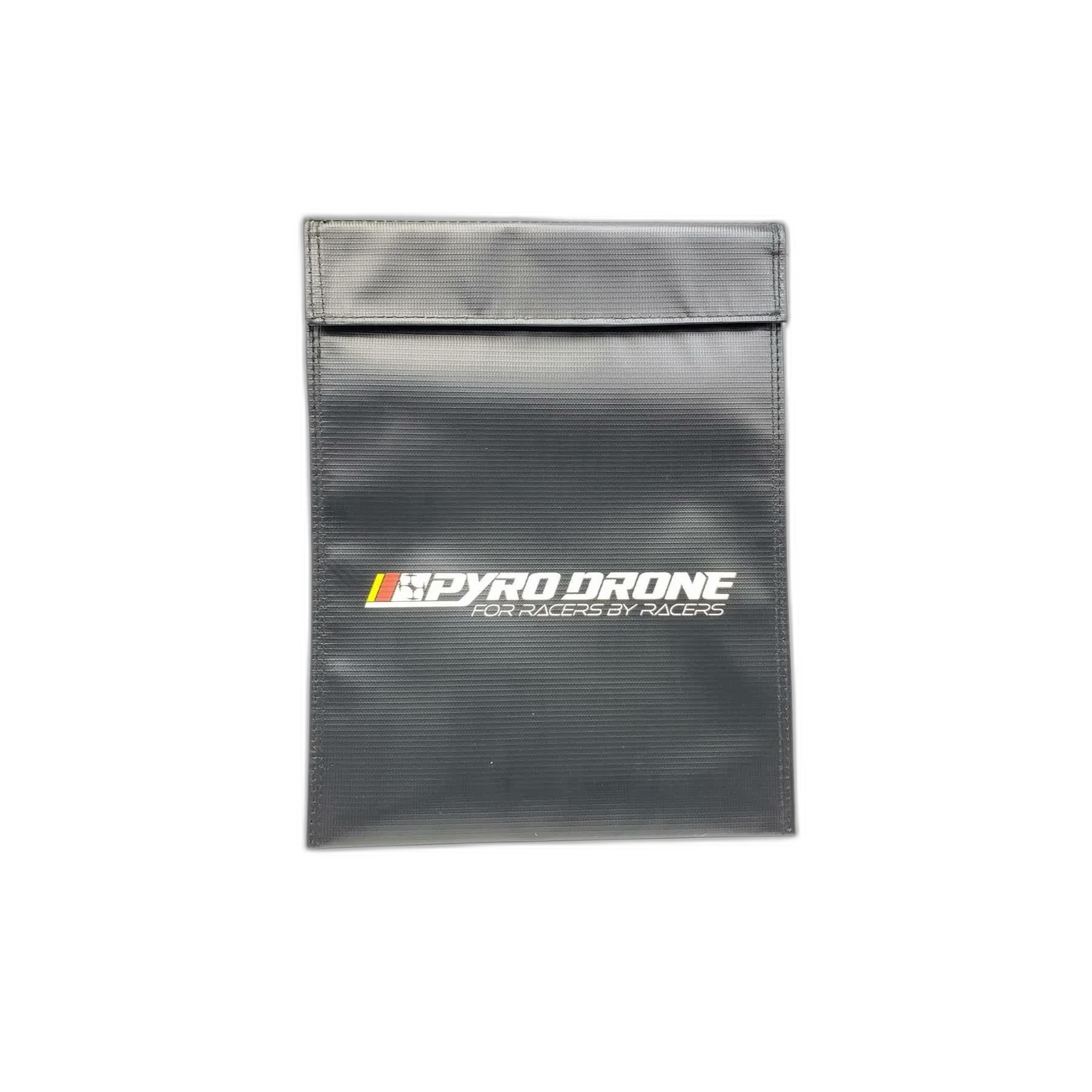
LiPo Safe Bag
$11.99
The Tool RollIncluded in the bag
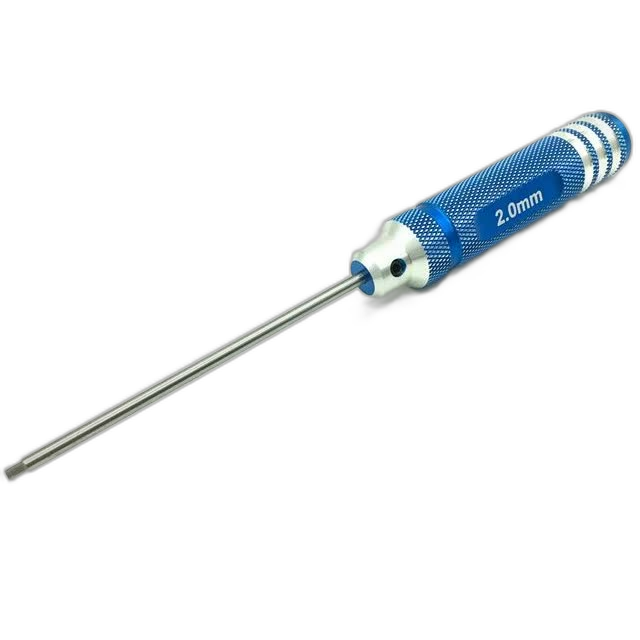
Hex Drivers M2 / M2.5 / M3 / M5
$15.96
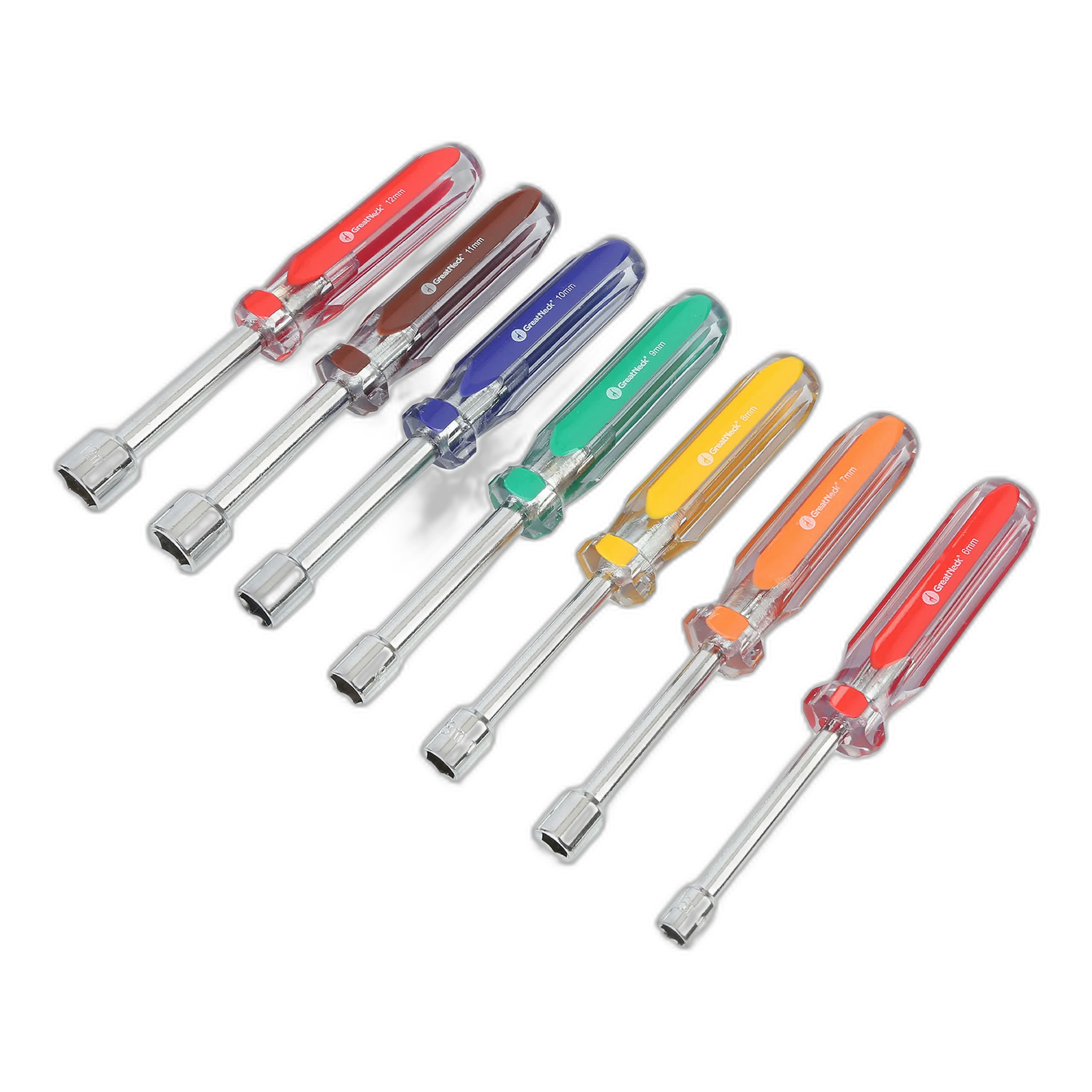
Nut Driver Set — 7 Piece
$27.99
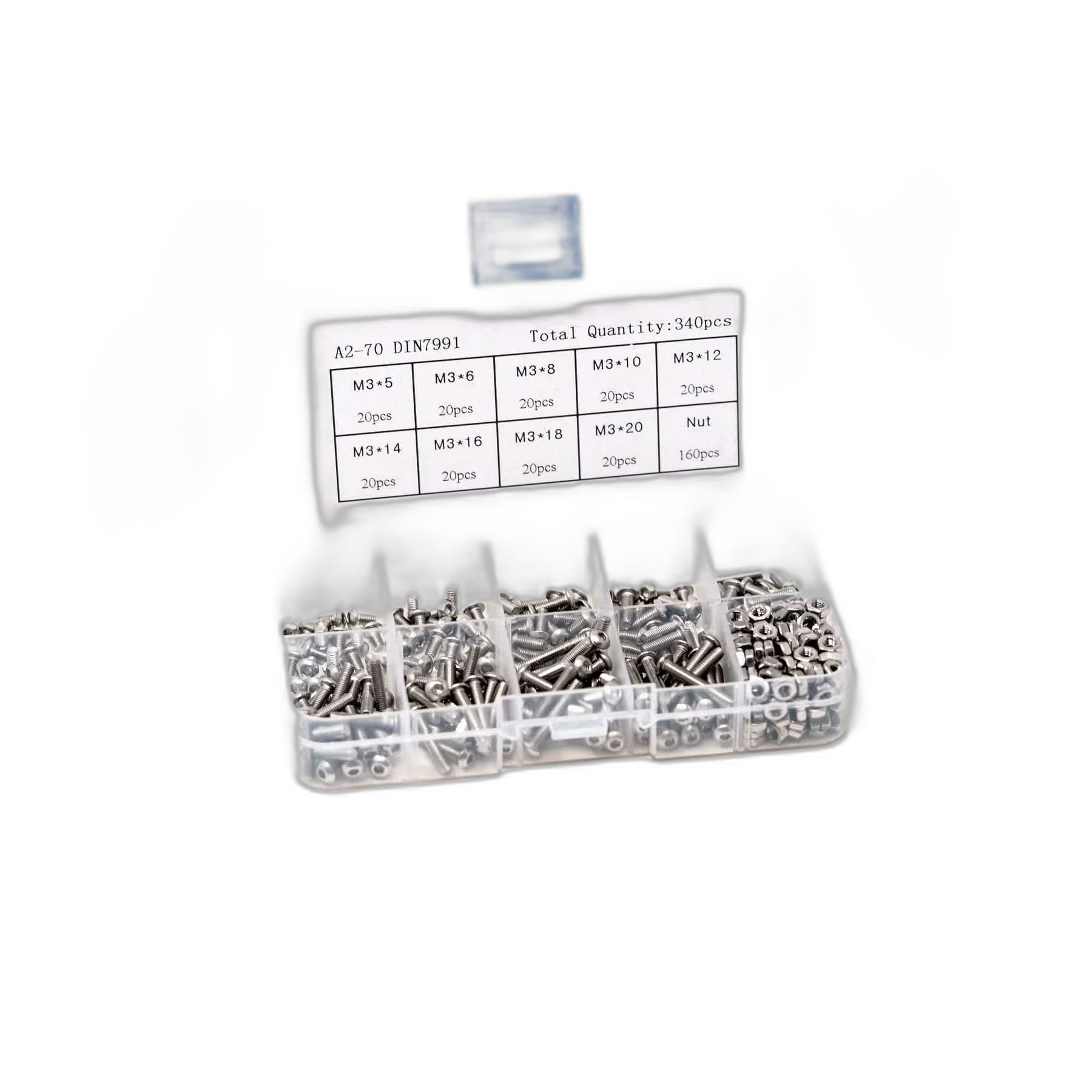
M3 Bolt Kit — 340 Piece
$12.99
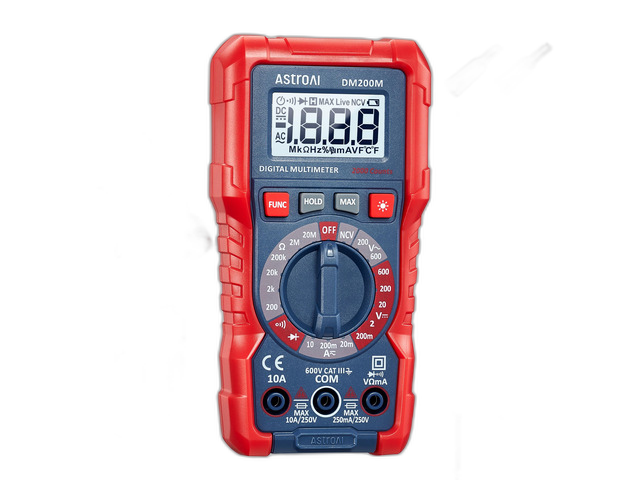
AstroAI DM200M Multimeter
$9.99
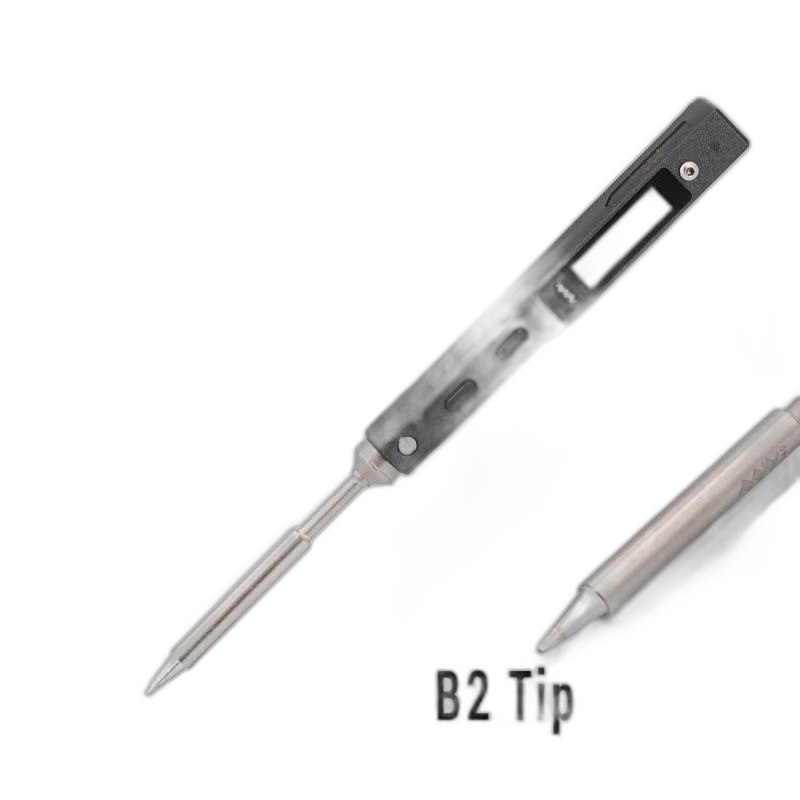
MINIWARE TS101 Soldering Iron
$75.99
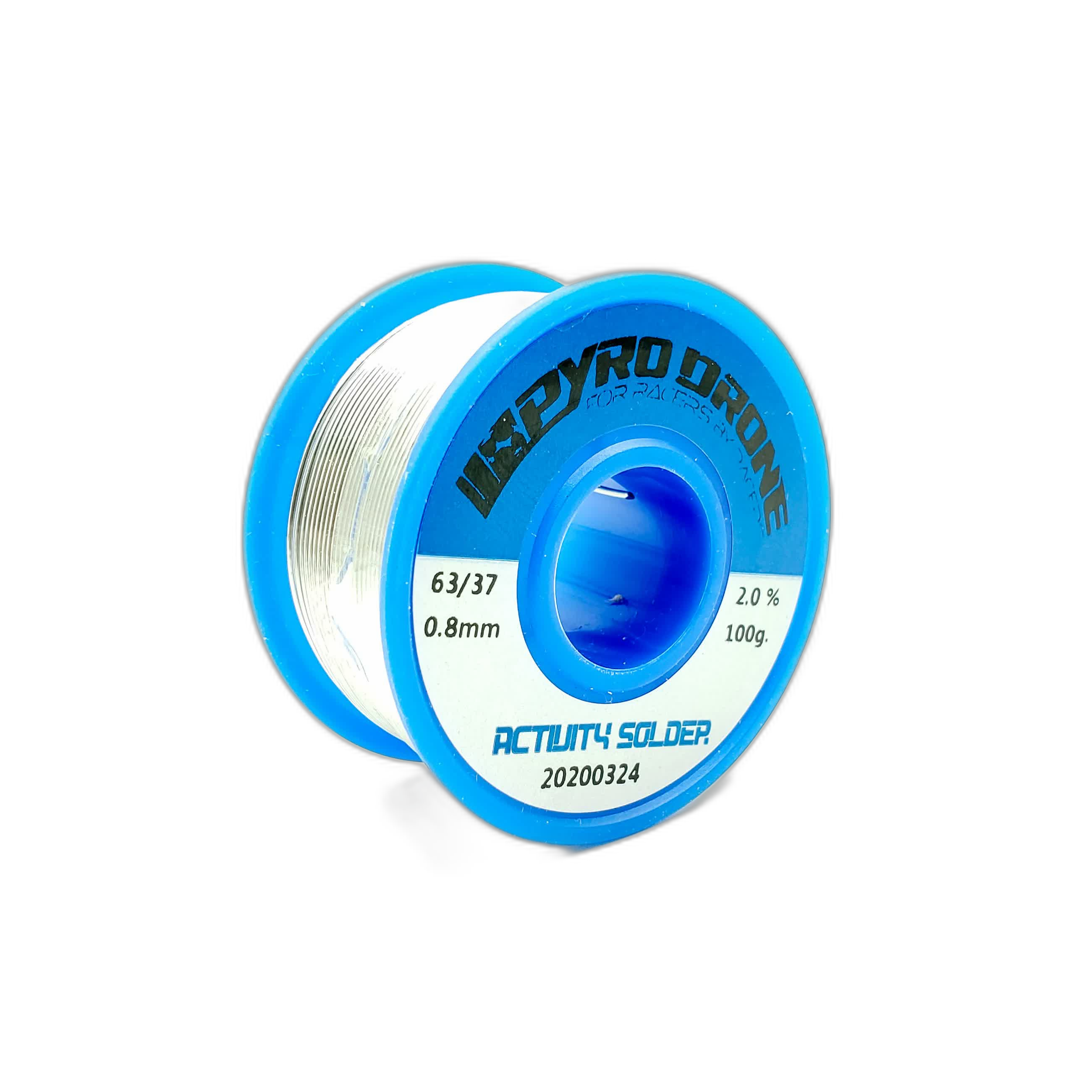
63/37 Solder Spool — 100 g
$10.99
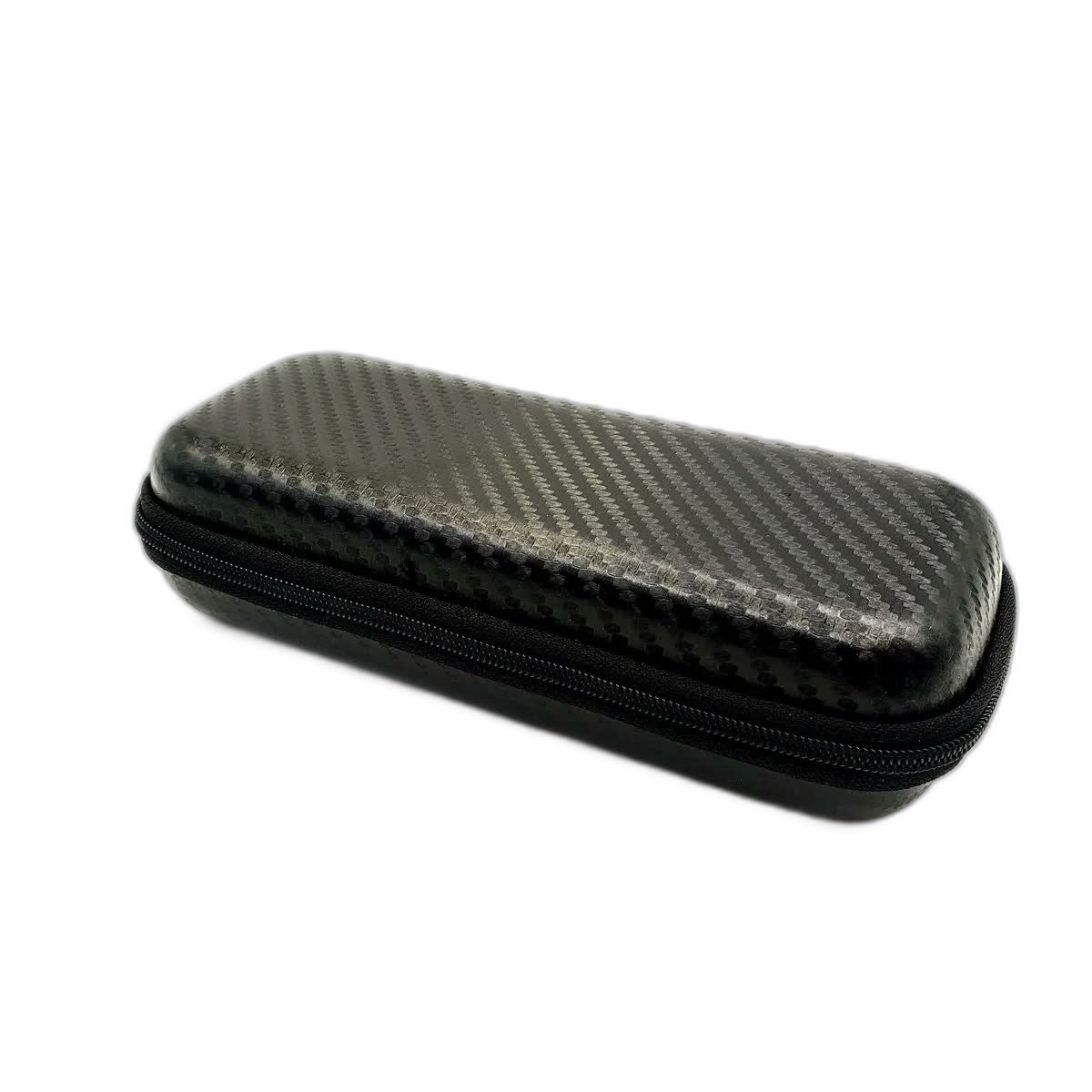
TS100 Carrying Case
$5.99
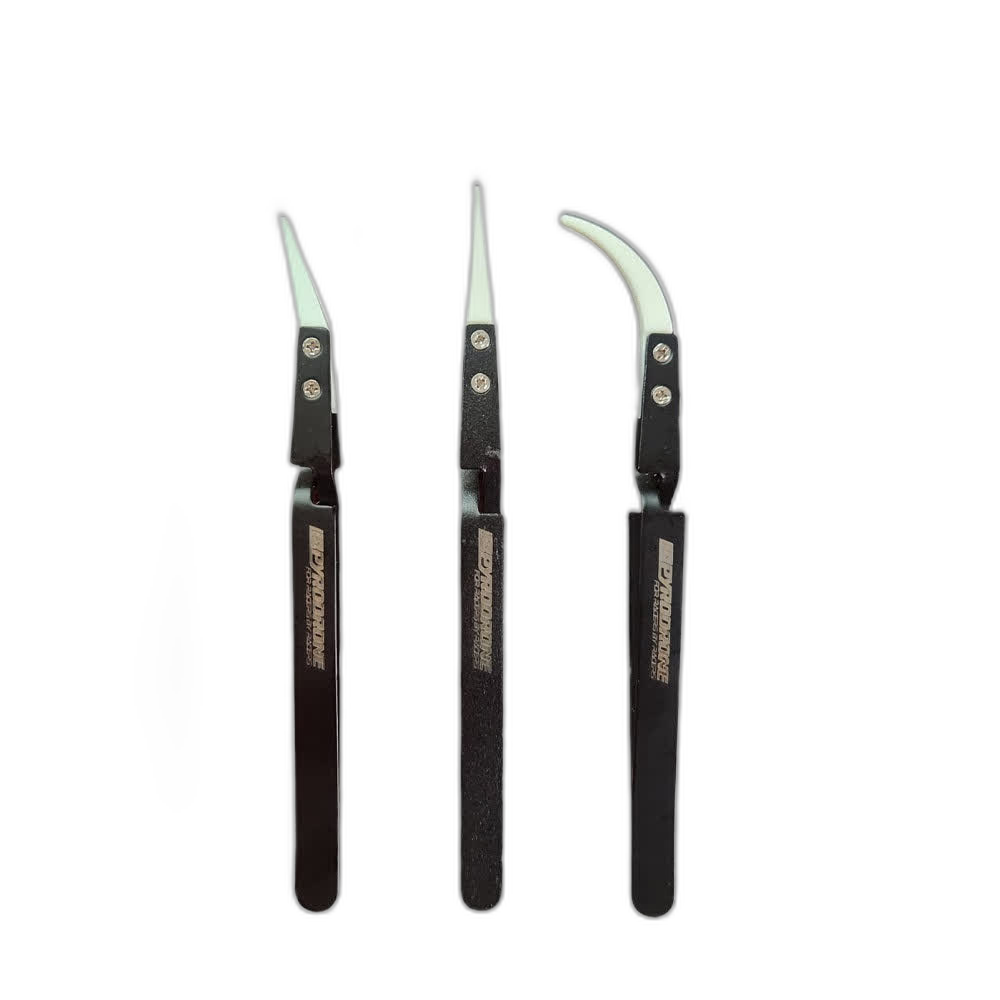
Tweezers — Set of 3
$17.97
Zip Ties — 50 Pack
$4.49
Heat Shrink Set — 148 Piece
$9.99
Digital Battery Capacity Checker
$12.99
Bundle contents at retail (itemized above): $2,209.25
Materials: the $2,710 Deluxe bundle — the full bundle contents · Flywoo Naked GoPro GP13 Pro V2.1 camera included · Licensing: $1,450 · Consulting: $1,000/day per person · Five-day course: $7,209.25 — materials at cost + $5,000 consulting; licensing fee and material margin dropped on the five-day course
Claude AI basic training included — basic Claude membership per person, with a basic introduction and training (Tips and Tricks).
The certificate gets you qualified. The circle gets you connected. Deluxe induction: the alumni circle. Graduate, and the circle opens — alumni post jobs, share plugs, and open doors for each other. Your five days end; your network doesn't.
Secret Society of UAV Jobs — the Deluxe alumni circle. Private group · on Facebook.
Business / team procurement: do not use individual totals. Team training lives under Commercial on the Programs page — quoted per crew, not per seat.
Rates — Individual
Operator pricing. Stated up front.
Curriculum licensing $1,450 per student. Consulting $1,000/day per person. Materials by platform. Five-day course pricing: materials at cost + $5,000 consulting per student — licensing fee and material margin dropped on the five-day course. Instruction, lab, field access, and certification included. Crew rates live under Commercial on the Programs page — 5-day crew cohorts. www.how2flyfpv.com.
Curriculum Licensing — Per Student
$1,450
THE LICENSE TO USE THE FULL CURRICULUM. CONSULTING $1,000/DAY PER PERSON ON TOP — A FIVE-DAY COURSE PURCHASE DROPS THE LICENSING.
Instruction — 40 contact hours
Day 1 · Bench & Setup — workshop deployment
Flight-field access
Tools, solder stations, smoke stoppers
FAA Part 107 prep pathway — study plan, practice exams to the 85%-twice standard, and test-day guidance
Graduation certificate
Alumni network — lifetime
50% deposit at signing — invoiced after your inquiry is confirmed (this form takes no payment), refundable up to 14 days before your unit starts.
“By Day 5 you will have flown your own quadcopter, configured Betaflight, flown acro at our field, and executed your first freestyle maneuver.”— The www.how2flyfpv.com Standard · www.how2flyfpv.com
Every operator trains on this stack — the same radio, the same goggles, the same aircraft, the same batteries, on every seat. This is the gear your crew flies, maintains, and keeps — issued as ready to fly kits: all in one, everything you need, a full tool roll — hex and nut drivers, M3 screws, multimeter, soldering kit, tweezers, zip ties, shrink tube and a battery checker — included. Every piece is framed below in blueprint with its price and the full kit it flies with, and linked to its maker’s own page.
FPV
The complete FPV catalog — every item across the FPV kits, each shown exactly once, with the kits it flies in. Item prices are the contents prices of record.
EMAX Tinyhawk III Plus Analog
$170.99
Kit One
GEPRC MARK5 Analog
$535.19
Kit Two · Freestyle Deluxe
GEPRC CineLog30 V2 Analog
$335.00
CineWhoop Deluxe · CineWhoop course
Flywoo Naked GoPro GP13 Pro V2.1
$589.99
CineWhoop Deluxe
GoPro Hero 13 Black
$429.99
Kit Two · Freestyle Deluxe
HDZero Goggle 2
$699.99
Kit One · Kit Two · Freestyle Deluxe · CineWhoop Deluxe · CineWhoop course
RadioMaster Boxer
$129.99
Kit One · Kit Two · Freestyle Deluxe · CineWhoop Deluxe · CineWhoop course
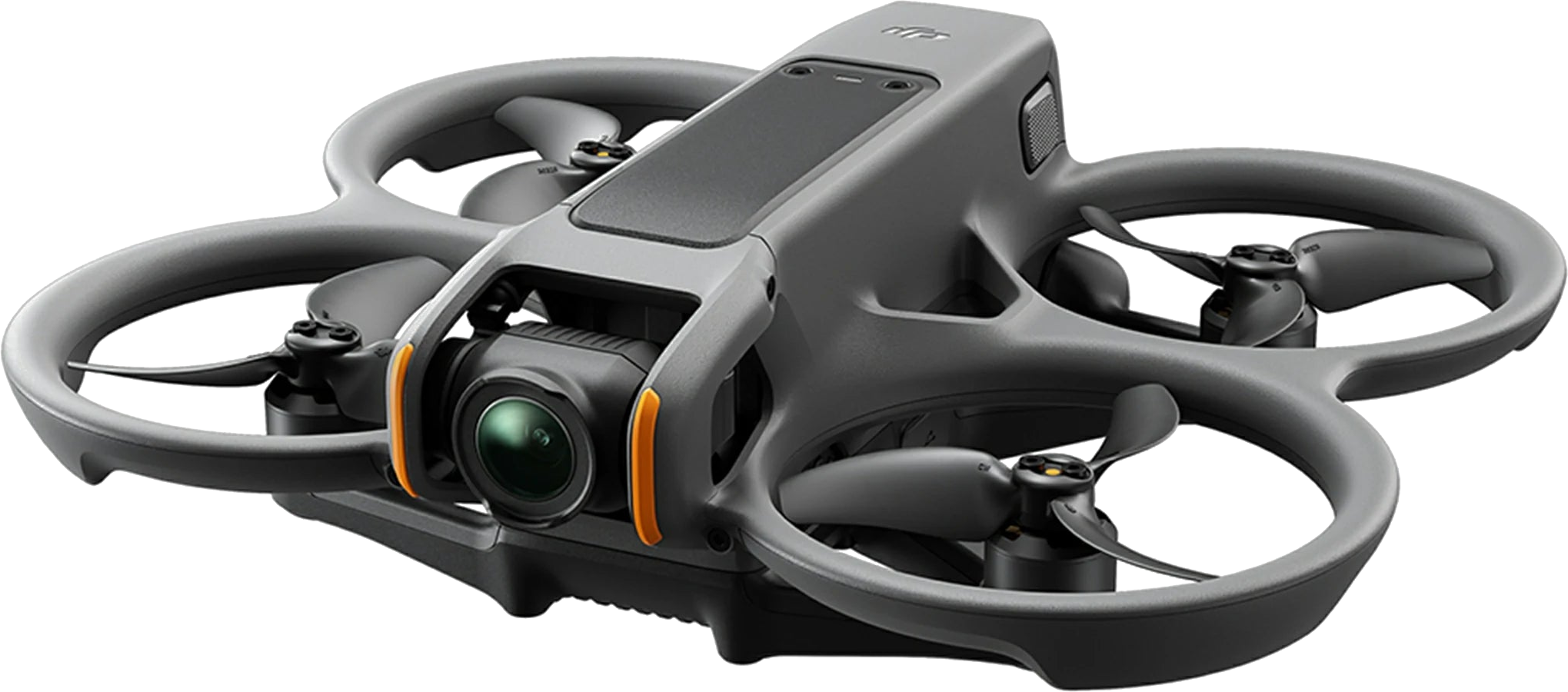
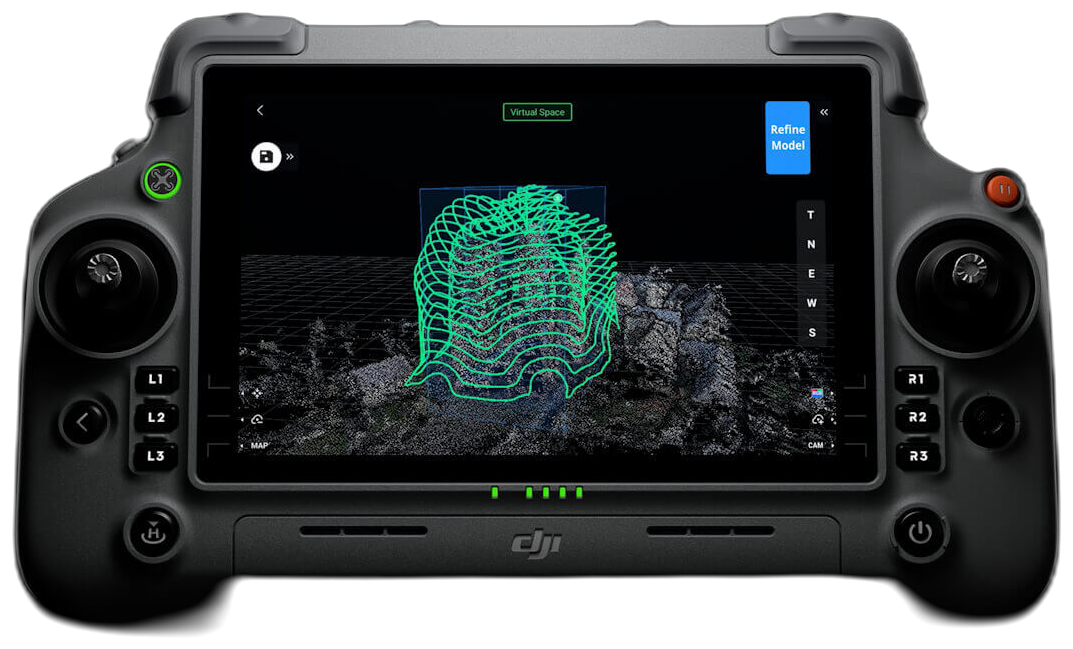
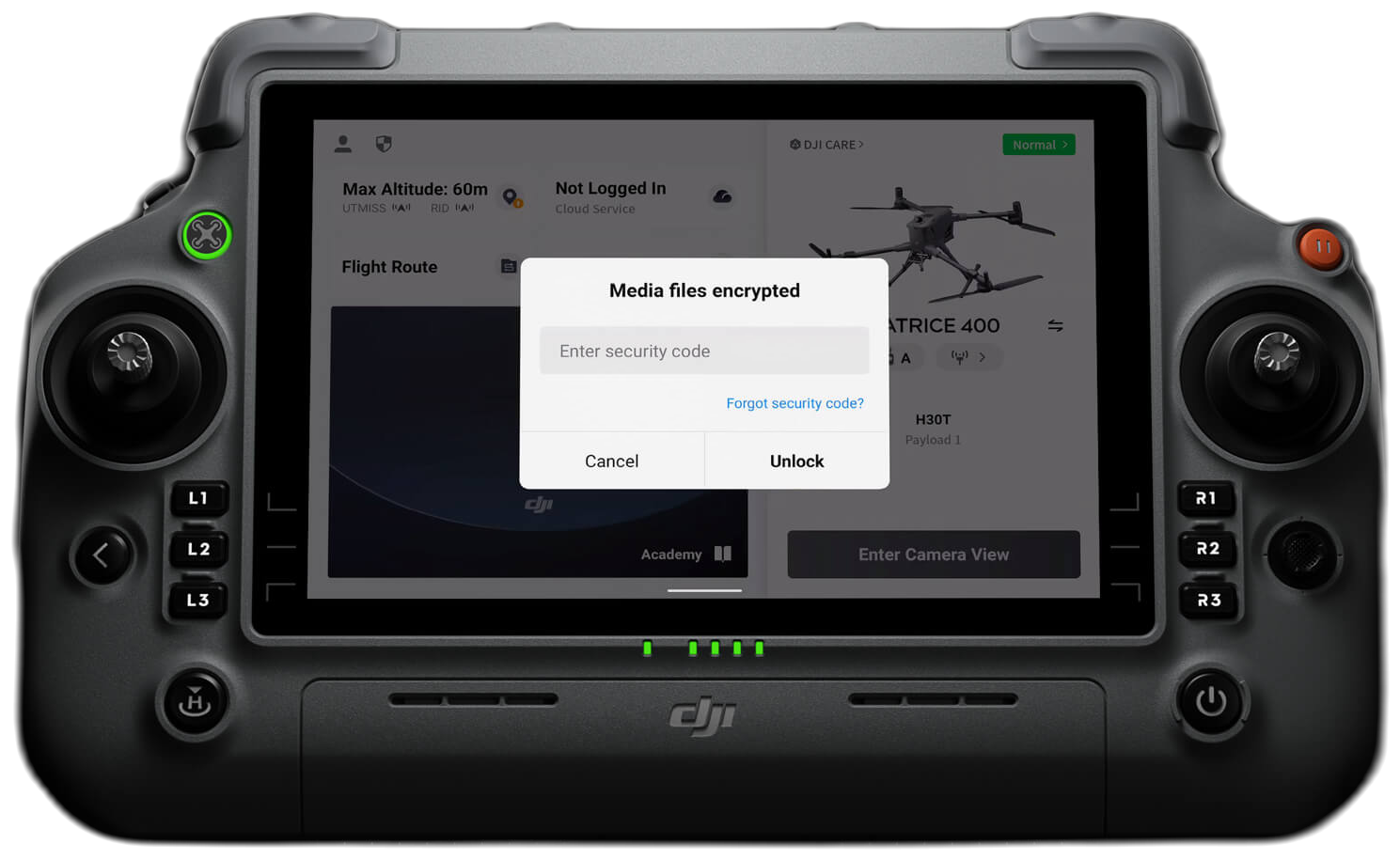
Thermal / inspection trainer · with DJI RC Plus 2 Enterprise
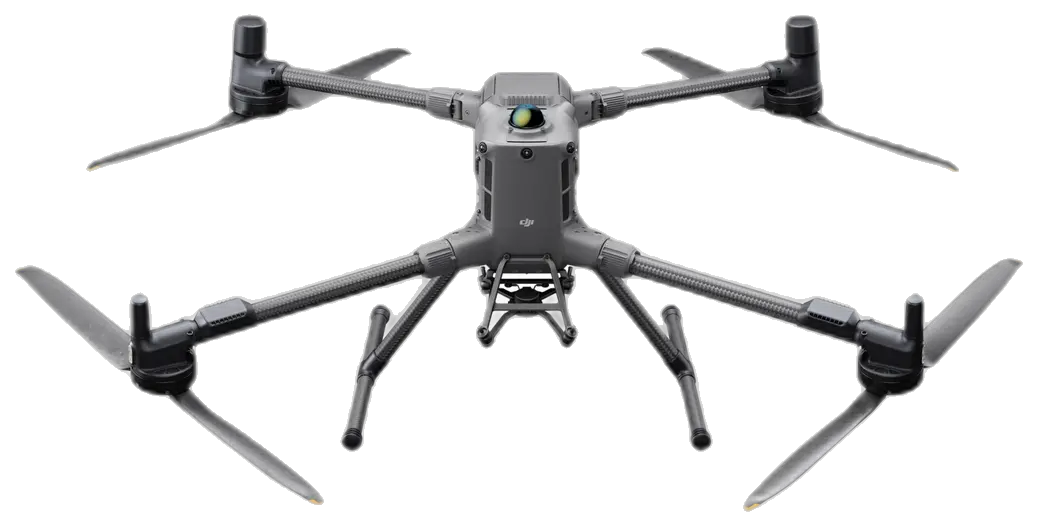
DJI Matrice 400 RTK
$10,450
Heavy / payload trainer · aircraft + DJI RC Plus 2 · payloads separate
Prices are DJI’s own, US, base/standard configuration, as published Nov 13, 2026 — combos and Fly More configurations run higher. The consumer platforms are priced on DJI’s own store; the Matrice platforms carry US list prices through DJI’s authorized enterprise dealer network.
Commercial / AG
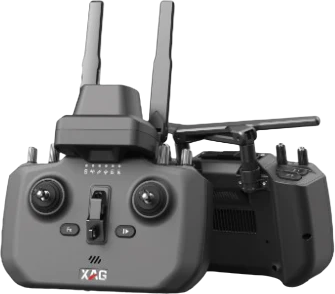
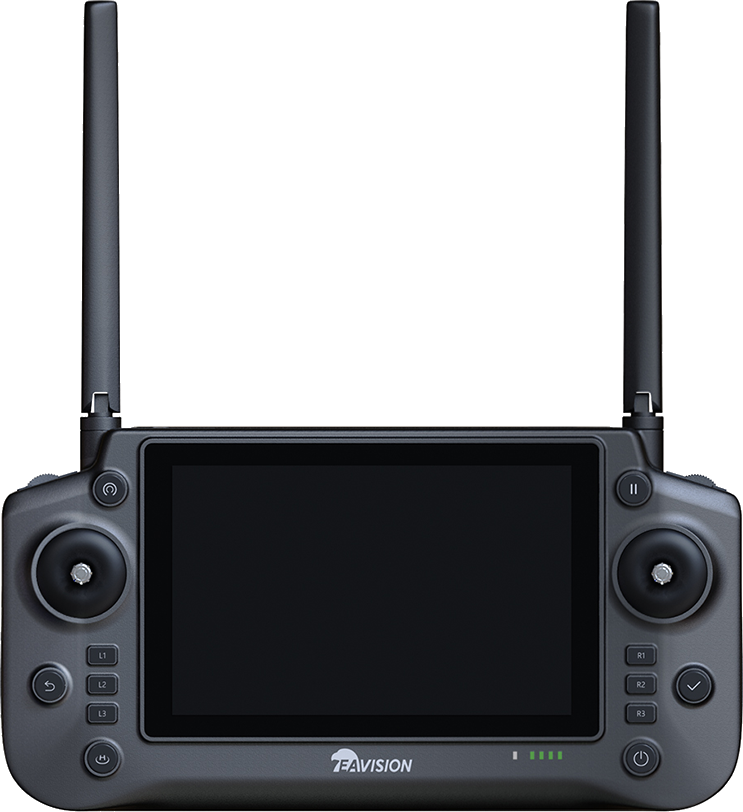
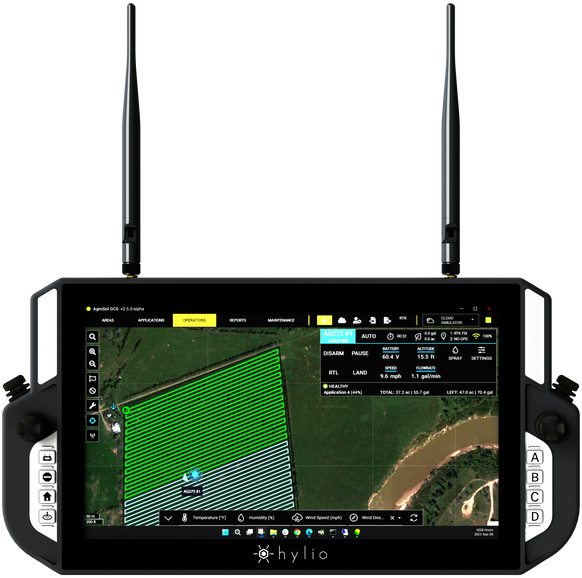
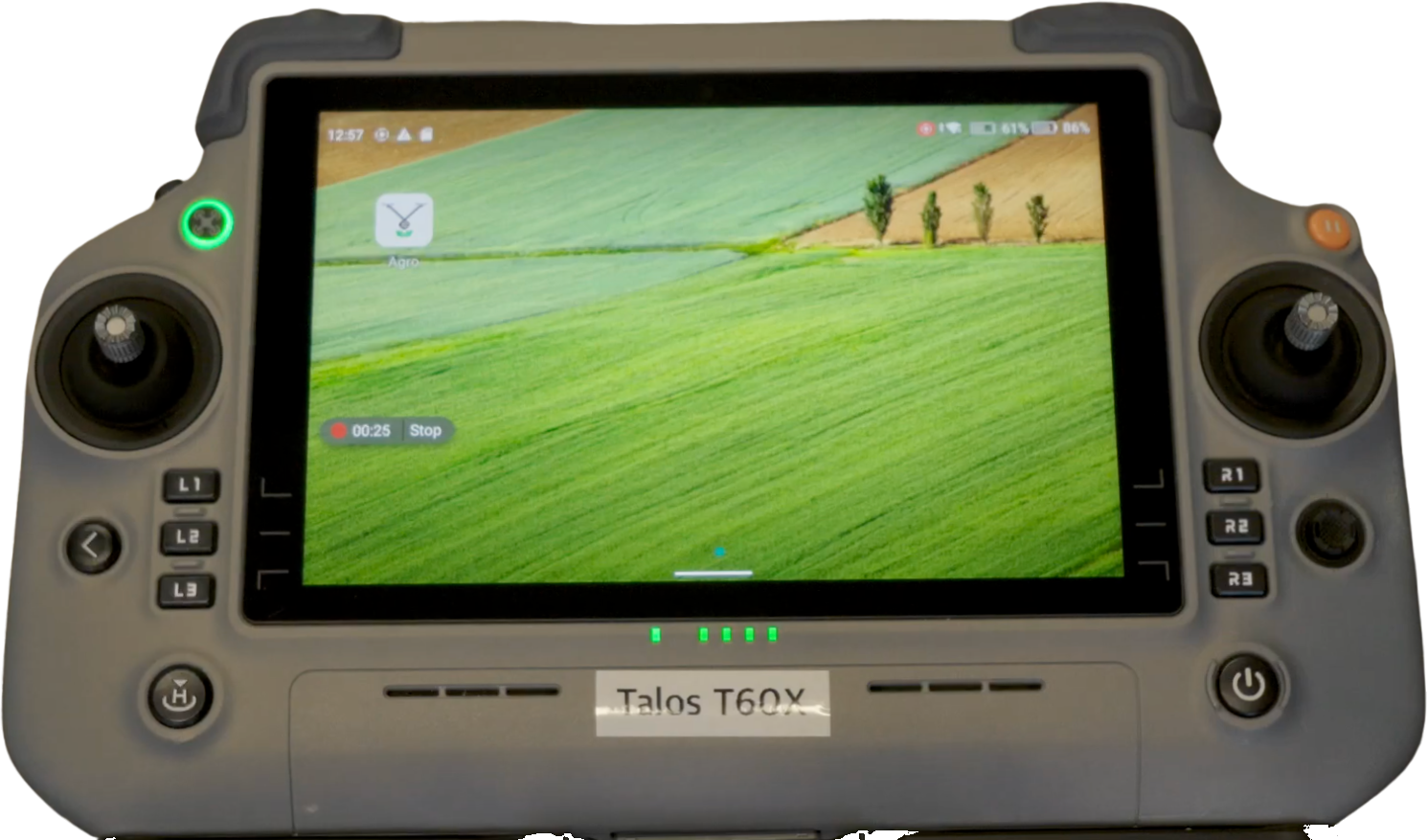
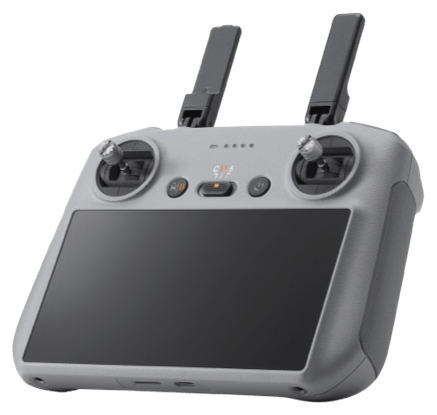
The five remotes sold to go with the station laptops — so students can do simulation training and get certified on those platforms before they work on them.
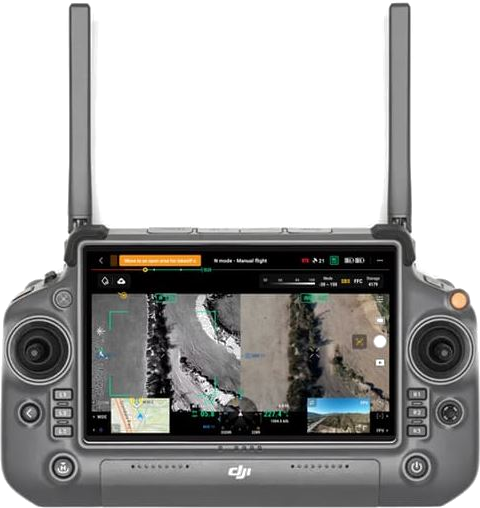
RC Plus (RM700B)
For the DJI Agras T50 station
ARC3 Pro w/ RTK
$941
XAG ARC3 Pro Remote Controller with RTK Module · for the XAG P100 Pro station
EAV-RC50
$1,600
EAV J100 Remote Controller · for the EAVision J100 station
GroundLink
For the Hylio ARES station
T60X Remote Controller
$2,999
For the Talos T60X station
Not for sale. Training only.
The All-Inclusive flight gear set
One set, every seat: the EMAX Tinyhawk III Plus Analog student aircraft, the HDZero Goggle 2, and the RadioMaster Boxer (ELRS) — the same gear in every pilot’s hands, in every program, on the All-Inclusive tier.
ONE PRICE PER CREW · www.how2flyfpv.com · 5 DAYS · FLY IT · MAINTAIN IT · KEEP IT
You acquired the aircraft. Your crew cannot operate them to standard. That gap is a liability. We close it in 5 days — your crew flies their own aircraft, trains on it, maintains it, and keeps it. At your site or ours, to a documented, signed-off standard. Priced plainly per crew — 10, 15 or 20 operators. No per-seat games. And on every tier, Part 107 is included: study runs through the week and the crew sits the FAA exam together at week’s end, so your operators leave not just trained, but certificated and legal to fly for work.
TIER 01 — SQUAD
$33,500
10 crew · 5-day fly-and-keep cohort
Part 107 included — study built into the week; the crew tests together through PSI at week’s end and leaves with temporary certificates
Full 5-day www.how2flyfpv.com crew program
Every operator flies, maintains & keeps their aircraft
FPV fundamentals + safety enforcement
Skills check-off per operator
Written after-action summary
$3,350 PER OPERATOR · ALL-IN CREW PRICE
50% DEPOSIT AT SIGNING — FUNDS THE COHORT’S EQUIPMENT PURCHASES
⬢ ALL TIERS INCLUDE FAA PART 107 — STUDY BUILT INTO THE WEEK · CREW TESTS TOGETHER AT WEEK’S END · OPERATORS LEAVE CERTIFICATED AND LEGAL TO FLY FOR WORK.
⬢ ALL COHORTS — 50% DEPOSIT REQUIRED AT SIGNING. THAT DEPOSIT FUNDS THE EQUIPMENT PURCHASES FOR THE COHORT.
⚠ INSTRUCTOR DAY RATE (STANDALONE DEPLOYMENTS): $5,000 / DAY + TRAVEL & PER DIEM. NET-15 INVOICING FOR APPROVED BUSINESS ACCOUNTS. — www.how2flyfpv.com
Commercial — Ways To Book
Basic, or All-Inclusive (Deluxe).
Book the training on its own, or book the whole outcome — certificate, gear, kit, and curriculum included. Both tiers run the same standard.
Claude AI Basic Training IncludedBasic Claude membership included with every tier.
Basic
The training itself
Squad — 10 crew $33,500
Company — 15 crew $52,000
Battalion — 20 crew $67,000
Consulting $5,000/day
Your crew trains on How2FlyFPV™’s fleet, with Chase LeDeatte, founder and lead instructor
No drone purchase required — and none included
Every crew member gets the program t-shirt
Nothing else bundled — the training, plain and simple
All-Inclusive (Deluxe)
Everything in Basic, plus
Part 107 certification run included — study woven through the week, the whole crew tests together through PSI and walks out with temporary certificates; the $175 PSI exam fee is itemised separately — the student’s at test time, unless the buyer elects at signing to absorb it
The full flight gear set — aircraft, goggles, radios, and the battery program — that stays with your organization
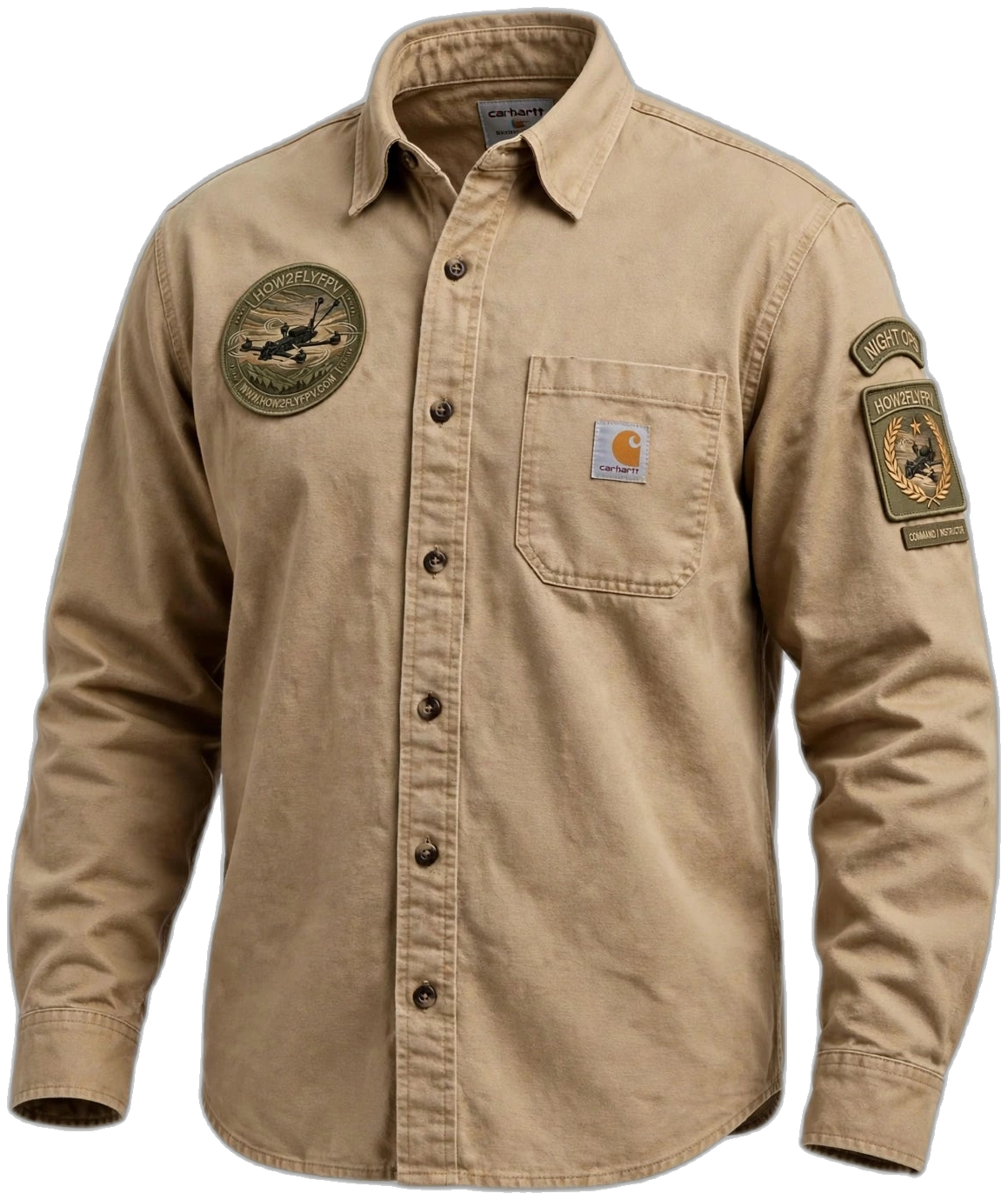
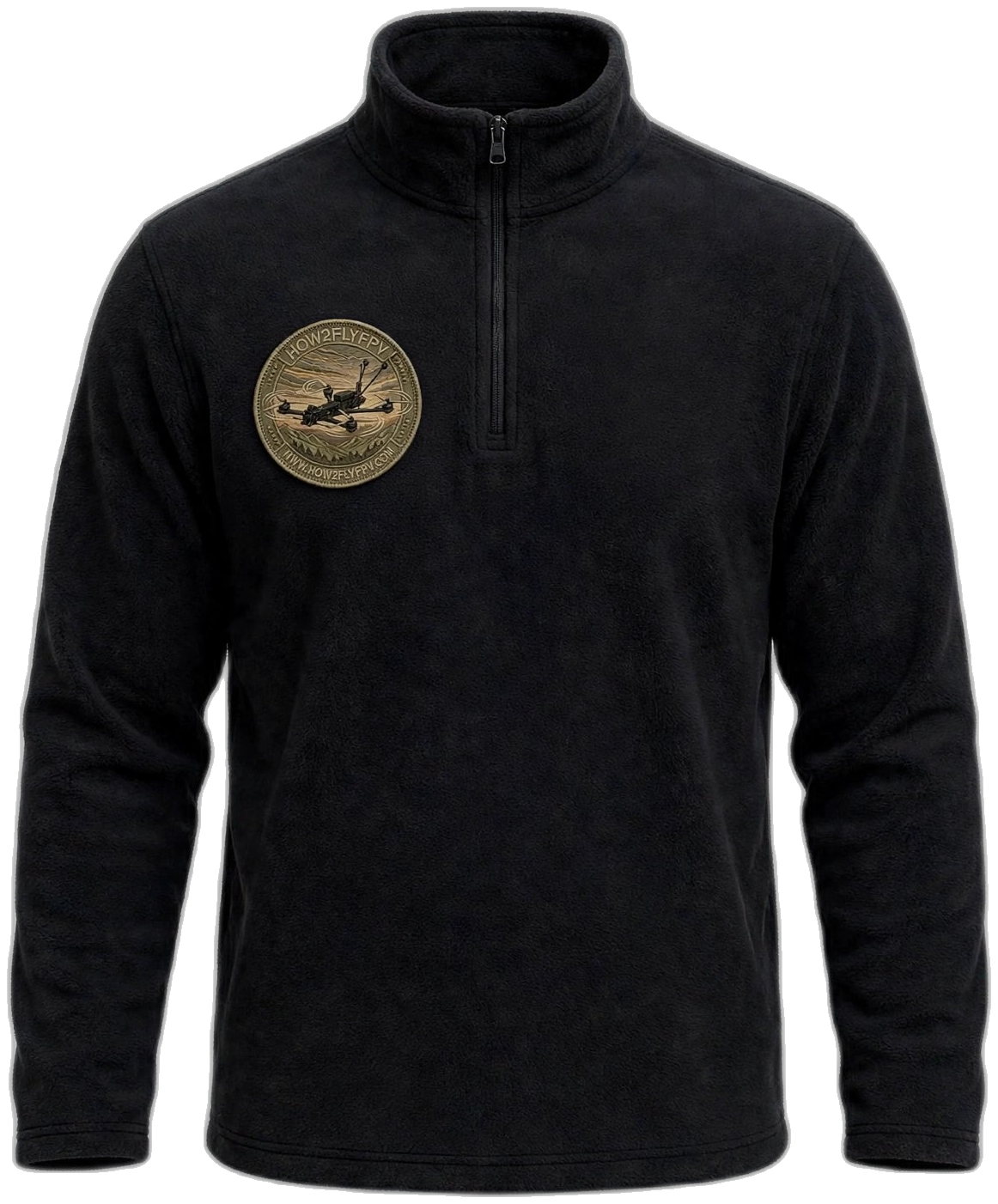
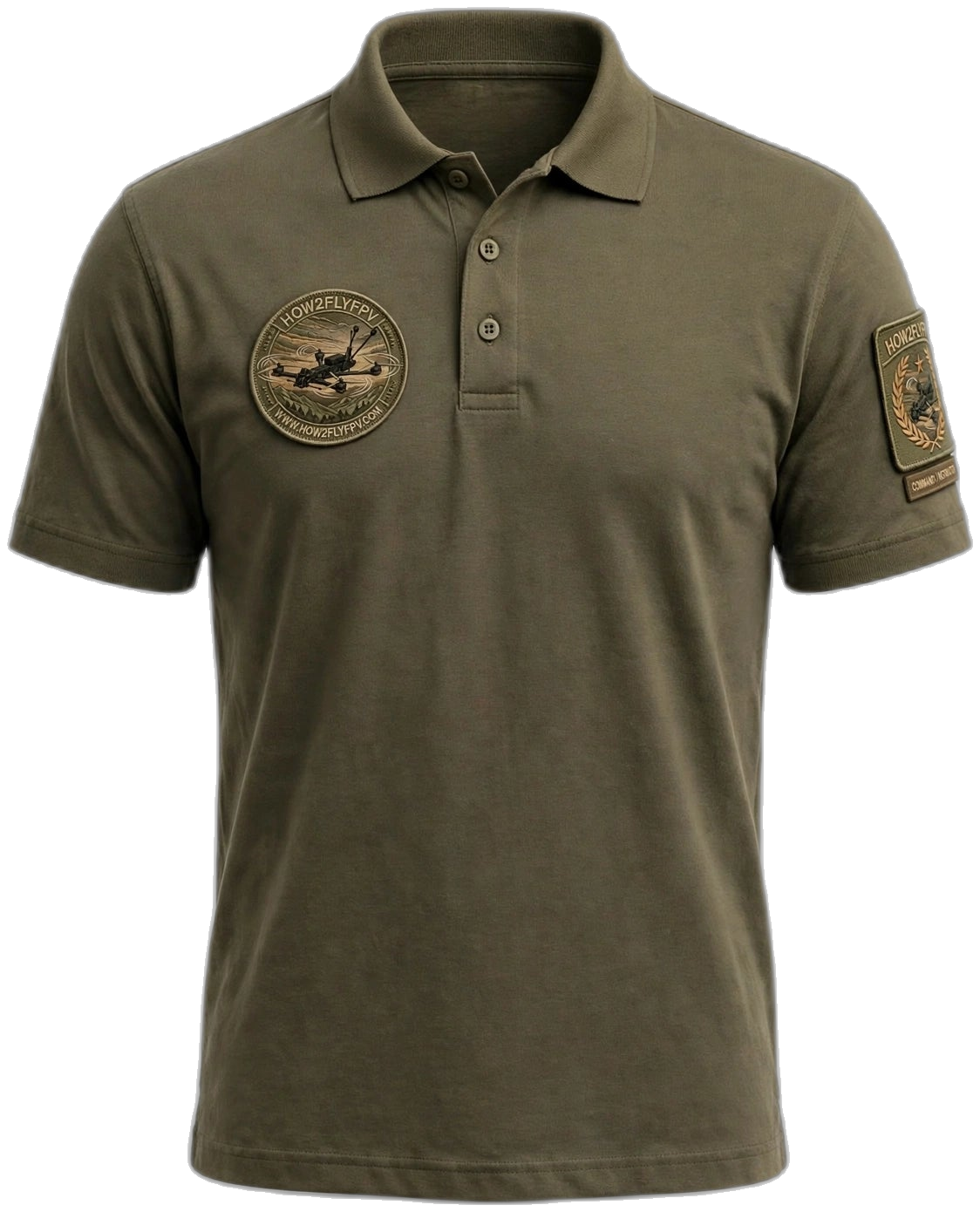
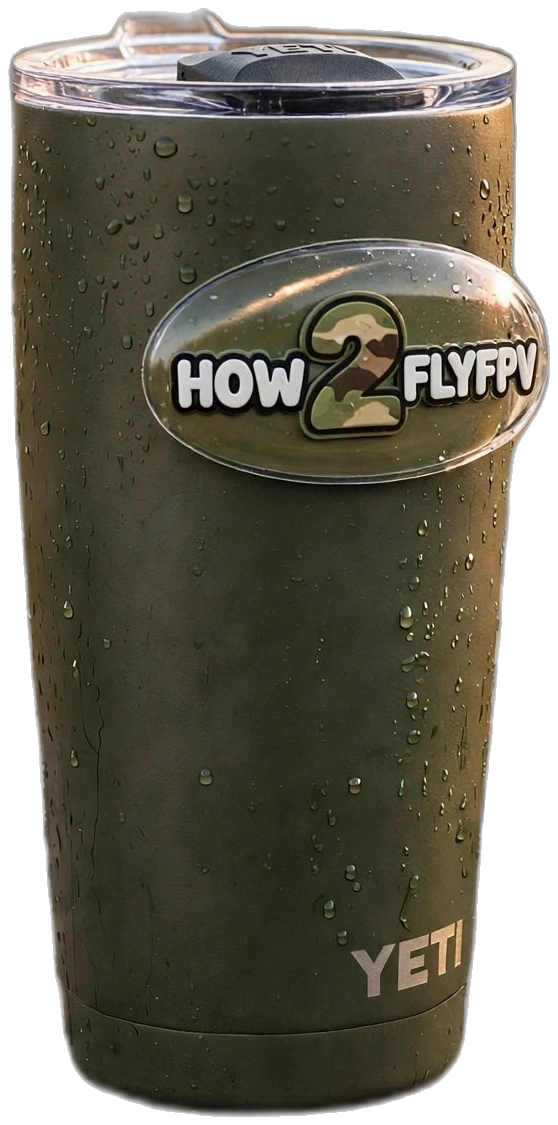
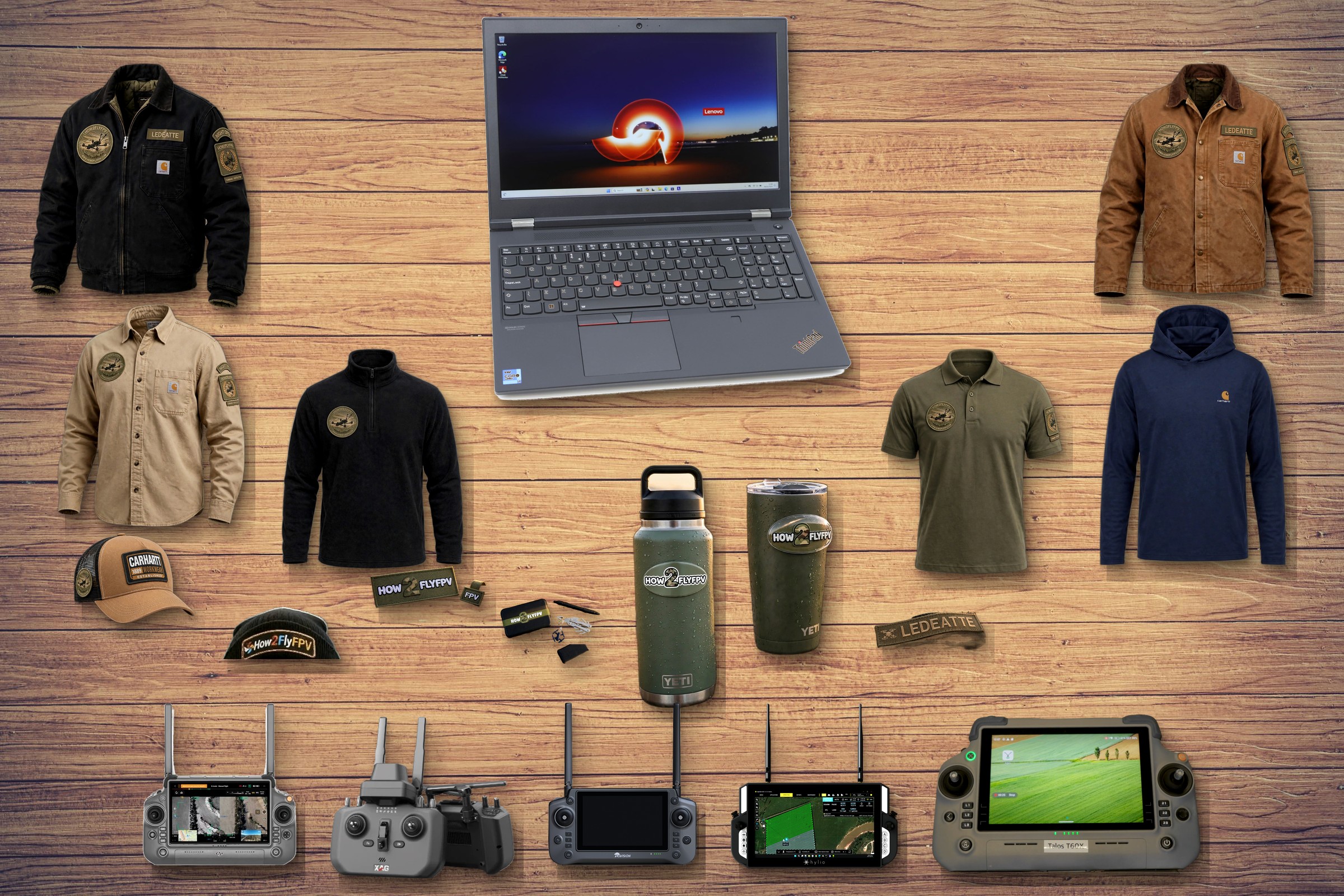
The full 13-piece How2FlyFPV™ merch kit for every crew member: Detroit Jacket, Chore Coat, Sun Defender Shirt, Work Shirt, Quarter-Zip Pullover, Force Pocket Polo, YETI Tumbler, YETI Bottle, Canvas Cap, A18 Beanie, Smalls Set, Patch Set, Name Tape
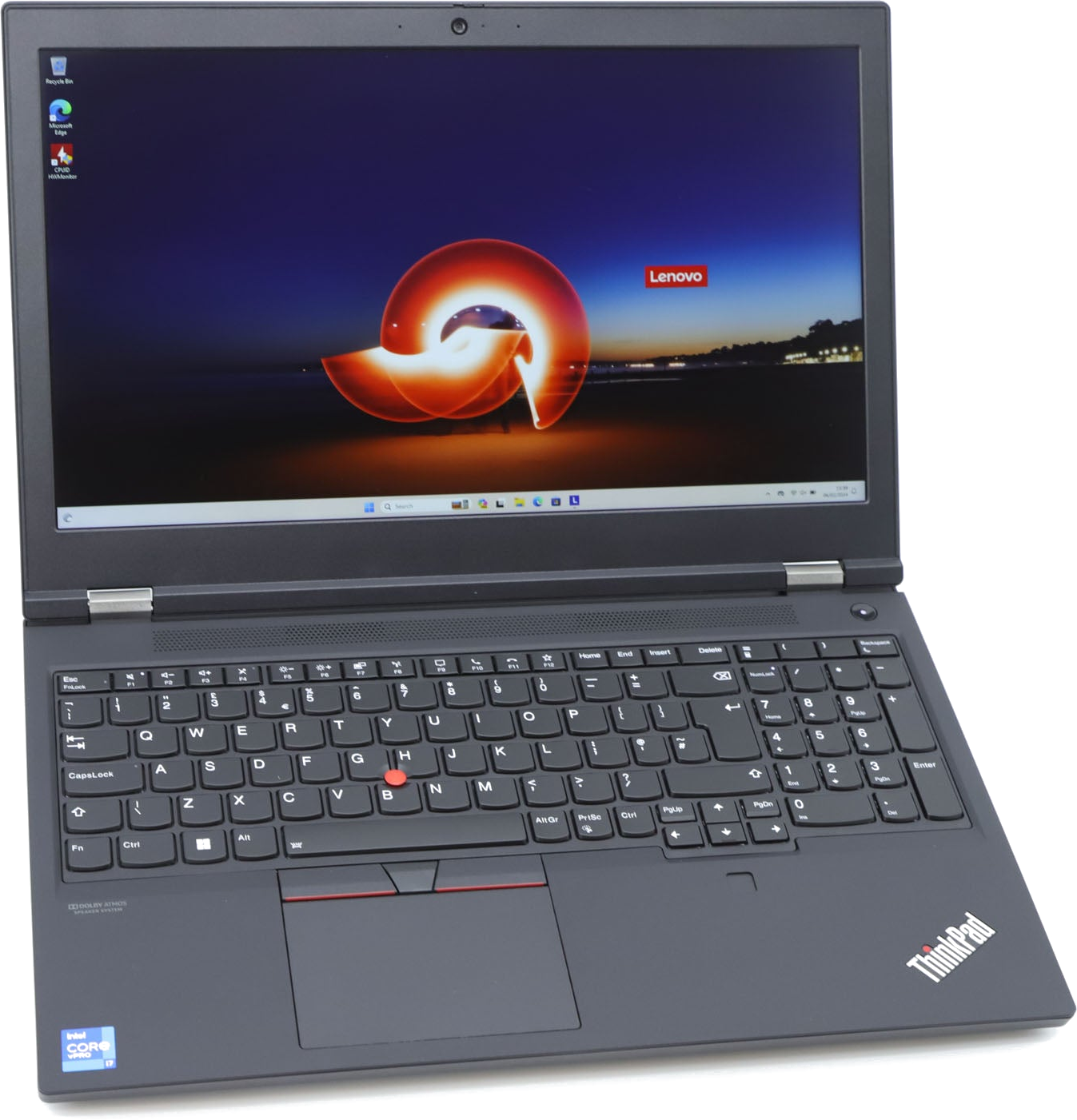
A take-home laptop for every crew member — a refurbished Lenovo ThinkPad P15 Gen 2, with the interactive curriculum loaded
Printed curriculum for every student
Year-one licensed access to the How2FlyFPV™ curriculum and training app for your site — progress tracking, skill gates, flight logs, and the honors record
Full pricing in writing per engagement.
How Buying Works
STEP 1
Scope Call
Platforms, headcount, and your operational definition of “qualified.”
STEP 2
Written Proposal
Fixed curriculum. Flat price, in writing. No hourly meter.
STEP 3
Invoice / Purchase Order
Net-15 invoicing for approved business accounts, or a PO from your procurement.
STEP 4
We Come To You — Or Host With Us
Five live days at your site, or hosted at ours. Your crew flies, maintains, and keeps the fleet.
Platform OnboardingNew fleet or new system — structured bring-up so your team learns it correctly the first time, to the OEM-instructor standard.
FPV Proficiency for OperatorsSim-to-real progression, acro control, LOS + FPV discipline, emergency procedures — for inspection, media, public-safety, and R&D units.
Repair & Field MaintenanceSoldering, Betaflight / PX4 / ArduPilot configuration, failsafe setup, and field repairs that return aircraft to service.
Safety & SOP DevelopmentPreflight checklists, failsafe standards, TRUST / Part 107 guidance, and documentation your safety lead can enforce.
Train-the-TrainerQualify your internal lead so capability remains in-house after the engagement closes.
WHO THIS IS FOR: Drone-service firms, inspection & media teams, OEMs and startups scaling a flight program, defense-adjacent contractors, and any operation adding FPV capability.
PSI® is a registered trademark of PSI Services LLC. PSI administers FAA knowledge examinations under contract with the Federal Aviation Administration. How2FlyFPV students register and test through PSI's public testing channel, as any applicant does. How2FlyFPV is not a PSI testing center and is not affiliated with, sponsored by, or endorsed by PSI.
Earned Honors — Patches & Valor Pins
Earn it. Wear it. Read it across the field.
Two systems, one uniform. The patch says how far you’ve come — hours, flights, checkrides. The ring of pins around it says who you are to this company — the extraordinary day you were the reason something didn’t go wrong. Neither is sold. Neither is given as swag. Both are issued from a verified record — and both are why people stay, push, and come back to the line.
1 — The Earned Patch Ladder
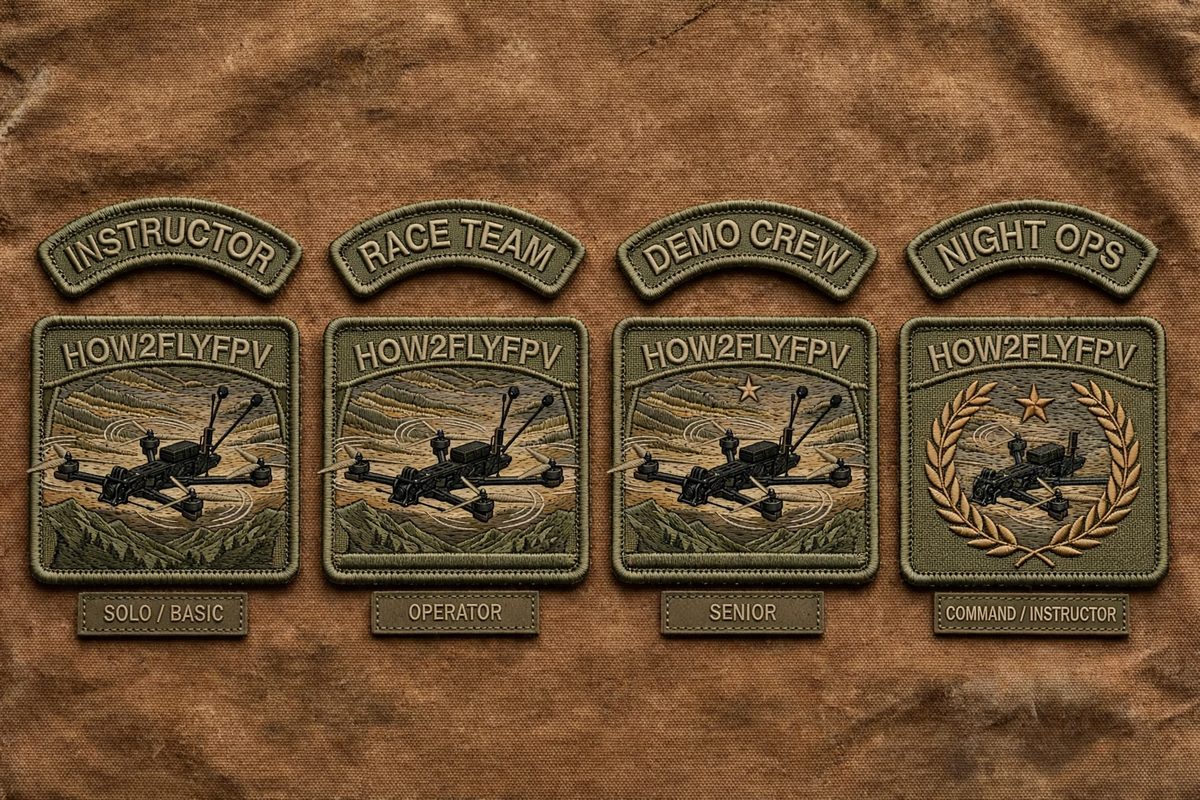
One patch identity. Every grade is the SAME patch — the approved design (quad in flight profile over the stitched sunset, HOW2FLYFPV top arc, WWW.HOW2FLYFPV.COM bottom arc) in the subdued military palette: olive drab, coyote, tan, charcoal, black. Nobody gets a different design for going further. The patch is 2×3 in, woven face (matte PVC is the approved alternate construction for the same art), merrowed border, hook backing — hook-and-loop is used here and only here, because these pieces are made to be swapped. Grade is shown ONLY by the device added to that one patch, the way real pilot wings progress: plain → bar → star → star and wreath. Your new grade REPLACES the old one on the field — grades never stack, one patch worn at a time. It is worn on the single loop field: left upper arm on the Detroit jacket (loop panel 4×4.5 in, shoulder-sleeve position), front of the left thigh on the bib overalls (4×4 in, centred above the knee) — the same physical patch fits both garments, by design. The field holds exactly one grade patch plus one tab; that capacity limit is deliberate, so nothing else accumulates. No other loop field exists anywhere in the uniform — every permanent mark is sewn. Logged means logged: hours and flights count from your logbook and flight records and are verified before any patch is issued. No verification, no patch. Issued, never sold — no earned patch or tab is ever in the store or given as swag. Below the ladder, a trainee’s field stays blank. That empty field is the first rung — the first thing you’re working to fill.
The Full Set — Tabs Above, Grades In Ladder OrderOne patch · Devices carry the grade
Device — Blank Field
Trainee
Enrolled — nothing worn yet
Your loop field is issued blank at sign-up — garment-matched loop fabric, left upper arm on the jacket, left thigh on the overalls. No patch, no tab. It stays empty until you solo — on purpose. The blank field is itself the first rung of the ladder: simulator hours and your first logged flights are already going into the logbook this field is waiting on.
Device — None · Plain Patch
Solo / Basic
First solo + safety & knowledge check
Signed off by an instructor. The plain patch is the grade — no device, because none is needed: you flew alone, to standard, and proved you know the safety rules cold. Construction: the standard 2×3 in woven patch, subdued palette, merrowed border, hook backing. Issued from your record at the first-solo sign-off and worn on the single loop field from that day.
Device — Bottom Bar
Operator
25 hrs logged + 50 flights
One horizontal bar along the bottom edge, inside the border — the only change to the same patch. The on-ramp rung of the ladder (the house gate): real hours, real flights, all verified from your logbook and flight records before issue. When it’s issued, this patch replaces your Solo patch on the field — grades never stack.
Device — Star
Senior
100 hrs logged + 200 flights as pilot-in-command
One five-pointed star above the quad, in tonal thread — still fully subdued, no accent colour. Modelled on the senior-pilot wing progression: advanced pilot territory, the grade other operators start asking questions of. Hours and pilot-in-command flights are verified from your records before issue, and the star patch replaces the bar patch on the field.
Star encircled by a laurel wreath, centred above the quad, star and wreath in the reserved muted antique-brass thread — the ONLY accent colour in the entire patch system, reserved for this grade alone. Brass means instructor grade; a student never carries it. The top of the ladder carries a formal presentation — the grade is presented in front of the crew, with an honors dinner — because at 250 hours, 500 flights and a passed checkride, it has been earned like one.
Rocker Tab — Above The Patch
Instructor
Issued with the role — returned when the role ends
The tab: a curved rocker, 3.25 in wide × ~1 in high, embroidered block capitals, subdued palette, hook backing, sitting directly above the grade patch inside the same loop field — the field fits one patch plus one tab, never more. The INSTRUCTOR rocker pairs with the Command / Instructor grade and is worn only while you are actively instructing: issued with the role, returned when the role ends. It is a duty marker (the military identification-badge rule), not a grade you keep. Role tabs — RACE TEAM (earned at race-team selection/qualification), DEMO CREW (at demo-crew selection), NIGHT OPS (at the night-operations qualification) — work the same way: one design for the whole crew, never individual variants, worn while you hold the role, off when the assignment ends. The glance test for the whole uniform: brass = instructor grade; INSTRUCTOR rocker = instructing right now.
SPEC — PATCH 2×3 IN · WOVEN FACE (MATTE PVC ALTERNATE) · MERROWED BORDER · HOOK BACKING · SUBDUED PALETTE ONLY (ANTIQUE BRASS RESERVED FOR COMMAND) · TAB: 3.25×~1 IN CURVED ROCKER, EMBROIDERED CAPITALS · SINGLE LOOP FIELD — JACKET LEFT UPPER ARM 4×4.5 IN / OVERALLS LEFT THIGH 4×4 IN · ONE PATCH + ONE TAB ONLY · NEW GRADE REPLACES OLD · ISSUED, NEVER SOLD · NO VERIFIED LOGBOOK, NO PATCH
2 — The Valor Pins
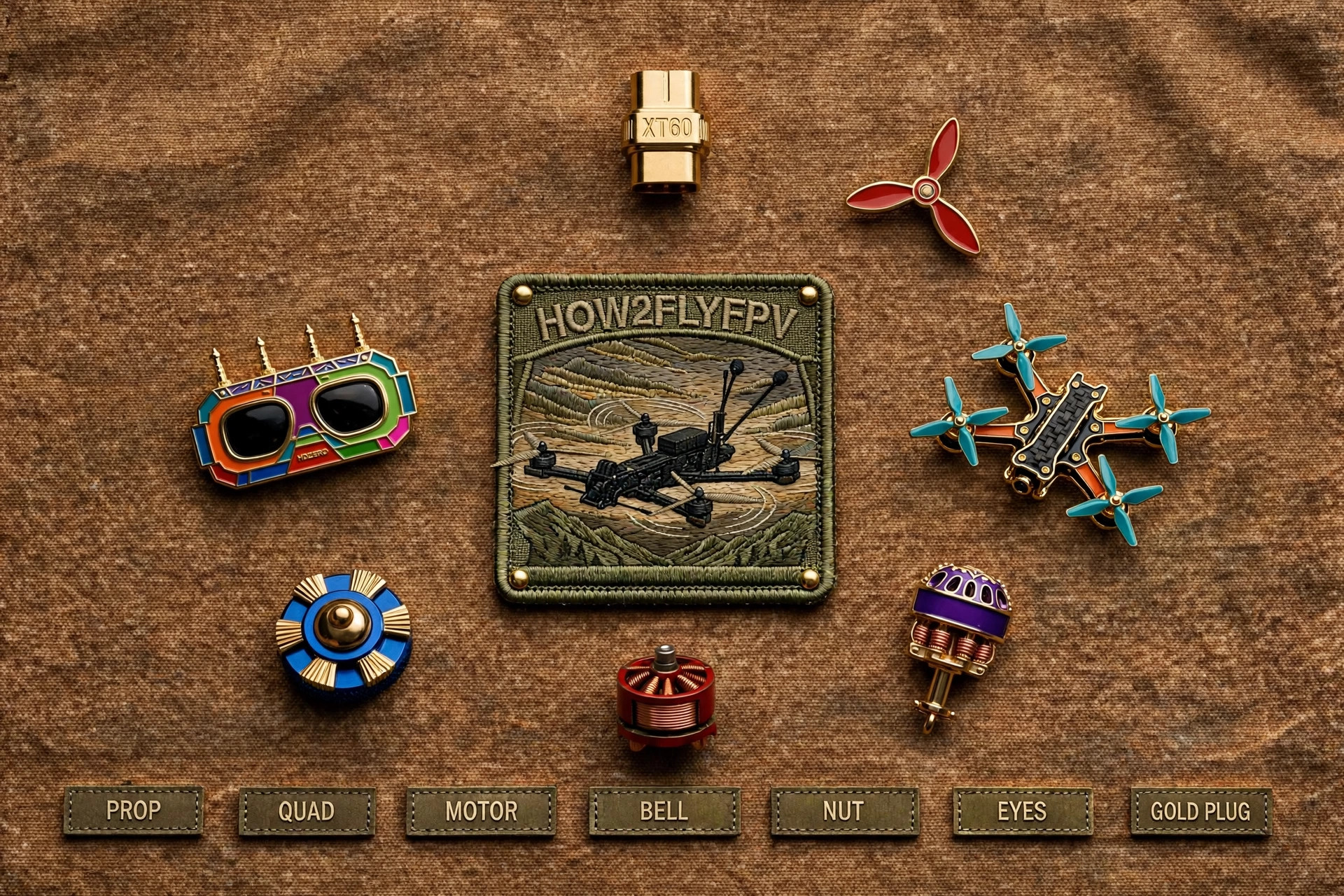
For the people who work the system: instructors, staff, crew — and the long-serving students who work the line alongside them. Each pin is a real part from the field, struck in miniature at 12–15 mm: die-struck metal, hard enamel in full colour, polished gold accents on every piece. Every pin is numbered on the back (№ / 25), entered in the Valor Ledger against one name, and pinned around the patch — the patch stays the centrepiece, the pins frame it. Most cohorts end with most pins un-awarded. That scarcity is the point.
Why A Ring Means Something
Read any uniform in one glance: subdued patch and devices — student grade. Brass star-and-wreath and an INSTRUCTOR rocker — instructor, on duty. A ring of small, bright, gold-edged metal around the patch — this person works the system, and the company has honoured them for it. A gold plug at the top of the ring? Ask them what they did. Then listen.
Numbered editions of 25 — struck once; when they’re gone, the design retires unless Chase calls a re-strike in writing
Ledgered to a name — a pin that isn’t in the Valor Ledger isn’t a Valor pin
Never sold, never merch — not in the store, not a signup bonus, not a thank-you gift, at any price
Worn one way only — ringing the patch, in precedence order; never on the patch itself, never over the Carhartt mark
The Ring — As WornPatch centre · Pins in precedence order · Gold Plug at top
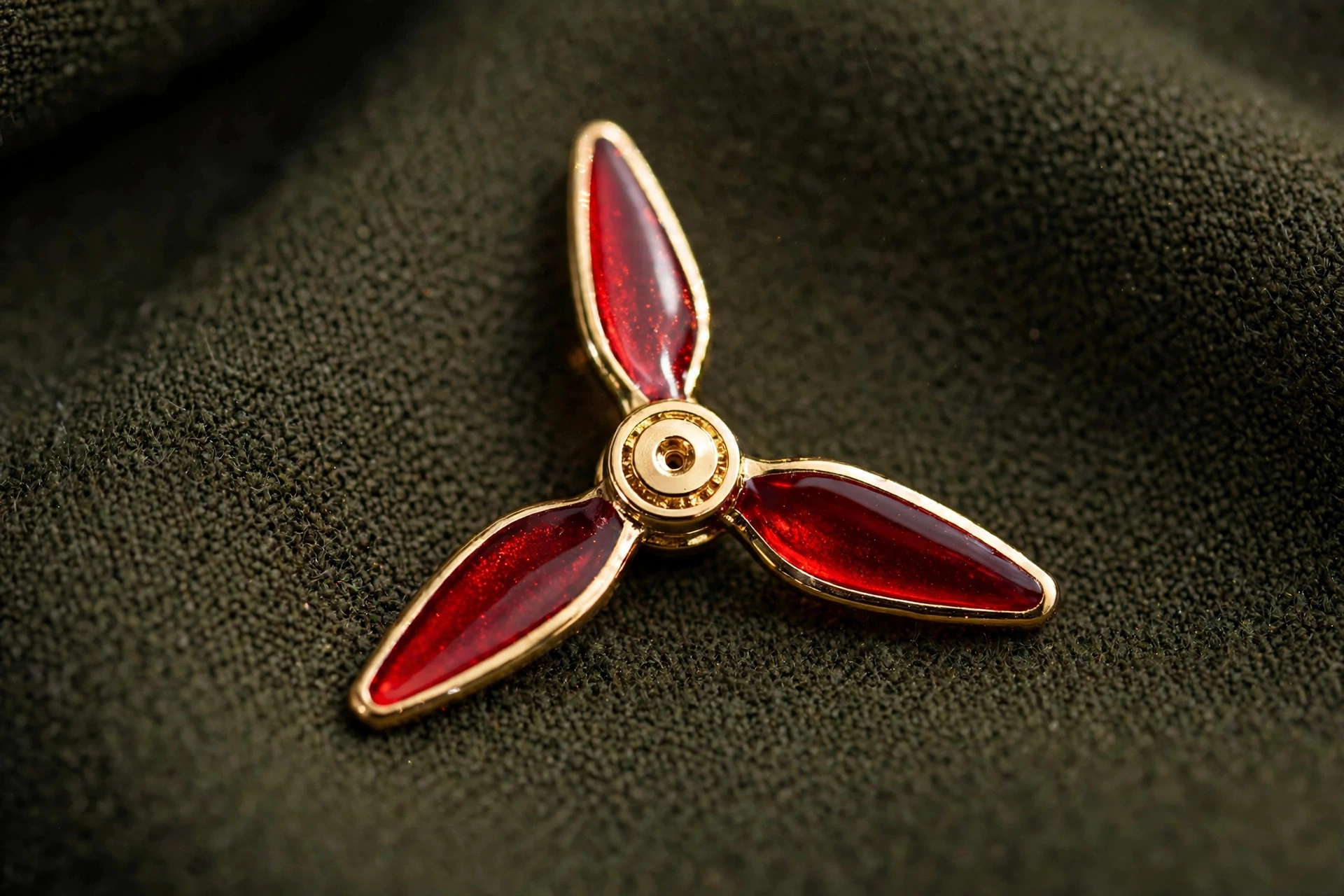
Precedence 01 · 15 mm
The Prop
The part: the tri-blade propeller — the fleet’s standard tri-blade, never a 2-blade, in exact miniature. The first part that meets the air, and the first pin in the ring.
Finish: translucent red enamel blades, polished gold hub and gold outlines on every blade.
Construction: die-struck metal, hard enamel, single post with locking clutch. Edition of 25, engraved № / 25 on the back and entered in the Valor Ledger against one name.
What it honours: the first Valor honour — you moved toward the problem when everyone else stepped back. This is where the ring starts: pit-crew valor, covering the line, the first Good Catch — the early, witnessed proof that you run toward trouble, not away from it.
How it’s earned: redeem 30 banked Valor Points from the Ledger — points from witnessed acts only, logged the same day (2–10 pt routine acts cap at 10 per day; one redemption per person per quarter). Each pin is earnable once.
How it’s worn & presented: first position in the ring around the grade patch, in precedence order — never on the patch itself. Pinned on in front of the crew, citation read aloud from the ledger: the act, the date, the witness.
Earn — 30 Valor Points
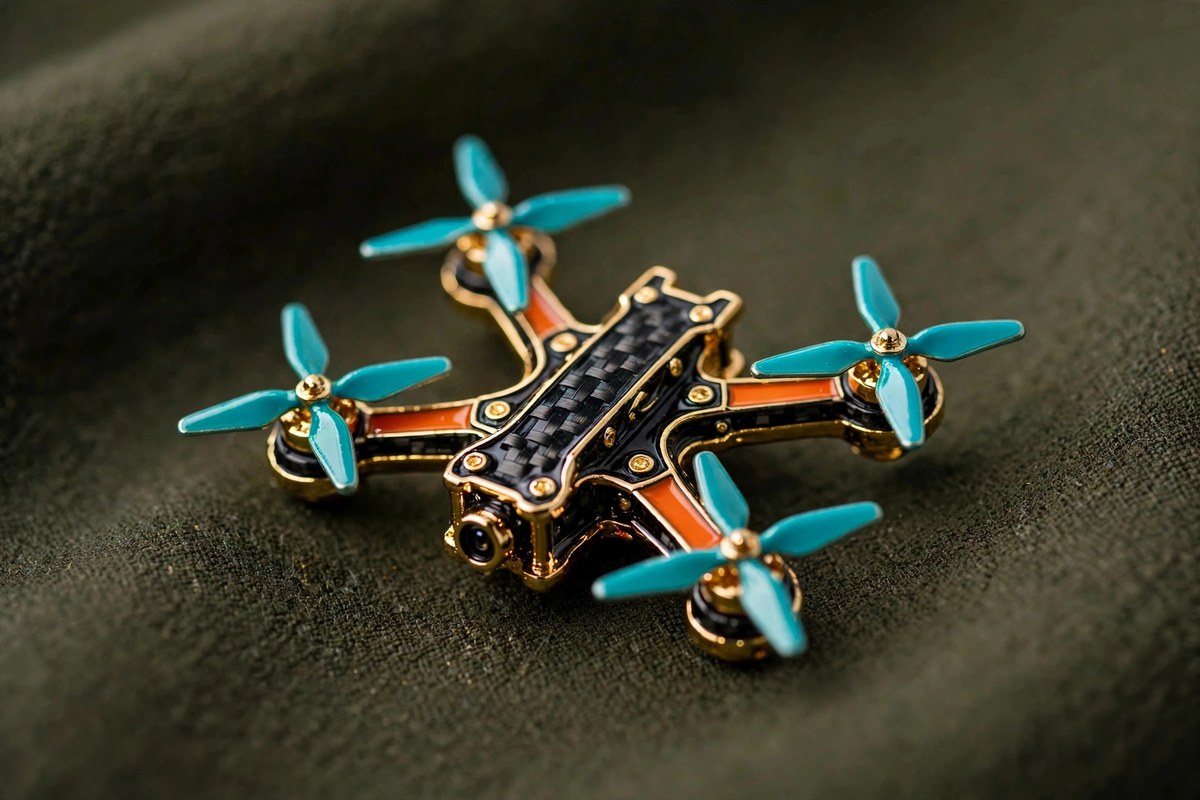
Precedence 02 · 15 mm
The Quad
The part: the complete FPV quadcopter, top-down — frame, arms, camera and all four motors, the whole aircraft in miniature.
Finish: carbon-black frame, orange enamel arms, four identical teal tri-blade props — same blade, same size, same colour on every corner, per the fleet rule — gold outlines throughout.
Construction: die-struck metal, hard enamel, single post with locking clutch. Edition of 25, engraved № / 25 on the back and entered in the Valor Ledger against one name.
What it honours: skill under pressure — the aircraft, mastered in the moment it mattered. Not routine good flying: the day the flying itself was the save, and the whole crew saw it.
How it’s earned: redeem 60 banked Valor Points, after The Prop — pins are earned in precedence order, each once, one redemption per person per quarter. Points come only from witnessed, same-day-logged acts.
How it’s worn & presented: second position in the ring around the grade patch. Pinned on in front of the crew with the citation read aloud from the ledger.
Earn — 60 Valor Points
Precedence 03 · 13 mm
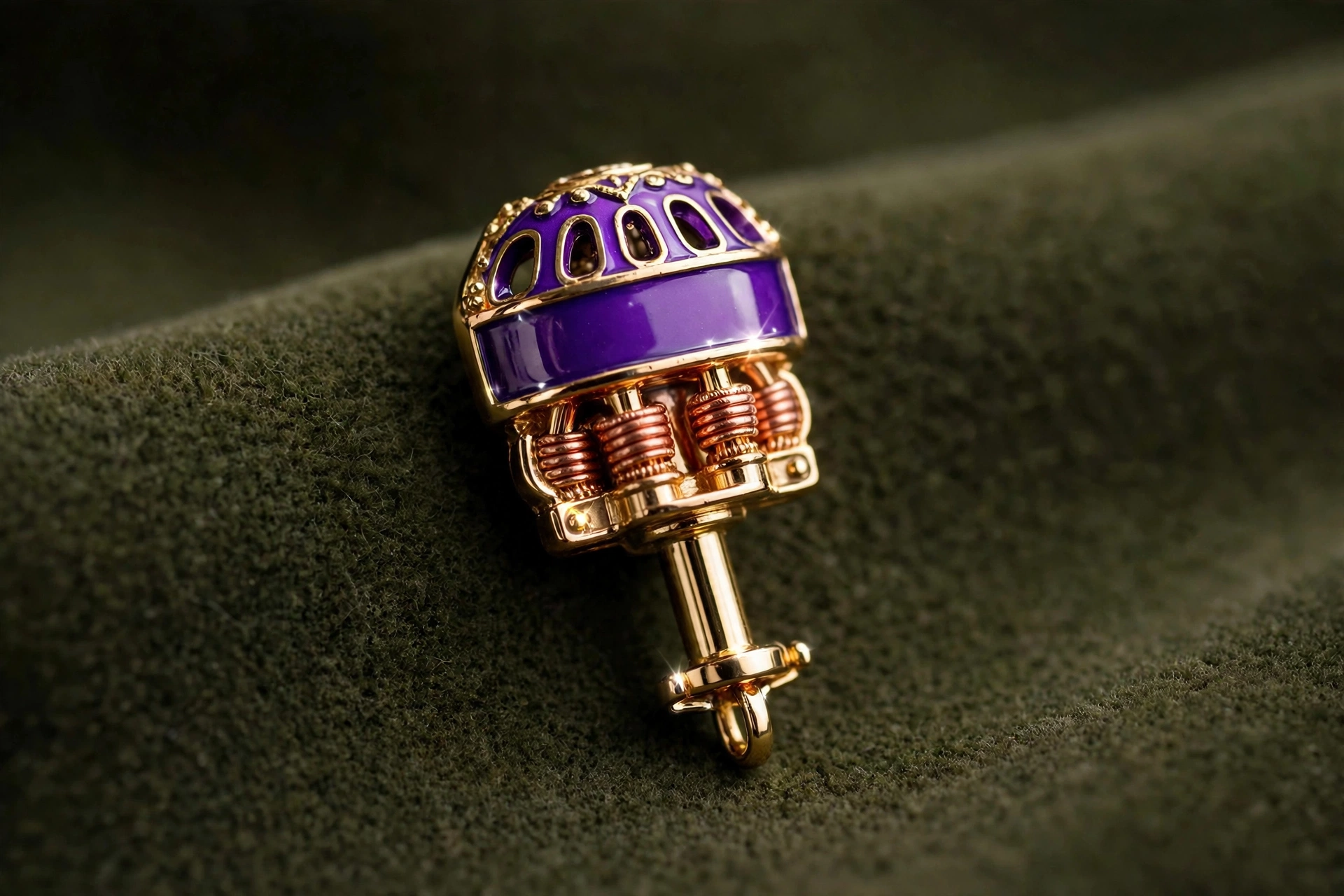
The Motor
The part: the complete brushless motor, side profile — bell, stator, copper windings and shaft, the whole powerplant in miniature, not just its cap.
Finish: glossy purple anodised bell with gold-rimmed cooling vents, real copper-tone windings, polished gold shaft and trim.
Construction: die-struck metal, hard enamel, single post with locking clutch. Edition of 25, engraved № / 25 on the back and entered in the Valor Ledger against one name.
What it honours: the workhorse honour — relentless, reliable service to the line, day after day. The motor never gets a day off and neither did you: sessions covered on no notice, cohort days run solo to standard, the line held together across a whole season of witnessed service.
How it’s earned: redeem 90 banked Valor Points, after The Quad — in precedence order, each pin once, one redemption per person per quarter. By 90 points the ledger behind you is months long; that’s the point.
How it’s worn & presented: third position in the ring around the grade patch. Pinned on in front of the crew, citation read aloud from the ledger.
Earn — 90 Valor Points
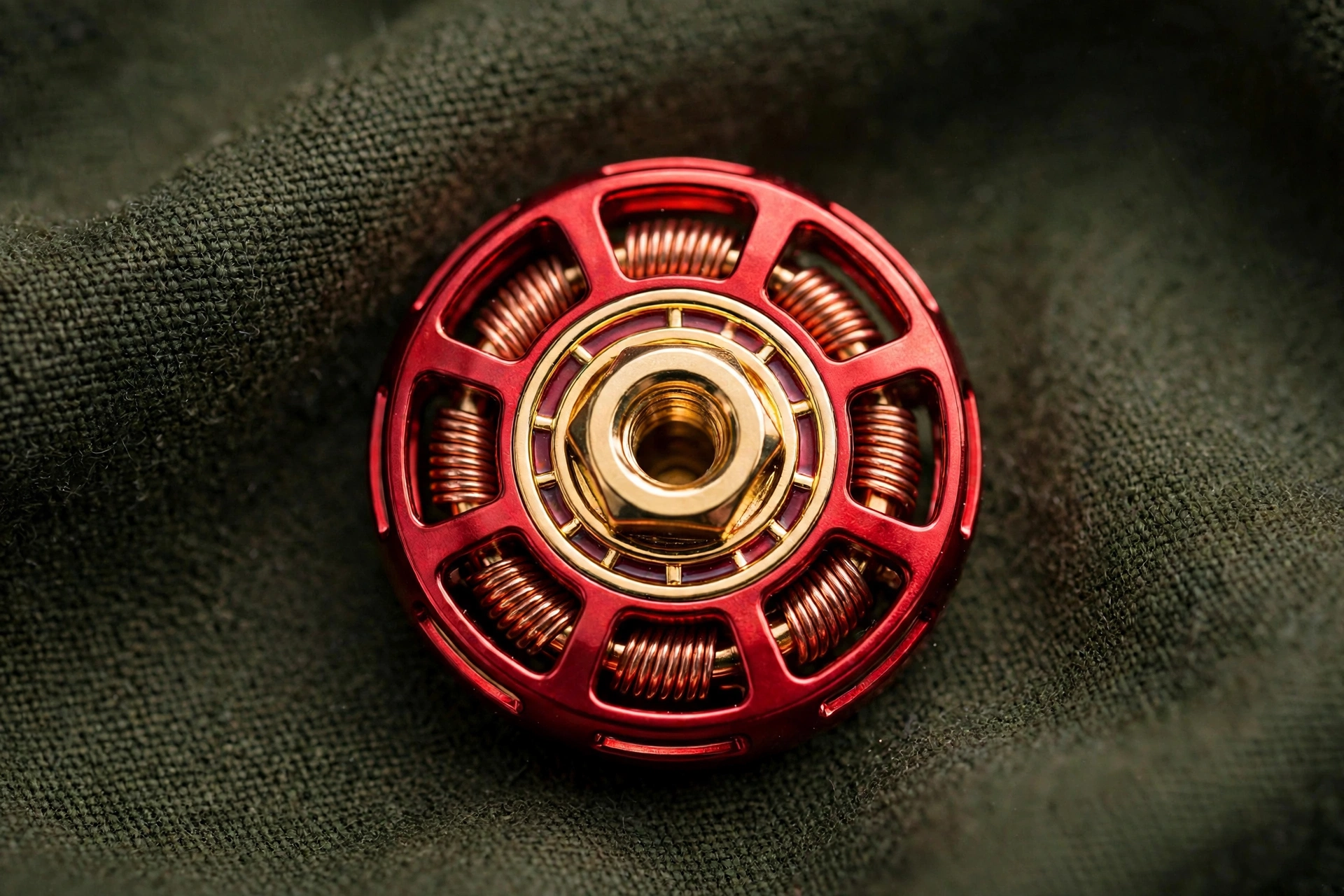
Precedence 04 · 13 mm
The Bell
The part: the motor bell, top-down — the spinning cap of the brushless motor, shown face-on with its vents open so the copper windings show through, exactly as you see it on the bench.
Finish: glossy red anodised bell, copper windings visible in the vents, polished gold centre nut and gold rim.
Construction: die-struck metal, hard enamel, single post with locking clutch. Edition of 25, engraved № / 25 on the back and entered in the Valor Ledger against one name.
What it honours: the builder’s honour — the rebuild, the repair, the quad that flew again because of your hands. Overnight pit-crew rebuilds, downed aircraft recovered and returned to the line, broken machines made whole under deadline, again and again.
How it’s earned: redeem 120 banked Valor Points, after The Motor — in precedence order, each pin once, one redemption per person per quarter. Pit-crew valor is 2 points an act: nobody farms their way to this pin.
How it’s worn & presented: fourth position in the ring around the grade patch. Pinned on in front of the crew, citation read aloud from the ledger.
Earn — 120 Valor Points
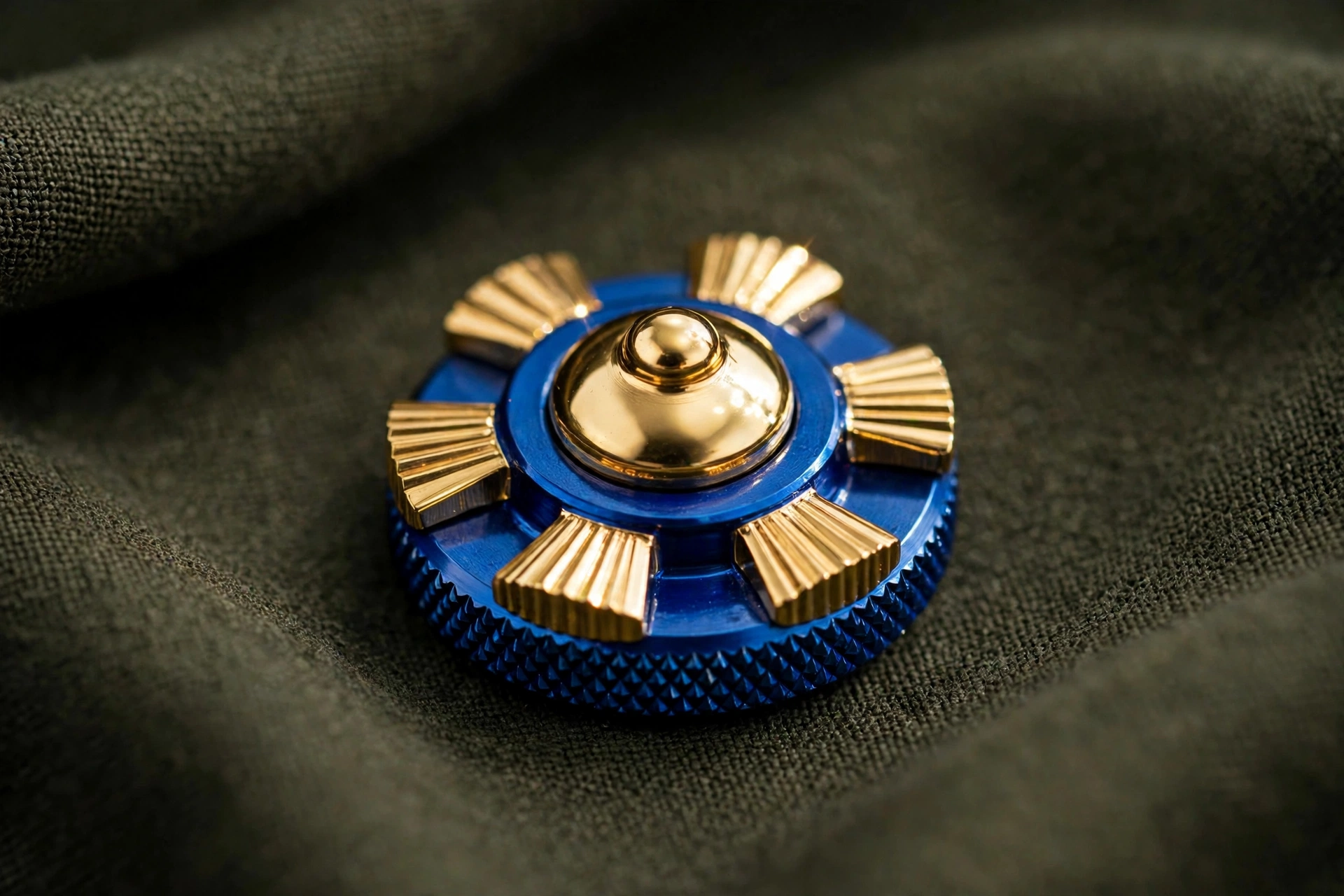
Precedence 05 · 12 mm
The Nut
The part: the flanged prop nut — the lug nut. The smallest part on the aircraft and the smallest pin in the set, at 12 mm: the nut that clamps the prop to the motor shaft, and the last thing checked before every flight.
Finish: deep blue anodised knurled body, six polished gold fluted grip fins, polished gold domed centre.
Construction: die-struck metal, hard enamel, single post with locking clutch. Edition of 25, engraved № / 25 on the back and entered in the Valor Ledger against one name.
What it honours: the finisher’s honour — the detail nobody saw, done right anyway. The loose prop nut caught on the pre-flight check is literally a 5-point Good Catch in the table below: this pin belongs to the people whose checking habit has quietly kept the line safe for a very long time.
How it’s earned: redeem 150 banked Valor Points, after The Bell — in precedence order, each pin once, one redemption per person per quarter. At 150 points, your ledger is a safety record the whole crew can read.
How it’s worn & presented: fifth position in the ring around the grade patch — small on purpose; the people who know, know. Pinned on in front of the crew, citation read aloud from the ledger.
Earn — 150 Valor Points
Precedence 06 · 15 mm
The Eyes
The part: the HDZero Goggle 2 box goggles — the actual goggle, not a generic visor: correct body shape and four separate antennas on top, because on the line the antennas are how you read whose feed is whose.
Finish: white body, four separate gold antennas, orange / purple / green / blue enamel panels, gold trim. The most colourful pin in the set.
Construction: die-struck metal, hard enamel, single post with locking clutch. Edition of 25, engraved № / 25 on the back and entered in the Valor Ledger against one name.
What it honours: the spotter’s honour — you saw it coming: the catch, the call, the save that started with someone watching. The highest achievement pin in the ring, one step below the decoration itself.
How it’s earned: redeem 180 banked Valor Points, after The Nut — in precedence order, each pin once, one redemption per person per quarter. Almost nobody gets here; the points demand years of witnessed line service.
How it’s worn & presented: sixth position in the ring around the grade patch, directly below where the Gold Plug sits when held. Pinned on in front of the crew, citation read aloud from the ledger.
Earn — 180 Valor Points
★ The Decoration · 15 mm · 12 Ever Struck
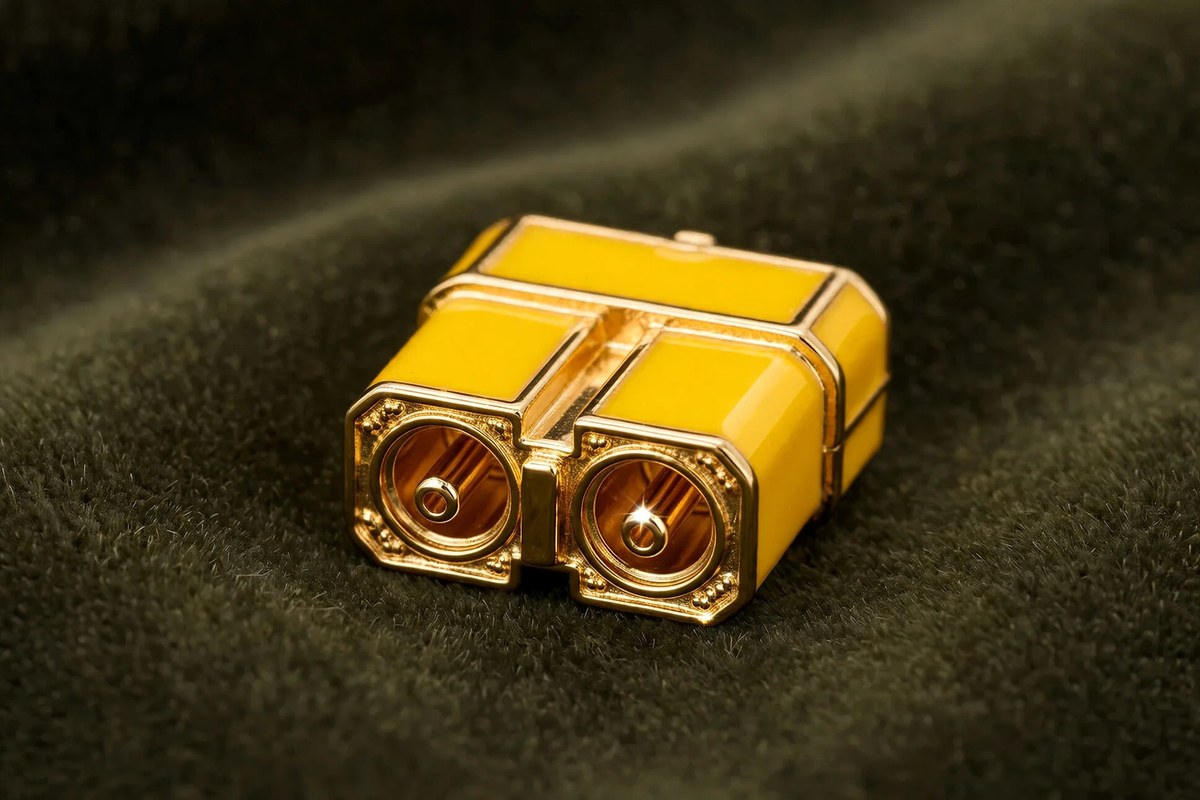
The Gold Plug
The part: the XT60 connector — the plug that connects battery to aircraft, the connection everything else depends on. In the ring, it sits where that connection sits: at the top.
Finish: fully gold — polished gold body and barrels, yellow enamel housing. No colour but gold. The most premium object in the company.
Construction: die-struck metal, hard enamel, single post with locking clutch. Edition of twelve — total, ever — each engraved and entered in the Valor Ledger against one name. When all twelve are awarded, the decoration closes and becomes history.
What it honours: THE decoration — this company’s Purple Heart. Two routes, both ending at Chase’s hand: a single verified 50-point Extraordinary Act, or 300 lifetime Valor Points. Even then it may be awarded — eligibility is not entitlement. Most years, none are.
How it’s worn & presented: top centre of the ring, above the patch, alone. The presentation is formal: citation read aloud with the crew standing to, pinned on by Chase personally — always, no delegate — followed by an honors dinner for the recipient. Then the crew closes it with the call: “Who taught your crew to fly?”
Awarded Only — Never Redeemed
The Standard
Points don’t buy grade. Grade doesn’t grant pins.
The two systems never convert. Hours and checkrides climb the patch ladder. Character — witnessed, logged, extraordinary — earns the ring. You need both to be read as complete on this line.
One Redemption Per Person, Per Quarter
The Pinning
Never handed over in an envelope.
A pin is pinned on in front of the crew — citation read aloud from the ledger: the act, the date, the witness. The top honors — Command / Instructor grade and the Gold Plug — carry a formal presentation, with the crew standing to. Then the crew closes it with the call: “Who taught your crew to fly?” The citation is the award. The pin is its receipt. The number on its back ties the two together forever.
Citation · Crew Present
3 — How Valor Points Are Earned
Routine good work earns no points — showing up and doing the job well is what pay and grade are for. Valor is for the day something went wrong, or nearly did, and one person was the reason it didn’t. Points are recorded in the Valor Ledger: date, act, witness, points, Chase’s initials.
Points
The Act
2 PTS
Pit-crew valor — rebuild another pilot’s quad overnight so it flies the next morning, or recover a downed aircraft from rough terrain for the crew
3 PTS
Cover the line — cover a fellow instructor’s session on no notice, and run it like your own
5 PTS
The Good Catch — spot the safety fault before flight (puffed LiPo, cracked arm, loose prop nut, wrong failsafe) on any aircraft on the line
5 PTS
Represent in public — work a full community / STEM / public-safety demo shift, representing the company
8 PTS
The breakthrough — mentor a struggling student to a documented breakthrough, or bring a struggling instructor up to standard
10 PTS
Run the day solo — run an entire cohort day alone: line, safety, students — without a single standard slipping
10 PTS
The Honest Act — return valuables found on site, or report your own incident nobody saw. Logged by Chase personally
15 PTS
Hold the moment — represent the company at a public event and handle a hard moment — a complaint, a scare, a crowd problem — safely and professionally
15 PTS
Podium — top-3 finish at a sanctioned competition, flying for the crew
25 PTS
The Save — prevent injury or serious damage: kill or catch a runaway quad, handle a LiPo fire correctly, stop an aircraft on a line toward a person
50 PTS
The Extraordinary Act — exceptional presence of mind: prevent an actual injury, or use the aircraft to help someone in immediate need — spotting a lost hiker and guiding help in
Witnessed, or it didn’t happen
An act counts only when witnessed by Chase or an instructor and logged the same day. Instructors may log up to 10 points; 15+ needs Chase. The Honest Act is the sole exception — Chase logs it himself.
Caps keep it honest
Routine acts (2–10 pts) cap at 10 points per person per day. Extraordinary acts (15+) are uncapped but always carry a written citation. One redemption per person per quarter — valor that arrives fast isn’t valor, it’s farming.
One authority — and revocation
Chase is the sole awarding authority for 15+ point acts and the Gold Plug. Nobody self-awards. A pin is surrendered — publicly, as it was pinned — for a safety violation, dishonesty, or misconduct. The ledger entry is struck through, never deleted.
4 — Built Into The Curriculum
You don’t apply for honors after the course. The course is where the record starts — every milestone below is assessed, logged, and signed off as you train.
DAYS 1–2
The Blank Field
You train as a Trainee — field issued blank. Simulator hours and the 60-second hover standard are your first logged entries. The logbook that will one day issue your patch opens here.
DAY 3 · FIRST FLIGHTS
First Solo
Set up your aircraft, pass Betaflight and failsafe checks, and fly your first solo. This is the Solo / Basic gate — first solo plus the safety & knowledge check, signed off by your instructor.
DAY 5 · CHECKRIDE & GRADUATION
Qualification — First Patch Issued
Qualification and graduation is the patch milestone: inspect, repair, execute your maneuver, and pass the check-off — and your first earned patch is issued from your verified logbook, in front of your unit. Operator (25 hrs / 50 flights) and Senior (100 / 200) keep climbing from the same logbook after graduation.
LINE SERVICE → INSTRUCTOR TRACK
Valor Points Start Accruing
Stay on the line — spotter, pit crew, demo crew, mentor — and Valor Points start accruing for witnessed, extraordinary service. Keep climbing to 250 hrs / 500 flights and pass the instructor checkride, and the brass star-and-wreath — and the INSTRUCTOR rocker — are in reach.
Start your record
Enlist, get your blank field, and start logging. Questions about the ladder, the ledger, or the line — Chase answers personally.
PATCH SAYS HOW FAR YOU’VE COME · RING SAYS WHO YOU ARE.
www.how2flyfpv.com YOUR TURN ✦ ENLIST NOW ✦ www.how2flyfpv.com YOUR TURN ✦ ENLIST NOW ✦ www.how2flyfpv.com YOUR TURN ✦ ENLIST NOW ✦ www.how2flyfpv.com YOUR TURN ✦ ENLIST NOW ✦
No calendar to chase. Units form on a rolling basis: when six operators are confirmed, the unit locks and the five days are scheduled as a group. File your interest and you are in line for the next formation.
Curriculum licensing $1,450 — materials separate ($1,826–$2,758) · five-day course from $6,325.76
Crews from $33,500 — Squad 10 · Company 15 · Battalion 20 · 5-day fly-and-keep
Five-day course — 40 contact hours
6 operators max per unit
50% deposit at signing invoiced after your inquiry is confirmed — refundable to 14 days out
FAA Part 107 included — crews test together and leave certificated; individual students get the full prep pathway (study plan + practice exams + test-day guidance)
Know an operator who needs real FPV qualification — or a company holding aircraft nobody can fly to standard? Copy and transmit. Ten seconds.
◈ Broadcast Post
www.how2flyfpv.com — THE EXPERIENCE. www.how2flyfpv.com — a five-day FPV operator course where you FLY, maintain, and keep the aircraft you train on — with the FAA Part 107 pathway built in, so you can fly it for work. Sim first. Acro from day one. 6 operators max. Instructor: Part 107 flight-test operator, 2,000+ hrs, 200+ builds. Doodle Labs & Silvus configuration trained. Curriculum licensing $1,450 per student. Crews: Squad 10 $33,500 · Company 15 $52,000 · Battalion 20 $67,000 — Part 107 included on every crew tier, crews leave certificated. Units forming now: www.how2flyfpv.com
◈ Direct — To a Partner
You said you wanted to learn FPV for real. www.how2flyfpv.com: five-day course — you train on factory aircraft, fly acro from day one, and keep the aircraft you train on. 6 max per unit, $1,450 licensing, 50% deposit at signing. Next unit forming now: www.how2flyfpv.com
◈ Enterprise Brief
www.how2flyfpv.com for crews: 5-day fly-and-keep cohorts — your team flies, trains on, maintains, and keeps their aircraft — with FAA Part 107 included: study built into the week, the crew tests together, and your operators leave certificated and legal to fly for work. Delivered on-site by Chase LeDeatte, Part 107 flight-test operator (previously Scout AI), 2,000+ hrs · Doodle Labs & Silvus configuration. Squad 10 crew $33,500 · Company 15 crew $52,000 · Battalion 20 crew $67,000 · Instructor day rate $5,000/day. Inquiries: chase@how2flyfpv.com · www.how2flyfpv.com
No. The course assumes zero. Most operators arrive with no radio time; half have only flown DJI camera drones.
When does the next unit start?
Units form on a rolling basis — when six operators are confirmed, the unit locks and the five days are scheduled with the group. File interest above and you will be offered a position in the next formation. No fixed dates — nothing expires, nothing is missed silently.
What does the kit cost?
$1,826–$2,758 by platform (Tinywhoop $1,826, 5″ Freestyle $2,758). Each one is a ready to fly kit — all in one, everything you need: aircraft, radio, goggles, charger, batteries, backpack, hex drivers, nut drivers, an M3 screw kit, a multimeter, a full soldering kit with solder, tweezers, zip ties, shrink tube and a battery checker. Full parts list issued on booking confirmation. Procure via our group partner or source independently.
What if I miss a day?
A 30-minute makeup window with your instructor is held before the next session.
Will I fly outdoors?
Affirmative. From Day 3 — First Flights — sessions run at the outdoor flight field.
Age requirement?
16+. Operators under 18 require a parent signature on the training waiver.
Where is training conducted?
Individual units train at your site or an arranged field — training deploys to where your crew is. Enterprise training deploys to your site, nationwide by arrangement.
What if I cannot yet hold the hover standard by Day 2 (Gate G4)?
Full licensing refund. No questions. That is the standard.
Do I keep my aircraft?
Affirmative. The aircraft you train on is yours permanently.
What is Part 107 — and do I get it here?
Part 107 is the FAA Remote Pilot certificate: the licence required to fly drones for work or pay in the US. It is a 60-question FAA exam (70% to pass, TSA vetting, age 16+), kept current with recurrent training every 24 months. And yes — it is a headline part of this program, not an afterthought. Crew cohorts study through the 5-day week and test together at week’s end, leaving certificated. Individual students run the Part 107 pathway across the five days — study plan, practice exams to the 85%-twice standard, and test-day guidance — so graduation leads straight to the exam.
Can I fly commercially with just TRUST?
No. TRUST covers recreational flying only. The moment the flight is for work — a client, an employer, a business, any compensation — the FAA requires a Part 107 Remote Pilot at the controls. That is exactly why Part 107 is built into every program here.
How is crew pricing structured?
Flat per crew, 5-day fly-and-keep cohorts: Squad $33,500 (10 crew), Company $52,000 (15 crew), Battalion $67,000 (20 crew). Every operator flies, maintains, and keeps their aircraft. Standalone instructor day rate is $5,000/day plus travel. File the crew form or email chase@how2flyfpv.com for a scoped flat quote after a discovery call. Full details: www.how2flyfpv.com.
www.how2flyfpv.com — Merch Catalog
The kit is issued. Now it’s yours.
Every How2FlyFPV™ cohort member receives the full setup at sign-up — genuine Carhartt, genuine YETI, embroidered and engraved to the house spec. Graduates and fans can buy the same pieces here, one by one. When a run is gone, it’s gone.
Right-chest embroidered mark on every top — Carhartt keeps the left. Three colourways: full colour on black and gravel, cream-led on Carhartt Brown and moss, subdued black and olive for the field. YETI is laser-engraved only — never printed, never wrapped.
Join a cohort and the kit comes with your seat — sizes collected at sign-up, season-matched to your cohort. Summer kits carry the Sun Defender layer and no jacket; winter kits carry the Detroit and beanie and no sun gear. The year-round core is in every kit. The full kit is issued with your seat — $1,382 at store prices, itemised in the pricing section.
In Every Kit
Year-Round Core Kit
$1,382 full kit · store prices
The core issue: uniform pieces, cap, drinkware, patches, smalls, and name tape — the setup every operator carries year-round.
Sun Defender Layer · No Jacket
Summer Kit
Included in the full kit
Core kit plus the summer field layer — Sun Defender shirt and sun gear, season-matched to warm-weather cohorts.
Detroit + Beanie · No Sun Gear
Winter Kit
Included in the full kit
Core kit plus the cold-weather layer — Detroit Jacket and A18 beanie, season-matched to winter cohorts.
Buy it in the store
Every piece above is in the How2FlyFPV™ Shopify store — pick your piece, size, and colourway, and check out there. Kit questions: chase@how2flyfpv.com.
Now hiring — join the flight line. We build FPV teams. Now we’re building ours.
How2FlyFPV™ trains crews for a living — public safety, utilities, inspection, construction, and the next generation coming up through school and workforce programs. Every cohort needs instructors who can fly it, build it, fix it, and teach it. If that’s you, there’s a place for you on this flight line. This is a part-time on-call W-2 instructor bench — the honest deal, stated up front: we are building the bench ahead of booked work, so there are no guaranteed hours yet. When a cohort books, bench instructors get the first call for paid assignments, at $31–$50/hr — placement within the range by role and experience, with the exact rate set in writing per assignment before you accept. Assignments include paid travel and a per diem for food. Keep your job, keep your gigs — nobody is asked to sit by the phone. We hire nationwide, anywhere in the US — the flight roles are 100% travel to wherever the cohort runs, the Build & Repair Tech role is fully remote, and there is no relocation — ever: you keep your home base.
Part-Time On-Call W-2Instructor Bench — First CallNo Guaranteed Hours Yet$31–$50/hr · Exact Rate Set in Writing Per AssignmentPaid Travel + Per Diem for Food on AssignmentsHiring Nationwide — Flight Roles 100% TravelNo Clearance Required
Every instructor at How2FlyFPV™ flies the same house fleet our students learn on: the EMAX Tinyhawk III Plus Analog in the classroom, the GEPRC CineLog30 V2 Analog for fly-through work, the GEPRC MARK5 Analog as the main trainer — HDZero Goggle 2, RadioMaster Boxer in hand, CNHL batteries throughout. Tell us what you’ve flown; you’ll teach on this.
The work is hands-on: run flight-line training, teach at the build bench, check aircraft, manage batteries, log flights, and hold the safety standard while students learn. When an aircraft goes down, you diagnose it, fix it, and put it back in the air the same day.
Three ways in. Every role is a part-time on-call W-2 bench position — no guaranteed hours yet, bench gets first call, pay listed at $31–$50/hr, with the exact rate set in writing per assignment. Assignments include paid travel and a per diem for food.
Role 01 — Leads the Cohort
Lead FPV Instructor
Part-time on-call W-2 · $31–$50/hr · exact rate set in writing per assignment
You run a cohort: teach it, fly it, keep it safe, sign it off — 5-day fly-and-keep crew cohorts and the Five-Day FPV Core Week, start to finish. This role is 100% travel: you teach where the cohort is, at client sites anywhere in the US.
FAA Part 107 Remote Pilot Certificate
2–3 years of FPV flying across multiple platforms, acro included
Real build-and-repair hands — full builds, soldering, troubleshooting
Betaflight and ExpressLRS depth, simulator instruction experience
Teaching, coaching, or mentoring experience
Role 02 — Coaches the Line
Assistant Instructor
Part-time on-call W-2 · $31–$50/hr · exact rate set in writing per assignment
You coach students on the line, one breakthrough at a time: simulator and acro sessions, build-bench support, and one-on-one reps until they hit standard. The entry door for strong pilots newer to teaching. This role is 100% travel: you coach where the cohort is, at client sites anywhere in the US.
FAA Part 107 Remote Pilot Certificate
25+ logged FPV hours in the past 6 months, confident in acro
At least one FPV build of your own; solid bench basics
Coaching, mentoring, or teaching experience — formal or informal
Role 03 — Owns the Bench
Build & Repair Tech
Part-time on-call W-2 · $31–$50/hr · exact rate set in writing per assignment
You keep the fleet flying from your own bench — this role is fully remote, with no on-site work. We mail you aircraft and parts; you build and repair them and mail them back, worked to the Bench standard — 5-business-day turnaround, the diagnostic starts the clock: kit prep before cohorts, crash repairs turned around while cohorts are in session, and a method for finding faults fast.
Complete builds from parts — frame, stack, motors, VTX, camera, receiver
Clean, reliable soldering and LiPo safety fundamentals
Betaflight / ExpressLRS configuration and failsafe verification
Part 107 held, or actively studying for it — required before any flight-line coaching duties
Qualifications — The Full List
What it takes to get assigned
FAA Part 107 Remote Pilot certificate — current. That means 16 or older, English-speaking, the 60-question FAA exam passed at 70%+, TSA vetting cleared, and recurrent training kept current every 24 months — Build & Repair Technicians actively studying may join for bench work only (builds/repairs, no student flight-line, no coaching) until Part 107 is held and their certificate copy is on file
Real logged FPV hours — 25+ hours in the past 6 months is the assistant-instructor floor; lead roles require 2–3 years of FPV across multiple platforms
Hands-on build skill — solder, assemble, and tune a quad from parts: flight-controller / ESC stack, motors, VTX, antennas
Repair under pressure — diagnose, swap, re-fly, same day
Systems fluency — Betaflight, ExpressLRS, simulator training, acro flight
Teaching ability — mentoring or instruction experience; senior roles benchmark at up to 2–3 years of FPV, build, and teaching combined
Based anywhere in the US — and built for the role’s setup — we hire nationwide: flight roles are 100% travel to cohort sites anywhere in the US, and Build & Repair Techs work fully remote, mail-in only, to the Bench standard — 5-business-day turnaround. No relocation is offered — you keep living where you live
No security clearance required for How2FlyFPV™ roles — clearance belongs to separate defense-contract jobs, not this work
Bench + flight skills check passed before your first paid assignment
The Job — Day to Day
Exactly what you will do
Teach the assigned cohort
Run your sessions on the 5-day crew program or the Five-Day FPV Core Week — briefed, flown, debriefed.
Own safety on your line
Safety brief, preflight checks, and failsafe verification before any aircraft leaves the ground.
Coach hands-on
Simulator, acro, and build bench — side by side with students, not lecturing from the front.
Inspect and repair
Check every solder joint you supervise; fix crashed aircraft and return them to flight the same day.
Keep the record
Log hours, attendance, and per-operator skills check-offs — accurate enough for a safety lead to enforce.
Hold the standard with clients
Public-safety, industrial, and commercial crews train to one standard — yours, on the day.
How to Apply — Exact Steps
Apply to teach — we read every one
Complete the form
Every field. Incomplete applications do not get a call.
State your Part 107 status
Held and current, recurrent training due, or exactly where you are in getting it — plus your currency date if you hold it. Lead and Assistant applicants must upload an actual copy of their certificate in the form. Build & Repair Techs actively studying state their study status instead — bench work only until the certificate is held and on file.
Show your hours and bench time
Total logged hours, hours in the past 6 months, builds completed, and the repairs you can prove.
Upload your resume
Attach your resume file directly in the form (PDF, DOC or DOCX) — it files with your application, no follow-up email needed. A resume link field is there too, as backup.
Submit — it goes straight to us
The form sends directly to How2FlyFPV™ when you hit Submit — no email app, no manual send. If you don’t submit, nothing is filed, so finish the form in one sitting.
Skills check, then assignment
If you fit: a call, a bench + flight check, then a written assignment offer — scope, dates, location, rate — before you accept.
Terms, stated plainly: part-time on-call W-2 bench · no guaranteed hours yet · bench members get first call when a cohort books · $31–$50/hr, exact rate set in writing per assignment · assignments include paid travel and a per diem for food · hiring nationwide — flight roles 100% travel, tech role fully remote · no clearance required.
A dedicated inspection-training segment on DJI platforms only — the Avata line leads — Avata 2 and Avata 360 — then the Mini, the Pro, and the larger Matrice aircraft: 4E, 4T, and 400 RTK. Every aircraft here can actually be purchased in the US. Built for the people who inspect utilities, infrastructure, and public-safety scenes for a living: thermal imaging, LiDAR, and close inspection work, taught hands-on to a documented standard. FAA Part 107 is included on both tiers — inspection flying is commercial flying, so your inspectors study through the program and leave certificated, not just trained.
Live Operations — Ground ControlThermal · LiDAR · Inspection
What The Segment Trains
The inspector’s skill set.
Not camera-drone basics — the working skills of the inspection role, flown on enterprise aircraft with enterprise payloads, and checked off per operator.
Thermal Imaging
Read heat the way an inspector has to: find the fault, not just the picture.
Thermal payload setup, palettes, and temperature measurement
Hotspot and anomaly detection on electrical and mechanical assets
Roof, solar, and building-envelope survey patterns
Search support and scene overwatch for public-safety crews
LiDAR & Mapping
Collect data a survey team can actually build on.
LiDAR payload operation and capture discipline
Corridor and structure mapping flight patterns
Repeatable data collection — the same asset, the same pass, every time
Deliverable checks before the crew leaves the site
Inspection Work
The day-to-day of the role, flown close and flown safe.
Transmission towers, substations, and line inspection
Bridges, rooftops, towers, and confined infrastructure
Close-range, GPS-tight flying around live assets
Crew roles, checklists, and documentation your safety lead can enforce
The Offers — Seven DJI Aircraft · US-Purchasable Only
Pick your aircraft. Keep your aircraft.
Seven DJI aircraft — that is the whole lineup, and every one of them can actually be purchased in the US. Students purchase their DJI aircraft and remote through How2FlyFPV and keep them — we don't train on DJI aircraft themselves. What we train is the work itself: thermal imaging, LiDAR, and inspection method, with a per-operator skills check-off and written record — and Part 107 included, because inspection work is commercial work and the FAA certificate is what makes it legal. All cohorts: 50% deposit required at signing — that deposit funds the equipment purchases for the cohort.
DJI aircraft supplied with your program.
DJI AVATA 2REMOTE — DJI RC MOTION 3 · GOGGLES 3
The FPV — Interior & First Response
DJI Avata 2
$409 / AIRCRAFT
The ducted FPV platform the first responders fly: a cinewhoop-format aircraft with full propeller guards, flown immersive on DJI Goggles 3 with the RC Motion 3. Interior and confined-space work — the platform police and first-response teams put through doorways and down hallways where a camera drone cannot go. Drone only runs $409; the Fly More Combo (Goggles 3 + RC Motion 3) runs $849.
ControllerDJI RC Motion 3 · DJI Goggles 3
Full KitFly More Combo (Single Battery) — $849
AIRCRAFT — $409 · PURCHASED THROUGH HOW2FLYFPV · YOURS TO KEEP
DJI AVATA 360REMOTE — DJI RC 2
The 360 — 8K 360° FPV
DJI Avata 360
$719 / AIRCRAFT
The newest Avata: a ducted FPV aircraft carrying dual 1/1.1-inch sensors for 8K 360° capture — fly the line first, then choose the shot in post from the full sphere. Sold in the US as a kit with the DJI RC 2 at $719; the Fly More Combo (RC 2) runs $979.
ControllerDJI RC 2
Full KitFly More Combo (RC 2) — $979
AIRCRAFT — $719 · PURCHASED THROUGH HOW2FLYFPV · YOURS TO KEEP
DJI MINI 5 PROREMOTE — DJI RC 2
The Mini — Compact
DJI Mini 5 Pro
$759 / AIRCRAFT
The small one that punches up: 1-inch sensor in a sub-250g airframe, flown on the DJI RC 2 controller. Roof, solar, and building-envelope work — and the light-inspection trainer a crew can put up anywhere. Fly More Combo (RC 2) runs $1,039.
ControllerDJI RC 2
Full KitFly More Combo (RC 2) — $1,039
AIRCRAFT — $759 · PURCHASED THROUGH HOW2FLYFPV · YOURS TO KEEP
DJI MAVIC 4 PROREMOTE — DJI RC 2
The Pro — Flagship Camera
DJI Mavic 4 Pro
$2,199 / AIRCRAFT
The Pro: 100MP Hasselblad triple-camera flagship on the DJI RC 2 — the detail camera for close inspection documentation, condition reports, and client-ready imagery. Sold through US DJI retailers; the Fly More Combo runs $2,899.
ControllerDJI RC 2
Full KitFly More Combo (RC 2) — $2,899
AIRCRAFT — $2,199 · PURCHASED THROUGH HOW2FLYFPV · YOURS TO KEEP
DJI MATRICE 4EREMOTE — DJI RC PLUS 2 ENTERPRISE
The Larger — Enterprise Mapping
DJI Matrice 4E
$5,189 / AIRCRAFT
The mapping half of the larger enterprise line: 20MP mechanical-shutter camera, built-in RTK, and 49-minute flights — survey, construction, and corridor work.
ControllerDJI RC Plus 2 Enterprise
Full KitAircraft · RC Plus 2 Enterprise · hard case
AIRCRAFT — $5,189 · PURCHASED THROUGH HOW2FLYFPV · YOURS TO KEEP
DJI MATRICE 4TREMOTE — DJI RC PLUS 2 ENTERPRISE
The Larger — Enterprise Thermal
DJI Matrice 4T
$7,849 / 4T KIT
The thermal core trainer: 640×512 thermal, 112× zoom, and a laser rangefinder, kitted with the RC Plus 2 Enterprise controller — utility, solar, and public-safety inspection.
ControllerDJI RC Plus 2 Enterprise
Full Kit4T kit — battery · charging hub · 100W adapter · hard case
AIRCRAFT — $7,849 · PURCHASED THROUGH HOW2FLYFPV · YOURS TO KEEP
The biggest DJI we fly: a 59-minute heavy platform on the RC Plus 2 Enterprise Enhanced controller, lifting swappable Zenmuse payloads. With the H30T thermal payload ($11,610), the full working thermal kit — aircraft, payload, batteries, and charging station — runs about $27,769.
ControllerDJI RC Plus 2 Enterprise Enhanced
Full KitZenmuse H30T · L3 · P1 payloads · TB100 batteries · BS100 station
AIRCRAFT — FROM $10,450 · THERMAL KIT $27,769
DJI — THE PLATFORMS
Every platform shown as the full working unit — aircraft with the controller it kits with.
DJI Avata 2
FPV Tier
DJI Avata 2
$409
Flown immersive — DJI Goggles 3 with the DJI RC Motion 3. The Fly More Combo (Single Battery) runs $849.
DJI Avata 360
360° FPV
DJI Avata 360
$719
Flown with the DJI RC 2. The Fly More Combo (RC 2) runs $979.
DJI Mini 5 Pro
Mini Tier
DJI Mini 5 Pro
$759
DJI RC 2
DJI Mavic 4 Pro
Pro Tier
DJI Mavic 4 Pro
$2,199
DJI RC 2
DJI Matrice 4E
Mapping Trainer
DJI Matrice 4E
$5,189
DJI RC Plus 2 Enterprise
DJI Matrice 4T
Thermal / Inspection Trainer
DJI Matrice 4T
$7,849
DJI RC Plus 2 Enterprise
DJI Matrice 400 RTK + Zenmuse H30T
Heavy / Payload Trainer
SHARED CREW UNIT
DJI Matrice 400 RTK + Zenmuse H30T
$10,450
DJI RC Plus 2
Shared crew unit — trained per-crew. The heavy platform is trained on one shared unit per crew — it is not a per-student take-home.
Platform values as listed in the offers above — DJI aircraft are purchased through How2FlyFPV at DJI's prices, and are the customer's to keep. Ever
DJI aircraft at DJI's listed prices, supplied through How2FlyFPV.
y DJI course carries the standard course kit (REEBOW GEAR 40L bag · Galaxy Tab A11+ · SUPCASE case · UGREEN hub). Materials $920 · five-day course $5,419.96 — the course kit, the literature, and the consulting; merch is sold separately. Aircraft and remote are purchased through How2FlyFPV and are yours to keep — we don't train on DJI aircraft. Course structure: licensing $1,450 · consulting $1,000/day per person — licensing dropped on the five-day course.
Full price $7,370 (materials $920 + licensing $1,450 + five-day consulting $5,000; aircraft priced separately at DJI's prices, purchased through How2FlyFPV) → Five-day deal $5,419.96SAVE $1,950.04 per student — licensing + material margin dropped, five-day course only.
Claude AI basic training included — basic Claude membership per person, with a basic introduction and training (Tips and Tricks).
An enterprise-platform module inside the commercial catalog — the platform layer the other segments ask for by name, because DJI is the installed base most organizations already own.
Day 1 — Capture
DJI Pilot 2 mission planning and RTK discipline
Matrice 4E mapping capture — mechanical shutter, repeatable viewpoints
Matrice 4T thermal and zoom capture on training assets
400-class aircraft with Zenmuse payloads — H30T thermal/zoom, L2 LiDAR
Day 2 — Deliverable
DJI Terra and Thermal Analysis Tool processing
Radiometric re-measurement — readings an engineer can re-check
The defect / progress deliverable, built and reviewed
Legacy-fleet differences — Mavic 3 and Matrice 30/300 support
Individual sign-off against the documented standard
Stated Plainly
DJI issues no pilot licence — this is platform training to a documented standard, never a “DJI certification”
New DJI models cannot currently be authorised for US sale; aircraft already authorised remain legal to buy and fly while stock lasts
Federally funded buyers: ask about the US-made alternatives in the same conversation
The platforms, at current US list.
Matrice 4E — mapping, mechanical shutter · $5,099–$5,189
Gear prices are current US dealer list — imported aircraft and thermal payloads are widely listed pre-tariff, and landed cost is confirmed in writing at purchase. The Mavic 3 Enterprise / Thermal line is discontinued: it is taught here as legacy-fleet support only.
Pricing: DJI inspection training is delivered inside the 5-day crew cohorts — Squad $33,500 · Company $52,000 · Battalion $67,000 — thermal, mapping and the deliverable, field-flown. The full crew tiers below stand as published.
How The Tier System Applies
Two ways to put a crew on aircraft.
The same tier system as the FPV crew programs. Which tier fits depends on one question: does your organization keep its aircraft, or do we bring the fleet?
TIER — BASIC
Your crew buys and keeps its aircraft
Your organization purchases its DJI aircraft — Mini 5 Pro, Mavic 4 Pro, Matrice 4E, Matrice 4T, or Matrice 400 RTK — and your crew trains on the exact aircraft it will fly on the job. The fleet stays with you when training ends.
Training on your own enterprise aircraft and payloads
Thermal imaging, LiDAR, and inspection curriculum
Per-operator skills check-off and written record
Platform setup, checklists, and SOPs delivered with the training
Part 107 included — study built into the program; your inspectors test together at program’s end and leave certificated
50% deposit at signing — that deposit funds the cohort’s equipment purchases
AIRCRAFT — FROM $759 (MINI 5 PRO) · PURCHASED THROUGH HOW2FLYFPV · YOURS TO KEEP, ANY OF THE FIVE
Training aircraft, payloads, and support gear are provided for the program — your inspectors arrive ready to train and leave qualified on the platform, with nothing to source, stage, or maintain first.
Enterprise aircraft and payloads provided for training
Thermal imaging, LiDAR, and inspection curriculum
Per-operator skills check-off and written record
A fleet and payload plan for when your crew is ready to buy
Part 107 included — study built into the week; your inspectors test together at week’s end and leave certificated
50% deposit at signing — that deposit funds the cohort’s equipment purchases
ALL COHORTS — 50% DEPOSIT REQUIRED AT SIGNING · THAT DEPOSIT FUNDS THE EQUIPMENT PURCHASES FOR THE COHORT
Scope your inspection crew
Tell us your sector, your headcount, and the assets you inspect. We reply personally with the tier recommendation and scheduling for your crew — no forms to chase, no hourly meters.
DJI® is a registered trademark of SZ DJI Technology Co., Ltd. How2FlyFPV supplies DJI aircraft to its students. How2FlyFPV is not a DJI authorized retailer and is not affiliated with or endorsed by DJI.
This is THE EXPERIENCE. You fly factory aircraft — simulator first, acro from day one, bench setup and maintenance training throughout. No loaners. No angle-mode crutch. No spectators. You leave an operator: hands that can set it up, fix it, and fly it.
And you don’t just leave able to fly — you leave on the path to flying for work. The FAA Part 107 Remote Pilot certificate — the licence the FAA requires for paid drone work — is built into this course: structured study, practice exams, and test-day guidance alongside your flight training, so graduation points straight at a certificate, a portfolio, and paying work. Not just a hobby. A credential.
Book the training on its own, or book the whole outcome — certificate, gear, kit, and curriculum included. Both tiers run the same standard.
Claude AI Basic Training IncludedBasic Claude membership included with every tier.
Basic
The training itself
Squad — 10 crew $33,500
Company — 15 crew $52,000
Battalion — 20 crew $67,000
Consulting $5,000/day
Your crew trains on How2FlyFPV™’s fleet, with Chase LeDeatte, founder and lead instructor
No drone purchase required — and none included
Every crew member gets the program t-shirt
Nothing else bundled — the training, plain and simple
All-Inclusive (Deluxe)
Everything in Basic, plus
Part 107 certification run included — study woven through the week, the whole crew tests together through PSI and walks out with temporary certificates; the $175 PSI exam fee is itemised separately — the student’s at test time, unless the buyer elects at signing to absorb it
The full flight gear set — aircraft, goggles, radios, and the battery program — that stays with your organization
The full 13-piece How2FlyFPV™ merch kit for every crew member: Detroit Jacket, Chore Coat, Sun Defender Shirt, Work Shirt, Quarter-Zip Pullover, Force Pocket Polo, YETI Tumbler, YETI Bottle, Canvas Cap, A18 Beanie, Smalls Set, Patch Set, Name Tape
A take-home laptop for every crew member — a refurbished Lenovo ThinkPad P15 Gen 2, with the interactive curriculum loaded
Printed curriculum for every student
Year-one licensed access to the How2FlyFPV™ curriculum and training app for your site — progress tracking, skill gates, flight logs, and the honors record
Full pricing in writing per engagement.
PSI® is a registered trademark of PSI Services LLC. PSI administers FAA knowledge examinations under contract with the Federal Aviation Administration. How2FlyFPV students register and test through PSI's public testing channel, as any applicant does. How2FlyFPV is not a PSI testing center and is not affiliated with, sponsored by, or endorsed by PSI.
Agriculture · Application Operations
Ten days. The full stack.
One course that takes you from zero to a passed Part 107 exam, a complete Part 137 preparation with your filing packages assembled, and the full California DPR pathway prepared — including the loading science application work runs on.
We teach the pathway; the FAA and California DPR issue the certificates. Nothing you complete here is a certificate. What you leave with is the preparation, the paperwork, and the skill — done right the first time.
DELUXE — $12,500 a seat · ten days · everything included · class capped at 8
The stack — five pieces, in order
1 · FAA Part 107
The Remote Pilot Certificate. Issued by the FAA — you sit the exam through PSI on Day 6. The $175 exam fee is PSI’s own charge, itemised separately from your course price — yours at test time, unless your buyer elects at signing to absorb it.
2 · §44807 Exemption
Required for application aircraft at 55 lbs and up. Your petition package is drafted and reviewed in class.
3 · Part 137 AAOC
The Agricultural Aircraft Operator Certificate. Form 8710-3 completed line by line, with the §137.19(e) knowledge and skill preparation taught to the documented standard.
Your Pest Control Aircraft Pilot Certificate — Apprentice application packet, assembled in class, attachment by attachment.
The two weeks
Week 1 — Part 107, complete (Days 1–6)
The whole exam body at its current weights — Regulations, Operations, Airspace, Weather, Loading — drilled the way the test asks it. Two full timed practice exams and a readiness gate (85%+ on both) before anybody sits the real one. Day 6 is exam day through PSI, and the class files the IACRA paperwork together that afternoon.
Week 2 — Part 137 + California (Days 7–10)
The Part 137 certificate and the §44807 exemption, package by package. The heavy branch taught whole: at 55 lbs and up the rules change — Part 91, an N-number, and a third-class medical if you fly at night. Then the California layer: DPR exams prepared, the Apprentice packet assembled, your Journeyman year mapped — one year as an Apprentice plus 50 hours under a Journeyman. That year can’t be shortened, and we won’t pretend otherwise.
The ten days
DAY 1
Regulations
The rules of commercial flight — the Week 1 exam body opens with the regulations, at the test’s current weights.
DAY 2
Airspace & Charts
Reading the sectional, knowing where you can and cannot fly, and how controlled airspace is entered legally.
DAY 3
Weather
METARs, forecasts, and what the weather does to a working flight — read the way the test asks it.
DAY 4
Operations
Crew and operating discipline, and loading on the exam’s terms — the last teaching block before the drills.
DAY 5
Practice Gate
Two full timed practice exams, drilled the way the test asks. The readiness gate is 85% or better on both before anybody sits the real one.
DAY 6
Test Day — PSI Exam
Exam day through PSI. The $175 exam fee is itemised separately from the course price — the student’s at test time, unless the buyer elects at signing to absorb it. That afternoon, the class files the IACRA paperwork together.
DAY 7
Part 137
The Agricultural Aircraft Operator Certificate — Form 8710-3 completed line by line, with the §137.19(e) knowledge and skill preparation taught to the documented standard.
DAY 8
§44807 + The Heavy Branch
Your exemption petition drafted and reviewed in class. At 55 lbs and up the rules change — Part 91, an N-number, and a third-class medical if you fly at night.
DAY 9
California DPR
QAC exam preparation — Laws & Regulations, Basic Principles, Plant Agriculture — and your Unmanned Apprentice packet, assembled attachment by attachment.
DAY 10
Loading + Coverage Routes
The loading strand worked end-to-end — graded worksheets, field problems, your final load plan — and Day 10 coverage-route flights, logged to the standard employers screen for.
AFTER
The Journeyman Year
One year as an Apprentice plus 50 hours under a Journeyman, drawn as a calendar with the hour log started. That year can’t be shortened, and we won’t pretend otherwise.
The course, plainly — 10 days · Part 107 + Part 137 · California DPR pathway · Exam at PSI on Day 6 · Class capped at 8 · $12,500 a seat
The loading strand — why this course is ten days
On the Part 107 exam, loading is 2% of the test. In application work, loading is the job: the product leaves the aircraft in flight, the weight and balance move with it, and the math — rate, flow, speed, swath, tank, loads per field — decides whether the day makes money. This course teaches the exam’s 2% in its 30 minutes, then teaches loading as a working discipline: weight & balance across full, half, empty, and ferry states; performance at working weight; swath and flow math worked end-to-end; the load plan written as a professional document; and chemical loading, mixing, label, and spill procedure taught at the bench with water and inert materials only. Our own flying stays scouting and facility inspection — no dispensing is flown, practiced, or simulated as application in this course.
What you walk out holding
Your Part 107 result
The one third-party credential — issued by the FAA, earned at PSI.
Filing packages
Your reviewed 8710-3 and §44807 packages, plus a dated filing checklist for everything that completes after the federal pieces issue.
DPR packet + roadmap
The Apprentice packet as assembled — every attachment present, or named and dated — and your Journeyman year drawn as a calendar with the hour log started.
Loading work
Graded weight-and-balance worksheets, graded field problems, and a load plan that would survive an operator’s read.
Flight record
Simulator pattern sorties and Day 10 coverage-route flights, logged to the standard employers screen for.
The full merch kit
Every piece in the How2FlyFPV™ merch line, issued with your seat — itemized in the pricing section below. The 10-day comes complete; there is no smaller version of it to buy.
Who this is for — and who it isn’t
For: pilots going to work in agricultural application operations, operator-owners building an application business, and crew leads who will document others. Not for: scouting and imaging only — if nothing you fly dispenses anything, you need Part 107, not this course, and we’ll tell you that at intake rather than sell you the seat.
Pricing — one tier: Deluxe
The 10-day comes in exactly one form: Deluxe — the complete course, everything included. There is no base tier and no stripped-down version. If it’s part of the course, it’s in the seat.
DELUXE — $12,500 per seat · employer/agency cohort: $9,850 per seat at a full cohort of 8 ($78,800)
Week 1 — Part 107 complete: five full teaching days, two timed practice exams, the readiness gate, and exam day through PSI.
The PSI exam fee, itemised separately — the $175 FAA test fee is PSI’s own charge, outside the course price; you book your seat and pay PSI at test time, unless your buyer elects at signing to absorb the fee.
Week 2 — Part 137 + California DPR: §137.19(e) preparation, the heavy branch, DPR QAC exam preparation (all three categories), chemical-handling discipline.
Filing-package assembly included — Form 8710-3 and the §44807 petition drafted with you and reviewed line by line; the DPR Apprentice packet assembled and audited in class.
The loading strand — the deep day, graded worksheets and field problems, and your final load plan.
Materials included — the three-volume printed curriculum (Part 107 track · Part 137 playbook · Loading & DPR workbook) is yours to keep.
Take-home laptop included — the refurbished Lenovo ThinkPad P15 Gen 2, with the interactive curriculum loaded, goes home with you.
Support window — if the gate says not yet, or a sitting doesn’t go your way, course support continues through one repeat of the repair loop and a written retest plan, within 30 days.
The full merch kit — included. Every piece in the How2FlyFPV™ line, issued with your seat:
Detroit Jacket — $279
Chore Coat — $249
Sun Defender Shirt — $145
Work Shirt — $135
Quarter-Zip Pullover — $129
Force Pocket Polo — $95
YETI Rambler 20 oz Tumbler — $85
YETI Rambler 26 oz Bottle — $79
Canvas Cap — $65
A18 Beanie — $49
Smalls Set — $35
Patch Set — $25
Name Tape — $12
$1,382 of merch at store prices — in the seat, not sold to you after.
Class is capped at 8 and runs at 6 — Days 7–10 are filing and loading work reviewed student by student, and a bigger room can’t be given that honestly. Employer and agency cohorts book the same Deluxe course direct, 50% deposit at signing. Individual seats enroll through our partner-institution route — write us and we’ll walk you through yours. California DPR charges its own application and exam fees, paid by you directly to DPR; they are not part of the course price.
The 10-Day Exclusive, laid out — the take-home ThinkPad P15 laptop and the full 13-piece merch kit, with the five training remotes riding below. Not for sale. Training only.10-DAY — EVERYTHING INCLUDED
REEBOW GEAR 40L Tactical Backpack
Refurb ThinkPad P15 Gen 2 laptop
$650
The ControllersEvery controller in the stack — pictured
RadioMaster Boxer (ELRS)
$129.99
DJI RC Plus (RM700B) — Agras Remote
XAG ARC3 Pro
$941
EAVision EAV-RC50
$1,600
Hylio GroundLink
Talos T60X
$2,999
Not for sale. Training only.
The Full Merch KitAll 13 pieces — issued at sign-up
Detroit Jacket — Carhartt Duck Detroit
$279
Chore Coat — Carhartt Firm Duck
$249
Sun Defender Shirt — Carhartt Force
$145
Work Shirt
$135
Quarter-Zip Pullover
$129
Force Pocket Polo
$95
YETI Rambler 20 oz Tumbler
$85
YETI Rambler 26 oz Bottle
$79
Canvas Cap
$65
A18 Beanie
$49
Smalls Set
$35
Patch Set
$25
Name Tape
$12
Claude Pro Membership — included for every student
$60 — 3-month membership
Contents at retail (itemized above): $2,068.00
Included in the $12,500 seat — the full merch kit · Claude Pro · the refurbished ThinkPad P15 Gen 2 laptop · curriculum licensing is a component of the package price. The PSI exam fee ($175) is itemised separately — PSI’s own charge, the student’s at test time, unless the buyer elects at signing to absorb it
No aircraft is included in the 10-Day course. Printed curriculum and filing-package review are included in the seat; the PSI exam fee is itemised separately.
Open the full page →Claude AI basic training included — basic Claude membership per person, with a basic introduction and training (Tips and Tricks).
Deluxe adds induction into the Deluxe alumni circle — our graduate network, where alumni connect and share job postings, links, and plugs.
Secret Society of UAV Jobs — the Deluxe alumni circle. Private group · on Facebook.
Claude AI Basic Training IncludedBasic Claude membership included with every tier.
Straight answers
Do I leave with a Part 137 certificate?
No — the FAA issues it, on its own clock. You leave with the preparation done to the documented standard and both federal packages assembled and reviewed. Anyone who promises you the certificate itself is selling something that isn’t theirs to give.
Can I finish the DPR Journeyman level in the course?
No. Journeyman takes a minimum of one year as an Apprentice plus 50 hours of operation under a Journeyman. The course assembles your Apprentice packet, prepares you for the DPR exams, maps that year, and starts your hour log.
When can my DPR packet actually be filed?
The packet attaches your Part 137 certificate and §44807 exemption, so it files when the federal pieces issue. You leave knowing exactly what is filed, what is pending, and the dates — nothing silent, nothing guessed.
Do we spray in this course?
No. Our agriculture flying is scouting and facility inspection. Pattern geometry is taught on the simulator and flown as coverage routes on our scouting fleet; chemical handling is classroom and bench procedure with inert materials only.
Seats are capped at 8 and intake is a real conversation — write chase@how2flyfpv.com and tell us where you’re headed.
How2FlyFPV™ — WE BUILD FPV TEAMS · Training delivered where your crew works
The full stack is the product
Part 107 earned at PSI, the Part 137 and §44807 packages assembled, the California DPR pathway prepared — with the full merch kit and the take-home ThinkPad P15 in the seat. One tier: Deluxe.
PSI® is a registered trademark of PSI Services LLC. PSI administers FAA knowledge examinations under contract with the Federal Aviation Administration. How2FlyFPV students register and test through PSI's public testing channel, as any applicant does. How2FlyFPV is not a PSI testing center and is not affiliated with, sponsored by, or endorsed by PSI.
FAA Remote Pilot Certification
Part 107. Leave certified.
Part 107 is the FAA Remote Pilot certificate — the licence required to fly drones for work. Paid work, agency work, client work: no certificate, no legal commercial flying. So we don’t bury it at the end of a program as a nice outcome. It is a headline offer, with its own course, its own price, and a test day the whole class takes together.
$5955-Day Part 107 Sprint
INCLUDEDIn every All-Inclusive cohort
60Exam questions · 70% to pass
TESTS THROUGH PSIWhole class tests together
TEMP CERTLeave with it in hand
THE SPRINT // STANDALONE COURSE
$595 · 5 DAYS
The 5-Day Part 107 Sprint
Five focused days. One goal: you walk into the testing center ready, and you walk out certificated. Built for individuals, career changers, and operators who only need the certificate — no flight course required first.
Five days of structured study — regulations first (the heaviest part of the exam), then airspace & charts, weather, and operations
Practice exams to the standard — 85% or better, twice in a row, before anyone sits the real exam
Exam scheduling handled with you — scheduling and the test-day steps walked through, start to finish, so test day has no surprises
The whole class tests together through PSI at week’s end — same day, same room, instructor on site
Pass and leave with your temporary certificate — legal to fly for work right away, while the permanent card follows
Booking a crew? You don’t buy the Sprint on top. Part 107 is included inside every All-Inclusive cohort — Squad, Company, Battalion, and DJI Inspection All-Inclusive — inside the price you already see.
Study built into the training week, alongside the fly-and-repair work
The whole crew tests together through PSI at week’s end
Your operators leave with temporary certificates — certificated and deployable, not “trained, pending paperwork”
Recurrent-training calendar (every 24 months) set before the crew goes home, so they stay current
Individual students: the same Part 107 pathway runs through the 8-Weekend Course
The application-operations course: ten days — the full Part 107, the Part 137 and §44807 filing packages assembled, the California DPR pathway prepared, and the loading strand taught at working depth. Deluxe only — $12,500 a seat, everything included, full merch kit in the seat, capped at 8.
Two different doors, on purpose. The 5-Day Part 107 Sprint is Part 107 only — five days, $595 a seat, the whole class tests together through PSI. The 10-Day course is Part 107 plus Part 137 plus the California DPR pathway — ten days, Deluxe only at $12,500 a seat, everything included — for pilots going into agricultural application work, where the certificate alone doesn’t put you to work. If nothing you fly dispenses anything, the Sprint is your door. If you’re headed for application operations, it’s the 10-Day. → See the 10-Day page
Claude AI Basic Training IncludedBasic Claude membership included with every tier.
The Sprint Week
Five days. One test day.
Every day has one job. By test day, the material isn’t new — it’s drilled.
DAY 1
Regulations
The rules of commercial flight — the heaviest-weighted part of the exam, taken first and taken seriously.
DAY 2
Airspace & Charts
Reading the sectional, knowing where you can fly, and the airspace questions that fail first-timers.
DAY 3
Weather & Operations
METARs, forecasts, loading, emergencies — plus the first full practice exam.
DAY 4
Trap Drill
The known traps, drilled head-on. Second practice exam — the standard is 85% or better, twice in a row.
DAY 5
Test Day — PSI Exam
The whole class tests together through PSI. Pass, and you leave with your temporary certificate.
AFTER
Fly For Work
Your temporary certificate makes you legal for commercial work immediately. Permanent card follows; recurrent training every 24 months keeps it current.
The exam, plainly — 60 questions · 70% to pass · Age 16+ · English · TSA vetting · Current every 24 months
Certified is the product
Skill gets you hired in the interview. The certificate gets you legal on the job. Here, you leave with both — Sprint at $595, or included in your All-Inclusive cohort.
PSI® is a registered trademark of PSI Services LLC. PSI administers FAA knowledge examinations under contract with the Federal Aviation Administration. How2FlyFPV students register and test through PSI's public testing channel, as any applicant does. How2FlyFPV is not a PSI testing center and is not affiliated with, sponsored by, or endorsed by PSI.
The House Standard — Gear & Systems
The gear we fly and teach on
These are the brands in the programme’s locked fleet — the aircraft, radios, video systems, batteries, flight software, and workwear the training runs on — and PSI, the testing service that administers the FAA exams our students sit.
FAA exams administered by PSI — our students test through PSI
We run this gear and we teach on it — that is the whole relationship. No partnership, no sponsorship, no endorsement deal. Just the equipment we trust on the flight line.
PSI® is a registered trademark of PSI Services LLC. PSI administers FAA knowledge examinations under contract with the Federal Aviation Administration. How2FlyFPV students register and test through PSI's public testing channel, as any applicant does. How2FlyFPV is not a PSI testing center and is not affiliated with, sponsored by, or endorsed by PSI.